
Choosing the right white baseboard heater improves room comfort while matching trim and decor. Below is a quick comparison of five widely available white baseboard heaters and related hardwire models suitable for different voltages and room sizes. Each selection lists key features to help you match capacity, voltage, and installation needs.
| Product | Length/Watts | Voltage | Brand |
|---|---|---|---|
| Cadet F Series 36″ (3F750W, 09952) | 36″ / 750 W (multi-watt) | 240/208 V | Cadet |
| Cadet F Series 36″ (3F750-1W, 05532) | 36″ / 750 W | 120 V | Cadet |
| KING K Series 3′ 750W (3K1207BW) | 3′ / 750 W | 120 V | KING |
| Marley 2′ Baseboard Heater (2542NW) | 2′ / Model-specific | 240 V | Marley |
| 09950 30.3″ 500W Hardwire Heater | 30.3″ / 500 W | 240 V | Generic |
Content Navigation
- Cadet F Series 36″ Electric Baseboard Heater (3F750W, 09952)
- Cadet F Series 36″ Electric Baseboard Heater (3F750-1W, 05532)
- KING 3K1207BW K Series Baseboard Heater, 3′ / 750W
- Marley 2542NW 240V 2′ Baseboard Heater, White
- 09950 30.3 in. 240V 500W Baseboard Hardwire Electric Heater
- Buying Guide: How To Choose A White Baseboard Heater
Cadet F Series 36″ Electric Baseboard Heater (3F750W, 09952)
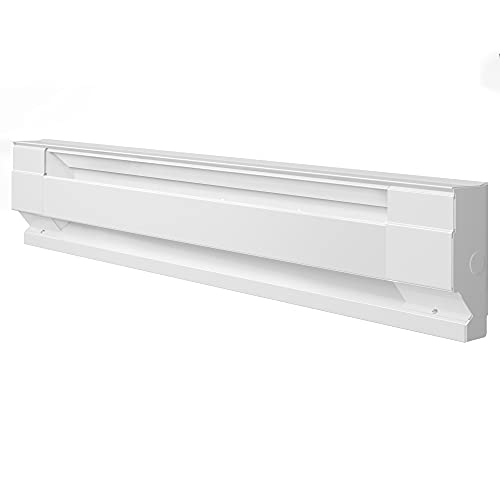
This Cadet model is a 36-inch white baseboard heater that supports multi-watt settings (750/563 W) and dual voltage (240/208 V). It uses convection to circulate warm air through the room and includes universal wiring and pre-punched knockouts for installation.
- Power Options: Multi-watt capability for varying heat output.
- Voltage: 240/208 V suitable for higher-voltage circuits.
- Installation: Universal wiring and pre-punched knockouts simplify hardwiring.
- Heating Method: Convection-based distribution for consistent room warming.
This unit is aimed at hardwired installations where a 240/208 V line is available and where convection heating is desired for steady, quiet warmth.
Cadet F Series 36″ Electric Baseboard Heater (3F750-1W, 05532)
This Cadet 36″ baseboard heater is built for 120 V circuits and rated at 750 W. The unit requires an external thermostat and is constructed with 25-gauge steel and a 20-gauge junction box with ground for hardwiring.
Call 888-896-7031 for Free Local HVAC Quotes – Compare and Save Today!
- Voltage: 120 V configuration suitable for standard household circuits.
- Construction: All-metal body with powder coating for durability.
- Controls: Thermostat required—offers centralized temperature control options.
- Wiring: 20-gauge junction box and built-in ground for hardwire connection.
Choose this model when a 120 V supply is needed and you plan to control the heater via a wall thermostat rather than onboard controls.
KING 3K1207BW K Series Baseboard Heater, 3′ / 750W

The KING K Series 3′ baseboard heater is a hard-wired 750 W unit for 120 V systems using an aluminum ribbon fin element. It features a full-length safety cutout to protect the element and the unit during abnormal conditions.
- Element Type: Aluminum ribbon fin for effective heat transfer.
- Safety: Full length safety cutout designed to interrupt power if necessary.
- Mounting: Intended for permanent hardwired installation, not plug-in.
- Finish: Bright white aesthetic to match trim and decor.
This model targets installations where a 120 V hardwired heater with built-in safety protections is preferred.
Marley 2542NW 240V 2′ Baseboard Heater, White
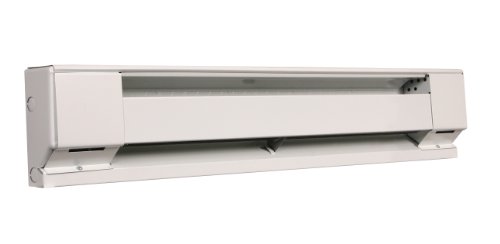
The Marley 2542NW is a 2-foot 240 V baseboard heater designed to produce convection heat across the room without a fan. Its wiring compartment includes dual knockouts, a built-in cable clamp, and a large access area for installation.
Call 888-896-7031 for Free Local HVAC Quotes – Compare and Save Today!
- Heating: Convection heating minimizes airborne dust and allergens.
- Installation: Large wiring compartment with dual knockouts and cable clamp.
- Response: Designed for rapid, even warming from floor to ceiling.
- Finish: White finish to match common molding and baseboards.
This unit is suited to spaces where quiet, fanless heating and reduced dust circulation are priorities, and where a 240 V connection is available.
09950 30.3 in. 240V 500W Baseboard Hardwire Electric Heater

This compact 30.3-inch white baseboard heater is rated for 240 V and 500 W and is intended for hardwired setups with a required thermostat. The smaller length and lower wattage make it appropriate for modest spaces or supplemental heating.
- Voltage/Wattage: 240 V / 500 W — lower output for smaller areas.
- Installation: Hardwire required; uses external thermostat control.
- Design: White finish for blending with baseboard trim.
- Use Case: Supplemental heating, bathrooms, bedrooms, or hallways.
Consider this model when space is limited or when lower wattage is sufficient to maintain desired temperatures without oversized output.
Buying Guide: How To Choose A White Baseboard Heater
Selecting the right baseboard heater involves matching the heater’s specifications to room requirements, electrical infrastructure, and installation preferences. The following factors provide a structured comparison perspective.
Heat Output And Room Size
Watts and BTU ratings determine the heater’s ability to maintain temperature. Higher wattage or multi-watt models suit larger rooms. For small rooms or supplemental heat, choose lower wattage units. Consider ceiling height and insulation when estimating required capacity.
Voltage And Electrical Compatibility
Check whether your space supplies 120 V or 240 V. Many models come in either configuration. 120 V units connect to standard household circuits; 240 V units typically require dedicated circuits and may deliver higher power options.
Installation And Wiring
Hardwired vs. Plug-In: Most effective baseboard heaters are hardwired and require proper junction boxes and knockouts. Confirm wiring compartment size and grounding provisions. If you lack electrical experience, plan for a licensed electrician.
Controls And Thermostat Requirements
Some units require an external thermostat. Decide between a wall thermostat for centralized control or a line-voltage thermostat at the unit. Matching the heater’s control type with existing thermostats avoids compatibility issues.
Heating Method: Convection Vs. Fan-Assisted
Baseboard heaters typically use convection to circulate warm air quietly and without fans. Convection designs reduce dust circulation and are lower maintenance, while fan-assisted units (less common in baseboard form) offer quicker initial heat but may increase noise and dust movement.
Safety Features
Look for features like full-length safety cutouts, robust metal construction, and proper grounding. Safety cutouts protect the element and wiring during faults. Durable powder-coated finishes resist corrosion and discoloration over time.
Build Quality And Finish
Steel gauges, powder coats, and endcap materials affect longevity and appearance. Thicker gauges and high-quality white finishes are less prone to dents and rust, keeping the heater visually consistent with trim and baseboards.
Accessory Compatibility
Consider registers, covers, and replacement grilles that match the heater length and depth if you plan to replace old covers. Confirm dimensions—length, height, and maximum width—before purchasing covers or diffusers.
Installation Environment
For bathrooms or humid areas, confirm manufacturer guidance on suitability and spacing from water sources. Smaller units or those with specific safety ratings may be more appropriate for certain rooms.
Maintenance And Longevity
Convection baseboards are generally low maintenance. Regular dusting and periodic inspection of wiring and mounting are recommended. Choose models with accessible wiring compartments for easier servicing.
Tips for Getting the Best HVAC Prices
- Prioritize Quality Over Cost
The most critical factor in any HVAC project is the quality of the installation. Don’t compromise on contractor expertise just to save money. - Check for Rebates
Always research current rebates and incentives — they can significantly reduce your overall cost. - Compare Multiple Quotes
Request at least three estimates before making your choice. You can click here to get three free quotes from local professionals. These quotes include available rebates and tax credits and automatically exclude unqualified contractors. - Negotiate Smartly
Once you've chosen a contractor, use the proven strategies from our guide — How Homeowners Can Negotiate with HVAC Dealers — to get the best possible final price.
Comparison Perspectives
- Power vs. Size: 750 W units provide more heating area than 500 W units but require appropriate circuit capacity.
- Voltage Strategy: 240 V units can deliver more power per circuit; 120 V units may integrate with existing circuits more easily.
- Installation Complexity: Larger or high-voltage units often need professional installation, whereas smaller 120 V units may be easier for experienced DIYers.
- Safety and Features: Units with safety cutouts and solid metal construction prioritize long-term reliability over lower-cost alternatives.