
Choosing A Whole Home Heater means balancing capacity, fuel type, efficiency, and installation needs. Below is a quick comparison of five high-capacity tankless and condensing boiler options suited for whole-home heating and domestic hot water.
| Product | Type | Key Capacity/Feature |
|---|---|---|
| Rinnai i090CN Condensing Gas Boiler | Condensing Gas Boiler | 90K BTU, Multizone Control |
| Rinnai i060CN Condensing Gas Boiler | Condensing Gas Boiler | 60K BTU, Built-In DHW Plate Heat Exchanger |
| WINTEMP 27kW 240V Electric Tankless | Electric Tankless | Up To 6.3 GPM, WiFi Control |
| MIZUDO Natural Gas Tankless Water Heater | Gas Tankless | 80,000 BTU, Up To 3.6 GPM |
| Rheem 18kW 240V Tankless Electric Water Heater | Electric Tankless | 18kW, Up To 4.4 GPM, Digital Thermostat |
Content Navigation
Rinnai i090CN Condensing Gas Boiler
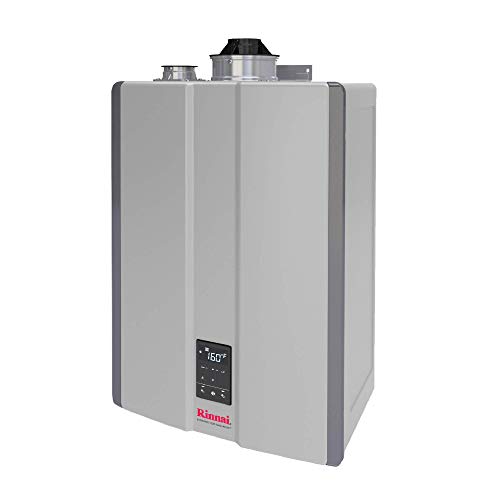
This wall-mounted condensing gas boiler is designed for whole-home heating and domestic hot water integration. It combines a stainless-steel heat exchanger with a modulating wire mesh burner and a built-in plate heat exchanger for DHW. The unit supports multizone control, allowing thermostat and integrated control pumps to connect directly to the boiler for zoned heating.
Key interface features include a digital display for temperature and pressure, an outdoor reset sensor, and adjustable CH/DHW temperature ranges. Safety features include a child-lock and automatic shutdown functions. Use cases include homes requiring powerful, integrated space heating with simultaneous hot water needs and multizone thermostat control.
Installation considerations: gas supply, venting, condensate drainage, and compatibility with existing hydronic distribution systems. The condensing design improves fuel efficiency when compared to non-condensing boilers in similar applications.
Rinnai i060CN Condensing Gas Boiler
Call 888-896-7031 for Free Local HVAC Quotes – Compare and Save Today!
The Rinnai i060CN is a compact condensing boiler rated at 60K BTU. It integrates a stainless-steel heat exchanger with a modulating burner and includes a built-in domestic hot water plate heat exchanger for showers and faucets. The unit supports multizone configurations for targeted heating control.
Controls include a digital main screen with temperature and pressure readouts, parameter settings, and an outdoor reset sensor. The CH temperature is adjustable between 104°F and 180°F, and DHW between 98°F and 140°F, enabling flexible system tuning for different climates and distribution systems.
Consider this model for mid-sized homes that need efficient hydronic heating plus on-demand DHW. Installation requires proper gas connections, venting, and integration with zone pumps or thermostats for multizone performance.
WINTEMP 27kW 240V Electric Tankless

This electric tankless unit is rated at 27kW and claims up to 6.3 GPM. It uses self-regulating technology to adjust power input based on incoming water temperature and flow, aiming to provide continuous stable temperatures and high energy efficiency.
Notable features include an LED temperature display, WiFi control for remote management, and automatic power modulation to limit energy use when flow decreases. Electrical requirements are significant: the unit needs multiple double-pole breakers and heavy gauge wiring; a high-capacity household service is recommended.
Call 888-896-7031 for Free Local HVAC Quotes – Compare and Save Today!
Recommended for homes where gas is not available or where electrical infrastructure can support higher loads. Evaluate your panel capacity and budget for electrical upgrades before selecting this option. It is suited for simultaneous shower use in many U.S. homes but actual flow rates depend on inlet temperature and wiring configuration.
MIZUDO Natural Gas Tankless Water Heater

The MIZUDO tankless gas heater delivers up to 80,000 BTU and approximately 3.6 GPM. It emphasizes quick hot water delivery within 10 seconds and is positioned for indoor installation serving 2–3 low-flow fixtures concurrently.
Construction notes: an oxygen-free copper heat exchanger is cited for faster heating, and UL/CSA certifications indicate compliance with North American safety standards. The product includes a warranty period for unit coverage and an extended coverage for the heat exchanger.
Best for smaller to medium homes or apartments where a gas-fired tankless unit can serve hot water demand without the need for hydronic heating. Confirm gas line capacity, venting needs, and fixture flow rates to ensure the unit meets household peak demand.
Rheem 18kW 240V Tankless Electric Water Heater
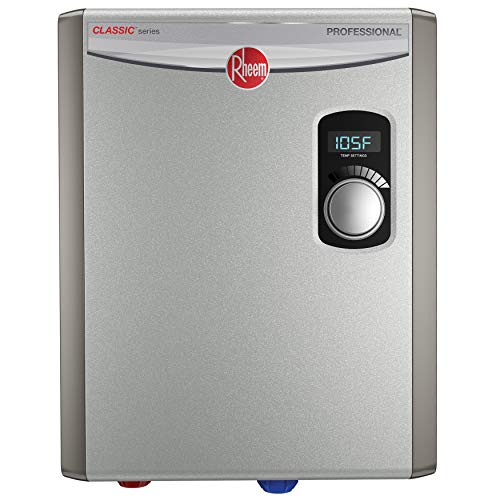
Rheem’s electric tankless model is rated at 18kW and offers up to 4.4 GPM. It includes an external digital thermostatic control with LED display and self-modulation to match power to hot water demand. The unit features copper immersion heating elements that are field serviceable.
This model is often chosen for its compact footprint and straightforward controls. Its performance depends on inlet water temperature and the number of simultaneous fixtures. Electrical requirements are lower than larger electric models, but still require appropriate breakers and wiring.
Consider this unit for smaller whole-home scenarios in warmer climates, or as a main unit paired with pre-heating strategies. Installation planning should include breaker sizing and assessment of peak flow requirements to avoid capacity shortfalls.
Buying Guide: How To Choose A Whole Home Heater
Selecting the right whole home heater requires comparing fuel type, capacity, efficiency, installation complexity, and long-term operating costs. The sections below outline practical considerations and comparison perspectives.
Tips for Getting the Best HVAC Prices
- Prioritize Quality Over Cost
The most critical factor in any HVAC project is the quality of the installation. Don’t compromise on contractor expertise just to save money. - Check for Rebates
Always research current rebates and incentives — they can significantly reduce your overall cost. - Compare Multiple Quotes
Request at least three estimates before making your choice. You can click here to get three free quotes from local professionals. These quotes include available rebates and tax credits and automatically exclude unqualified contractors. - Negotiate Smartly
Once you've chosen a contractor, use the proven strategies from our guide — How Homeowners Can Negotiate with HVAC Dealers — to get the best possible final price.
Fuel Type: Gas vs Electric
- Gas (Natural Or Propane): Offers high BTU output and is typically better for colder climates or large homes. Gas condensing boilers and tankless units can combine space heating and DHW. Consider gas line size, venting, combustion air, and local code requirements.
- Electric: Easier indoor installation with no combustion venting. Electric tankless units require significant electrical capacity for higher kW models. Choose electric when gas is not available or when installation constraints favor electrical solutions.
Capacity And Flow Rate
- For DHW, measure peak demand: add flow rates of simultaneous fixtures (showers, dishwasher, washing machine).
- Electric models list kW and estimated GPM; gas units list BTU and expected GPM based on temperature rise.
- Condensing boilers are rated in BTU and also provide hydronic heating capacity; match to your heat loss calculations for proper sizing.
Efficiency And Operating Costs
- Condensing Boilers capture exhaust heat to improve efficiency, lowering fuel bills compared to non-condensing models.
- Tankless Units reduce standby losses found in tanks, but real savings depend on usage patterns and energy costs.
- Compare EF/AFUE ratings if available, and estimate annual energy use based on local fuel prices.
Installation Complexity And Infrastructure
- Gas Units require professional gas-line sizing, venting or direct-vent systems, and condensate management for condensing models.
- Electric Units may demand panel upgrades and multiple high-amperage breakers for higher kW models; confirm available service amperage.
- Hydronic systems need compatibility with existing radiators, baseboards, or in-floor tubing; plan for pumps, expansion tanks, and controls.
Controls, Smart Features, And Zoning
- Look for multizone control compatibility if you have multiple thermostat zones; this improves comfort and efficiency.
- Digital displays, outdoor reset sensors, and WiFi control enable finer system management and diagnostics.
- Built-in DHW plate exchangers in condensing boilers simplify integration of potable hot water generation for combined systems.
Durability, Materials, And Maintenance
- Heat exchanger material matters: stainless steel and copper are common; stainless typically offers higher corrosion resistance for condensing systems.
- Field-serviceable elements and accessible controls reduce maintenance complexity.
- Regular descaling is necessary in hard water areas, especially for electric and gas tankless units; consider pre-filtration or softeners.
Safety And Certification
- Choose units with recognized safety certifications (UL, CSA, ETL) and manufacturer warranties for peace of mind.
- Gas appliances should be installed by qualified technicians and inspected for proper venting and combustion safety.
Comparison Perspectives
- Large Cold-Climate Homes: Favor higher BTU condensing boilers or high-capacity gas tankless plus hydronic distribution. Multizone and outdoor reset improve performance.
- Moderate-Sized Homes: Mid-range condensing boilers or 18–27kW electric tankless units may suffice depending on inlet water temperature and simultaneous demand.
- No-Gas Or Easier Install: Electric tankless units eliminate venting and combustion requirements but may require panel upgrades.
- Apartment Or Small Home: Compact gas tankless units like the MIZUDO can serve 2–3 fixtures if plumbing flow rates are managed.
Final Selection Checklist
- Calculate peak hot water flow and heating load (heat loss) for the home.
- Verify fuel availability and local utility costs.
- Confirm electrical service capacity or gas line sizing as required.
- Review certification, warranty, and maintenance needs.
- Plan for professional installation and permits if required by local codes.