
Window heat pump heaters combine cooling and efficient heating in a single unit, making them a versatile choice for year-round comfort. The table below summarizes the five selected models focused on window-mounted heat pump performance and energy efficiency.
| Model | Type | Coverage | Notable Feature |
|---|---|---|---|
| TCL 12,000 BTU Q-Series | Window Inverter Heat Pump | Up To 550 Sq. Ft. | Ultra-Quiet, AI Inverter |
| Midea 12,000 BTU Smart Inverter | Window Inverter Heat Pump | Up To 550 Sq. Ft. | Energy Star, Smart Controls |
| GE AWGP08WWA 8,000 BTU | Window Smart Heat/Cool | Up To 350 Sq. Ft. | Wi‑Fi Enabled, Heat Pump Tech |
| LG 23,000 BTU Window AC With Heat | Window AC With Supplemental Heat | Up To 1,400 Sq. Ft. | Low Noise, Multiple Fan Speeds |
| Whirlpool 18,000 BTU Window AC | Window AC With Supplemental Heat | Up To 1,000 Sq. Ft. | High Capacity, Easy Install Kit |
Content Navigation
- TCL 12,000 BTU Q-Series Smart Inverter
- Midea 12,000 BTU Smart Inverter Window Unit
- GE AWGP08WWA 8,000 BTU Smart Heat/Cool
- LG 23,000 BTU Window AC With Heat
- Whirlpool 18,000 BTU Window AC With Heat
- Buying Guide: How To Choose A Window Heat Pump Heater
- 1. Heat Pump vs. Supplemental Electric Heat
- 2. Capacity And Room Size Matching
- 3. Energy Efficiency And Certifications
- 4. Noise Levels And Indoor Use
- 5. Climate And Operating Temperature Limits
- 6. Smart Controls And Connectivity
- 7. Installation And Window Requirements
- 8. Maintenance And Durability
- 9. Comparison Perspectives
TCL 12,000 BTU Q-Series Smart Inverter
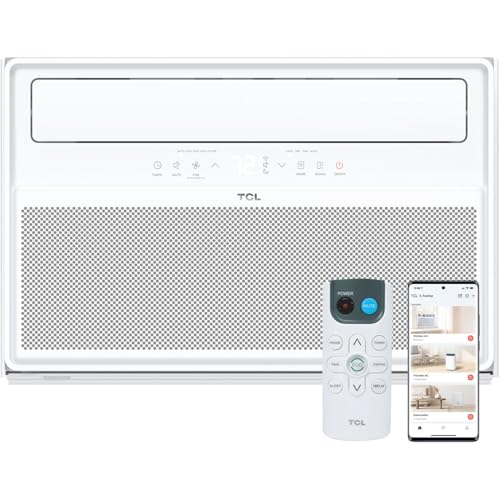
The TCL Q-Series is a window heat pump designed for rooms up to 550 sq. ft. It combines inverter-driven compressor technology with TCL’s heat pump to provide both heating and cooling with improved efficiency. The product highlights include ultra-quiet operation, making it suitable for bedrooms and living areas where noise matters.
Key listed features show the unit offers up to 67% energy savings using Heat Pump and AI Inverter technology, with specific savings claims for heating and cooling modes. The model is compatible with major smart ecosystems and supports voice control, enabling remote adjustments and scheduling. The heat pump design provides more efficient heating compared to traditional window AC units that use electric resistance heat.
Consider this unit if you prioritize energy-efficient year-round climate control and low noise for mid-sized rooms. The inverter drive also helps maintain consistent temperatures with reduced cycling.
Midea 12,000 BTU Smart Inverter Window Unit

Call 888-896-7031 for Free Local HVAC Quotes – Compare and Save Today!
The Midea 12,000 BTU window unit is an Energy Star-rated inverter model with heating, cooling, dehumidifier, and smart control. Listed features include multiple modes (Heat, Auto, Cool, Dry, Fan), three speed settings, and an LED display. The manufacturer notes the heat pump function is limited below about 41°F outdoor temperature, a common characteristic of many air-source heat pumps.
Midea emphasizes up to 35% energy savings compared to standard units, driven by variable-speed inverter technology. SmartHome app and voice assistant compatibility allow for remote control and scheduling. The washable front filter and automatic defrost contribute to maintenance ease and reliable winter performance.
This model suits buyers who want smart features, energy certification, and multi‑season use for rooms up to 550 sq. ft. Note the ambient temperature limit for heat pump operation if you live in colder climates.
GE AWGP08WWA 8,000 BTU Smart Heat/Cool

The GE AWGP08WWA is a Wi‑Fi-enabled window heat/cool unit rated for medium rooms up to 350 sq. ft. The product description highlights its heat pump technology, claiming up to 2x more effective heating
With an 8,000 BTU capacity for both heating and cooling, this unit targets bedrooms and smaller living spaces where remote control, scheduling, and energy-conscious operation matter. The integrated controls and remote offer straightforward management, while heat pump operation supports increased heating efficiency versus supplemental electric coils.
Call 888-896-7031 for Free Local HVAC Quotes – Compare and Save Today!
Choose this GE model for smaller rooms or where app-based control and precise pre-conditioning are beneficial.
LG 23,000 BTU Window AC With Heat

The LG 23,000 BTU window unit is built for large rooms up to 1,400 sq. ft. and includes a supplemental heat option. Key features call out low noise levels
LG’s listed features emphasize the usefulness of the supplemental heat to maintain steady indoor temperatures. Multiple fan speeds and the included remote allow for flexible airflow and temperature management. Because this is a high-capacity window AC with heat function, it’s often used where stronger heating output is needed but may rely on supplemental electric heat rather than a dedicated heat pump design in some configurations.
Select this model if you need higher capacity cooling
Whirlpool 18,000 BTU Window AC With Heat

The Whirlpool 18,000 BTU window unit targets large rooms up to 1,000 sq. ft. and includes supplemental heat
Whirlpool specifies the supplemental heater is not intended as a primary heat source in the coldest months, indicating a hybrid role: strong cooling and targeted, secondary heating. The electronic controls and multiple modes make it suitable for occupants seeking flexible operation and straightforward installation in larger windows.
Consider this unit when you need high cooling capacity with added heating capability for shoulder seasons or mild winters, especially in larger spaces.
Buying Guide: How To Choose A Window Heat Pump Heater
Selecting the right window heat pump heater requires considering performance, installation, climate, and long‑term operating costs. Below are key purchase criteria and comparison perspectives to guide decisions.
1. Heat Pump vs. Supplemental Electric Heat
- Heat Pump Technology: Transfers heat between indoors and outdoors, offering greater efficiency than resistance heating. Best for mild to moderate winter climates.
- Supplemental Electric Heat: Uses electric coils to generate warmth and can be effective for short-term or backup heating but is less energy efficient.
- Check product specs to confirm if heating is via a true heat pump or supplemental electric element, especially if winter heating efficiency matters.
2. Capacity And Room Size Matching
- Match BTU ratings to room square footage for reliable comfort: about 8,000 BTU for ~300 sq. ft., 12,000 BTU for ~500 sq. ft., up to 23,000+ BTU for large open areas.
- A unit undersized for the room will run continuously and struggle to maintain temperature. Oversized units can short cycle, reducing dehumidification and efficiency.
3. Energy Efficiency And Certifications
- Look for Energy Star ratings and inverter technology for better part-load efficiency and lower electric bills.
- SEER/CEER and HSPF/HSPF2 numbers indicate seasonal efficiency—higher values mean better efficiency.
4. Noise Levels And Indoor Use
- Check dB ratings and descriptions like “ultra-quiet” or “low noise” if installing in bedrooms or home offices.
- Inverter-driven units often operate more quietly due to slower compressor speeds during steady-state operation.
5. Climate And Operating Temperature Limits
- Heat pumps lose efficiency as outdoor temperatures drop. Verify manufacturer notes about minimum outdoor temps for reliable heating.
- In very cold climates, consider a primary heating system and use a heat pump unit for supplemental warmth and cooling.
6. Smart Controls And Connectivity
- Wi‑Fi connectivity, apps, and voice assistant compatibility provide remote scheduling and pre‑conditioning.
- Smart controls can increase convenience and may improve energy savings through optimized scheduling.
7. Installation And Window Requirements
- Confirm window size and minimum height requirements. Some units include quick-install kits or sleeves for easier mounting.
- Electrical requirements vary: 115V units plug into standard outlets; larger 230V units may need a dedicated circuit or outlet.
8. Maintenance And Durability
- Look for washable front filters, defrost controls, and accessible panels for routine cleaning.
- Consider warranty coverage and brand service reputation for long-term support.
9. Comparison Perspectives
- Efficiency Seekers: Choose inverter-driven heat pump models (like TCL and Midea) for best seasonal energy performance.
- Large Room Cooling + Backup Heat: High-capacity units (LG, Whirlpool) provide robust cooling and supplemental heat for larger spaces.
- Smart & Small Room Use: Wi‑Fi enabled compact units (GE) work well for bedrooms and offer remote pre‑conditioning.
- Cold Climate Considerations: Verify minimum outdoor operating temps for heat pump mode; consider supplemental heating or alternative heating sources in very cold regions.
Evaluating these factors will help identify the window heat pump heater best suited to your home, climate, and comfort priorities.
Tips for Getting the Best HVAC Prices
- Prioritize Quality Over Cost
The most critical factor in any HVAC project is the quality of the installation. Don’t compromise on contractor expertise just to save money. - Check for Rebates
Always research current rebates and incentives — they can significantly reduce your overall cost. - Compare Multiple Quotes
Request at least three estimates before making your choice. You can click here to get three free quotes from local professionals. These quotes include available rebates and tax credits and automatically exclude unqualified contractors. - Negotiate Smartly
Once you've chosen a contractor, use the proven strategies from our guide — How Homeowners Can Negotiate with HVAC Dealers — to get the best possible final price.