
Finding the right tent heater for winter camping balances warmth, safety, portability, and fuel options. Below is a quick comparison of five tent heaters suited for cold-weather tents and small enclosed spaces. Each product entry links to the Amazon listing and highlights key features to help you choose.
| Product | Heat Type | Fuel/Power | Notable Safety Feature |
|---|---|---|---|
| Mr. Heater Portable Buddy MH9BX | Radiant Infrared | Propane (1 lb) | Tip-over safety switch, Piezo igniter |
| KOMAN Propane Heater For Tent | Radiant/Convection | 1 lb Propane / 20–40 lb LP (adapter) | Tip-over switch, auto shut-off valve |
| HEATHIVE Portable Propane Heater | Radiant | 1 lb Propane | One-push ignition, foldable base |
| Hisencn 2-In-1 Portable Propane Heater | Radiant | Propane or Butane | High altitude ignition assist, sturdy build |
| VEVOR 1500W PTC Greenhouse Heater | Electric PTC Fan Heater | 120V Electric | Overheat protection, IP20 |
Content Navigation
- Mr. Heater Portable Buddy Heater MH9BX
- KOMAN Propane Heater For Tent
- HEATHIVE Portable Propane Heater
- Hisencn 2-In-1 Portable Propane Heater
- VEVOR 1500W PTC Greenhouse Heater
- Buying Guide: Choosing The Right Winter Tent Heater
- Heat Type: Radiant vs Electric Fan
- Fuel Availability & Flexibility
- Safety Features To Prioritize
- Portability, Weight, And Setup
- Ventilation, CO Management, And Tent Compatibility
- Runtime And Fuel Efficiency
- Noise, Air Circulation, And Comfort
- Use Cases And Matching Features
- Maintenance, Durability, And Materials
Mr. Heater Portable Buddy Heater MH9BX
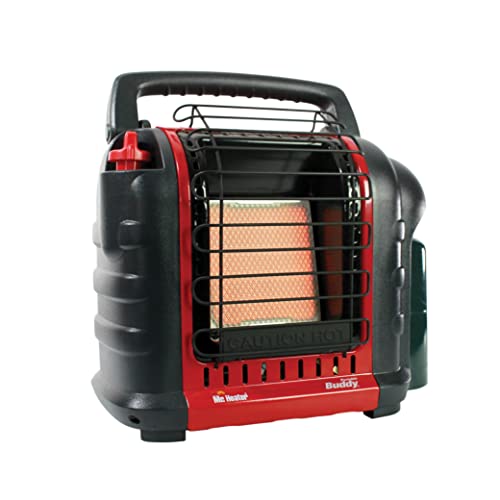
The Mr. Heater Portable Buddy uses infrared radiant technology to heat people and objects directly, not just the air. Adjustable output ranges from 4,000 to 9,000 BTU, with a stated coverage up to about 225 sq. ft., making it common for small tents, campers, and workspaces.
Key safety and usability features listed include an improved tip-over safety switch that audibly engages if the unit is moved or tipped, and a durable Piezo igniter for matchless startup. The radiant design delivers sun-like warmth quickly, which is efficient for short-term localized heating in tent sleeping areas when used according to ventilation and safety guidance.
KOMAN Propane Heater For Tent

The KOMAN Propane Heater emphasizes fuel flexibility with compatibility for 1 lb propane cylinders and larger 20–40 lb LP tanks via the included POL adapter. This dual-fuel design allows transition from backpacking or small tents to larger outdoor patios or parked vehicles.
Call 888-896-7031 for Free Local HVAC Quotes – Compare and Save Today!
Safety features highlighted include CSA certification, an automatic tip-over switch, and an auto shut-off valve. The unit also includes a hanger handle and a 1 lb propane tank holder for stability. The product listing notes ceramic construction to limit thermal conduction along gas lines, which is relevant for safety in enclosed setups when used properly.
HEATHIVE Portable Propane Heater

The HEATHIVE portable propane heater focuses on compact transport and straightforward operation for outdoor activities like camping, ice fishing, and hunting. The unit offers a built-in electric ignition for one-push startup and a foldable stand for rapid setup.
Features call out consistent radiant heat delivery and a lightweight design with a carrying case. The listing positions this heater for small outdoor spaces and short-duration use in tents or blinds, where portability and fast activation are priorities. As with all propane devices, ventilation and recommended clearances are central to safe operation.
Hisencn 2-In-1 Portable Propane Heater

This 2-in-1 portable heater supports both propane and butane cylinders, with adapters included for compatibility. The listing highlights no assembly required, direct mounting to a canister, and an ignition assist for high altitude conditions.
Call 888-896-7031 for Free Local HVAC Quotes – Compare and Save Today!
Constructed from mixed materials—nylon-wrapped connectors, copper adapter, ABS case, and iron grille—the product description emphasizes durability. The unit is intended for a range of outdoor uses including tent camping, patios, and ice fishing, offering portability and adaptable fuel choices for varied environments.
VEVOR 1500W PTC Greenhouse Heater

The VEVOR 1500W PTC electric heater uses rapid PTC heating elements and a 3-speed fan to warm and circulate air. The listing specifies 5100 BTU equivalent output and 3-second fast heating, with IP20 protection and ETL-certified overheat protection.
This electric option is suited to situations where AC power is available, such as a heated cabin, powered RV, or greenhouse-style tent with safe electrical access. The product is presented as a multi-scene heater for plant tents, brooding, or enclosed spaces where combustion-based heaters are not suitable or allowed.
Buying Guide: Choosing The Right Winter Tent Heater
Selecting a tent heater requires evaluating context, safety, and performance. Below are key considerations and comparisons to guide purchase decisions for winter camping and small enclosed shelters.
Heat Type: Radiant vs Electric Fan
- Radiant Propane Heaters (Mr. Heater, HEATHIVE, Hisencn, KOMAN): Heat people and objects directly, efficient for localized warmth, quick startup, and usable without electricity. Require strict ventilation and adherence to CO and flame-safety guidelines.
- Electric PTC Heaters (VEVOR): Safer for enclosed spaces where combustion is prohibited; provide air circulation and overheat protection. Depend on reliable electrical power and may not deliver the same localized radiant warmth.
Fuel Availability & Flexibility
- 1 lb Propane Canisters are widely used for backpack-style devices—lightweight and portable.
- Dual-Fuel/Adapter Options (KOMAN, Hisencn) permit connection to larger LP tanks for extended use at basecamp or patio setups.
- Consider cold-weather performance—butane can struggle in very low temperatures, while propane performs better in subfreezing conditions.
Safety Features To Prioritize
- Tip-Over Switch: Automatically shuts off if the heater falls—essential for tents and unstable surfaces.
- Auto Shut-Off/Overheat Protection: Prevents runaway temperatures and fire risk.
- Certified Components: CSA or ETL listings indicate third-party testing for safety standards.
- Ignition Type: Piezo or electric ignition avoids open matches and simplifies lighting; check for reliability at altitude and cold temperatures.
Portability, Weight, And Setup
- Look for compact size and carrying cases if backpacking. Foldable stands and integrated handles ease transport and setup.
- Consider whether the heater requires additional adapters, hoses, or bases for stability in a tent environment.
Ventilation, CO Management, And Tent Compatibility
- Combustion heaters emit carbon monoxide and water vapor; ensure adequate ventilation and use a CO alarm rated for enclosed spaces.
- Follow manufacturer clearance recommendations to prevent fabric scorching; avoid direct contact with tent walls and flammables.
- Electric heaters avoid combustion byproducts but still require safe electrical routing and GFCI protection in damp conditions.
Runtime And Fuel Efficiency
- Check listed BTU output and canister consumption rates where available. Higher BTU delivers more heat but can consume fuel faster.
- For multi-night trips, calculate required fuel capacity based on expected ambient temps and desired run hours.
Noise, Air Circulation, And Comfort
- Radiant units are typically quieter and focus heat directionally; electric fan heaters provide whole-space circulation but may be louder.
- Balance the need for quiet sleep vs. overall tent air temperature when choosing heater type.
Use Cases And Matching Features
- Backpacking/Ultralight: Prioritize weight and small 1 lb canister compatibility—HEATHIVE and Hisencn are examples.
- Car Camping/Basecamp: Dual-fuel or higher-output units with POL adapters (KOMAN) offer extended runtime and flexibility.
- Power-Available Enclosures: Electric PTC heaters (VEVOR) provide safe, continuous heat without combustion risks where AC is available.
Maintenance, Durability, And Materials
- Inspect build materials: ceramic or steel elements and protective grilles increase longevity.
- Keep fuel connections, igniters, and safety switches clean and serviced per the manufacturer.
When comparing models, prioritize the combination of safety certifications, appropriate heat output for tent size, and the fuel logistics that match your trip profile. Always follow the product manual for installation, clearances, and CO/ventilation guidance to reduce risks during winter use.
Tips for Getting the Best HVAC Prices
- Prioritize Quality Over Cost
The most critical factor in any HVAC project is the quality of the installation. Don’t compromise on contractor expertise just to save money. - Check for Rebates
Always research current rebates and incentives — they can significantly reduce your overall cost. - Compare Multiple Quotes
Request at least three estimates before making your choice. You can click here to get three free quotes from local professionals. These quotes include available rebates and tax credits and automatically exclude unqualified contractors. - Negotiate Smartly
Once you've chosen a contractor, use the proven strategies from our guide — How Homeowners Can Negotiate with HVAC Dealers — to get the best possible final price.