
Choosing a wireless heater for camping means balancing power, runtime, safety, and portability. The table below summarizes five well-matched portable, cordless or tank-powered heaters and heat systems suitable for tents, vans, showers, and outdoor setups.
| Product | Type | Primary Strength |
|---|---|---|
| Mr. Heater Portable Buddy Heater MH9BX | Propane Radiant Heater | High BTU radiant heat for small enclosed spaces |
| Mosoyolo Portable Propane Heater 6500 BTU | Propane Outdoor Heater | Compact outdoor propane heat with electric igniter |
| Naturehike Portable 3-in-1 Camping Heater | Butane Tent Heater / Stove | Multiuse heater with cooking/warming surface |
| EF ECOFLOW WAVE 3 Portable Air Conditioner | Battery-Powered HVAC (Cordless Option) | Cordless heating and cooling with integrated battery |
| Kohree Helios 20 Pro Portable Water Heater | Propane Water Heater With Battery Pump | Rechargeable battery plus propane for hot water/shower |
Content Navigation
- Mr. Heater Portable Buddy Heater
- Mosoyolo 6500 BTU Propane Heater
- Naturehike 3-in-1 Butane Camping Heater
- EF ECOFLOW WAVE 3 Portable Air Conditioner
- Kohree Helios 20 Pro Portable Water Heater
- Buying Guide: How To Choose A Wireless Camping Heater
- 1. Heat Source: Propane/Butane Versus Battery Electric
- 2. Heating Type: Radiant, Convective, Or Water Heating
- 3. Safety Features To Prioritize
- 4. Portability And Fuel Logistics
- 5. Runtime, Output, And Coverage
- 6. Multiuse Functionality
- 7. Environmental And Regulatory Considerations
- 8. Noise, Maintenance, And Durability
- 9. Comparison Perspectives
- 10. Practical Checklist Before Purchase
Mr. Heater Portable Buddy Heater
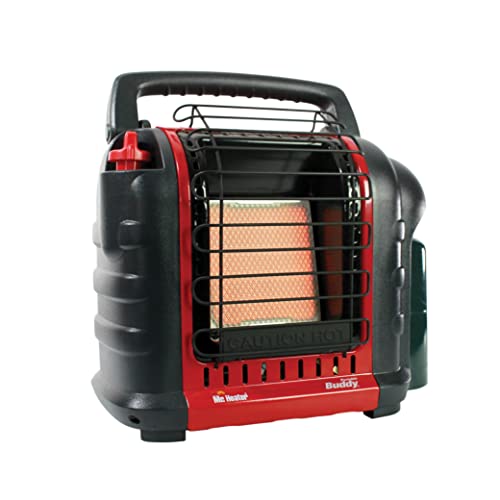
The Mr. Heater Portable Buddy MH9BX is a propane radiant heater delivering 4,000–9,000 BTU and is designed for indoor-safe use in campers, workshops, and patios. Its infrared radiant heat warms objects and people directly, which can be more effective in partially enclosed spaces than heating entire volumes of air.
- Heating Coverage: Up to ~225 sq. ft. depending on insulation and airflow.
- Ignition & Safety: Piezo igniter for matchless start; tip-over safety switch with audible engagement.
- Fuel: Uses standard disposable or refillable propane cylinders; cordless in operation aside from fuel.
As a wireless heat source, it provides continuous, controllable BTU output without electrical hookups. Consider ventilation needs, CO safety, and manufacturer guidance when using in tents or small campers.
Mosoyolo 6500 BTU Propane Heater

The Mosoyolo Portable Propane Heater offers a compact 6500 BTU output with a built-in electric igniter and fold-out legs for stable placement. It is marketed for outdoor use, golf carts, and tents where safe clearance and ventilation are maintained.
Call 888-896-7031 for Free Local HVAC Quotes – Compare and Save Today!
- High Heat Output: 6500 BTU to quickly raise localized temperature in open or semi-enclosed spaces.
- Safety Features: Tip-over automatic leak protection and durable aluminum reflector panel to withstand weather.
- Convenience: Electric igniter removes need for matches; brass connector for improved corrosion resistance.
Because it runs on propane canisters and includes tip-over protection, this unit functions as a cordless heater compatible with camping setups that permit propane use. Users should follow clearance and ventilation guidance to manage combustion byproducts.
Naturehike 3-in-1 Butane Camping Heater

The Naturehike 3-in-1 combines a butane heater with a cooking surface and warming shelf. Rated at ~3750 BTU, it is compact and designed to heat 54–108 sq. ft., suitable for small tent interiors or enclosed vestibules if used according to safety rules.
- Versatility: Heats, cooks, and provides a warming shelf—useful for minimalistic camp kitchens.
- Runtime: Up to ~240 minutes on an 8 oz butane canister at lower power settings.
- Technique: Cellular porous mesh heating tech for stable output and efficient transfer.
This model is wireless in that it uses portable fuel canisters rather than mains power. It is well-suited for campers who want a multipurpose device but must prioritize ventilation and carbon monoxide monitoring.
EF ECOFLOW WAVE 3 Portable Air Conditioner

The EF ECOFLOW WAVE 3 is a compact HVAC unit offering both cooling and heating modes and can operate cordless when paired with its LFP battery pack (sold separately). It delivers fast heating via a 2000W mode and is intended for vans, RVs, and small camping spaces.
Call 888-896-7031 for Free Local HVAC Quotes – Compare and Save Today!
- Cordless Operation: Can run from a built-in or add-on battery for several hours, enabling wireless heating without fuel combustion.
- Rapid Climate Control: Designed to raise vent temperatures quickly and to maintain automatic temperature swings.
- Connectivity: App control and real-time power monitoring; multiple charging methods including car, solar, and AC.
As a non-combustion heating option, the WAVE 3 removes CO/ventilation concerns but requires battery capacity planning. It’s suitable for campers prioritizing clean, controllable heating and the ability to shift between heat and cooling.
Kohree Helios 20 Pro Portable Water Heater

The Kohree Helios 20 Pro is a hybrid system: a propane-fired 20,000 BTU heater with an integrated 4000mAh rechargeable battery and electric shower pump. It focuses on on-demand hot water for camping showers, dishwashing, and cleaning.
- Rapid Heating: Electronic temp control for quick temperature rise; claims fast heat-up in seconds depending on input water temp.
- Battery-Assisted Operation: Rechargeable battery powers the pump for ~100 minutes of continuous use and supports charging while operating.
- Portability: Compact footprint and multiple handles for transport; designed for car-camping and outdoor cleaning.
This device is wireless in terms of pump power and does not need AC for operation, though it does require propane for heating. It suits campers who need hot water on demand rather than space heating.
Buying Guide: How To Choose A Wireless Camping Heater
Selecting the right wireless heater requires matching your campsite environment, safety tolerance, and mission profile. Below are key considerations and multiple comparison perspectives to help determine the best fit.
1. Heat Source: Propane/Butane Versus Battery Electric
Propane/Butane (Fuel Canisters)—Provide high BTU outputs and long runtime for their weight. They are ideal for rapid radiant or convective heating but generate combustion byproducts and require ventilation and CO detection.
Battery Electric / LFP Systems—Offer clean, non-combustion heat without ventilation concerns. Run time is limited by battery capacity and charging options (solar, vehicle, generator). They are better for enclosed spaces like vans and insulated tents when fuel combustion is prohibited.
2. Heating Type: Radiant, Convective, Or Water Heating
Radiant Heaters heat objects and people directly and can feel warmer at lower ambient temps—good for short-term spot heating in partially open shelters.
Convective Heaters warm the air and are better for maintaining an overall tent or van temperature but typically require more power or fuel.
Water Heaters/Immersion Units provide hot water for washing and showering but are not substitutes for ambient space heating.
3. Safety Features To Prioritize
- Tip-Over Shutoff: Important for any portable heater used in unstable environments.
- Oxygen Depletion/CO Monitoring: For propane/butane devices, use in well-ventilated areas or with CO alarms designed for camping.
- Overheat Protection: Electric units should have thermal cutoffs and auto-shutdown features.
4. Portability And Fuel Logistics
Consider fuel availability and resupply. Propane and butane canisters are widely available, but cold temperatures can reduce canister performance. Battery systems require planning for recharging options—solar panels, vehicle alternators, or spare battery packs.
5. Runtime, Output, And Coverage
Match BTU or watt output to space size: small insulated tents need much less power than an uninsulated awning. Use product-rated coverage as a baseline and factor in insulation, wind, and ventilation.
6. Multiuse Functionality
Some devices double as stoves, water heaters, or HVAC units. Multiuse systems can reduce pack weight but may require trade-offs in performance and complexity.
7. Environmental And Regulatory Considerations
Check campground rules about open flames and fuel use. Some campsites and national parks restrict gas-powered heating in certain zones or enclosed shelters.
8. Noise, Maintenance, And Durability
Combustion heaters can produce pilot noise or fuel valve sounds; battery HVAC units may have fans. Inspect materials—aluminum reflectors resist corrosion; brass connectors resist heat exposure. Plan regular maintenance for fuel fittings, batteries, and igniters.
9. Comparison Perspectives
Performance-Focused: If maximum BTU and rapid warmth are top priorities, propane radiants like the Mr. Heater and Mosoyolo supply strong output.
Safety/Enclosed-Space Focused: For vanlife or enclosed tents where combustion is undesirable, battery-based systems such as the EcoFlow WAVE 3 with compatible battery packs remove CO hazards.
Utility/Versatility Focused: For campers who need cooking and heating or hot water and showers, multiuse devices like Naturehike and Kohree provide combined capabilities.
Tips for Getting the Best HVAC Prices
- Prioritize Quality Over Cost
The most critical factor in any HVAC project is the quality of the installation. Don’t compromise on contractor expertise just to save money. - Check for Rebates
Always research current rebates and incentives — they can significantly reduce your overall cost. - Compare Multiple Quotes
Request at least three estimates before making your choice. You can click here to get three free quotes from local professionals. These quotes include available rebates and tax credits and automatically exclude unqualified contractors. - Negotiate Smartly
Once you've chosen a contractor, use the proven strategies from our guide — How Homeowners Can Negotiate with HVAC Dealers — to get the best possible final price.
10. Practical Checklist Before Purchase
- Confirm permitted fuel types for your campsite and national park.
- Verify runtime at typical settings and how many fuel canisters or battery cycles are required for your trip length.
- Ensure compatibility with your vehicle charging or solar system if using battery heaters.
- Prioritize units with multiple built-in safety mechanisms (tip-over, overheat, leak protection).
- Consider weight, packed size, and how the unit will be carried or stored.