
Choosing the right heater for a garage that ties into a wood boiler or uses wood fuel requires assessing compatibility, heat output, and installation needs. Below is a concise comparison table of the five selected products covered in this guide.
| Product | Type | Key Feature |
|---|---|---|
| ALORAIR 100,000 BTU Hydronic Hanging Heater | Hydronic Water-to-Air | Smart Auto-Temperature Control |
| ALECOIL 100,000 BTU Hydronic Hanging Unit Heater | Hydronic Water-to-Air | Temperature Control Switch |
| Atlas Authentic Wood Pellet Patio Heater | Pellet Patio Heater | Smokeless Flame Technology, Portable |
| Mr. Heater Big Maxx MHU80NG | Natural Gas Unit Heater | High Output For Large Spaces |
| Dr Infrared Heater DR-238 Carbon Infrared | Electric Infrared | IP55 Rated For Indoor/Outdoor |
Content Navigation
- ALORAIR 100,000 BTU Hydronic Hanging Heater
- ALECOIL 100,000 BTU Hydronic Hot Water Hanging Unit Heater
- Atlas Authentic Wood Pellet Patio Heater – Smokeless Flame
- Mr. Heater F260560 Big Maxx MHU80NG Natural Gas Unit Heater
- Dr Infrared Heater DR-238 Carbon Infrared Outdoor Heater
- Buying Guide: Choosing A Wood Heater For Your Garage
- 1. Identify The Heat Source Compatibility
- 2. BTU Output And Space Size
- 3. Ventilation, Emissions, And Fuel Handling
- 4. Control And Automation
- 5. Noise And Airflow Characteristics
- 6. Installation And Mounting Requirements
- 7. Material Durability And Corrosion Resistance
- 8. Safety Features And Certifications
- 9. Fuel Logistics And Operating Costs
- 10. Maintenance And Serviceability
- 11. Heat Distribution And Placement Strategies
- 12. Comparing Perspectives For Decision Making
- 13. Practical Checklist Before Purchase
ALORAIR 100,000 BTU Hydronic Hanging Heater

Type: Hydronic water-to-air heat exchanger designed for use with outdoor wood furnaces.
This unit emphasizes industrial-grade durability with galvanized steel housing and corrosion-resistant copper piping. The included reusable air filter helps protect internal components, and manufacturer materials state a multi-year commercial warranty for reliable operation in workshop or garage settings.
The heater features smart auto-temperature control, where the fan activates when water reaches a preset temperature and shuts off when cooling. The centrifugal blower delivers high airflow at relatively low noise levels, and adjustable louvers allow directed heat distribution for targeted garage warming.
Relevant aspects for garage users include compatibility with outdoor wood furnaces, quiet operation suitable for occupied workshops, and a design meant for continuous or seasonal use where a hydronic system is present.
Call 888-896-7031 for Free Local HVAC Quotes – Compare and Save Today!
ALECOIL 100,000 BTU Hydronic Hot Water Hanging Unit Heater
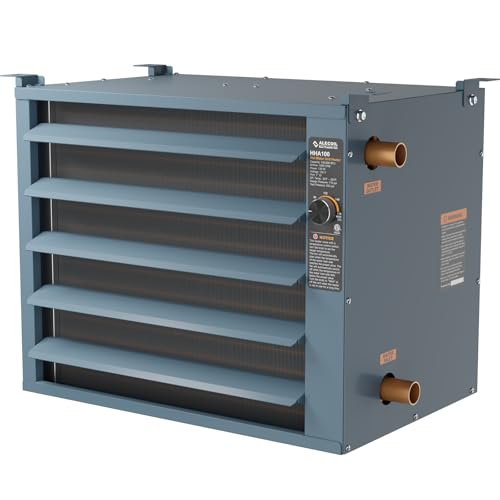
Type: Water-to-air hanging heater for connection to hot water sources such as outdoor wood boilers.
The ALECOIL unit highlights an automatic temperature control switch that starts the fan when inlet water reaches a preset value and stops it when temperature drops. This feature simplifies control when paired with an outdoor wood furnace and helps preserve energy by running only when heat is available.
Its centrifugal blower provides whisper-quiet operation and adjustable louver deflectors permit directional airflow. The unit is positioned as maintenance-friendly, relying on durable components to handle repeated seasonal operation and long runtime cycles typical of garage heating tied to wood furnaces.
For garages already using a wood boiler, this heater offers direct integration with hydronic systems and automated control to reduce manual adjustments and maintain more consistent indoor temperatures.
Atlas Authentic Wood Pellet Patio Heater – Smokeless Flame

Call 888-896-7031 for Free Local HVAC Quotes – Compare and Save Today!
Type: Portable wood pellet heater intended for patios, gardens, and camping but sometimes used in ventilated garage spaces.
The Atlas heater uses smokeless flame technology to reduce visible smoke and odors compared with open fires. It’s designed for portability with built-in wheels and offers quick assembly requiring minimal tools.
Key features include easy cleanout and a modern durable appearance. While optimized for outdoor use, some users utilize pellet heaters in large, well-ventilated garages where direct venting and carbon monoxide considerations are addressed.
Important compatibility notes: pellet heaters require proper ventilation, routine pellet supply, and clearances from flammable materials. They can offer a wood-based heating option where connecting to a hydronic system is not feasible.
Mr. Heater F260560 Big Maxx MHU80NG Natural Gas Unit Heater
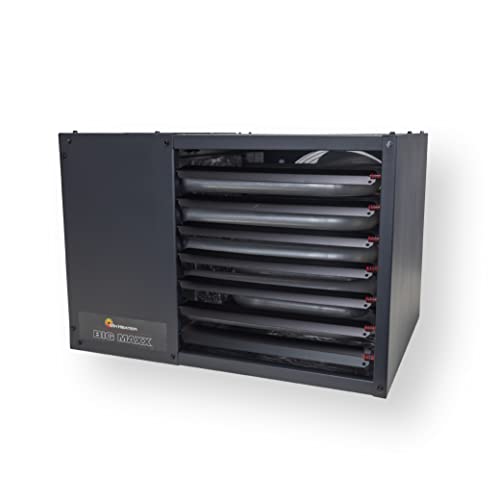
Type: Natural gas unit heater with high BTU output for large garages and workshops.
This Mr. Heater model provides up to 80,000 BTU and is rated to cover large spaces. It includes mounting brackets and a propane conversion kit in the package. Designed for vertical or horizontal venting depending on category, it requires a dedicated gas supply and proper clearances.
While not a wood-based heater, the Mr. Heater unit is relevant for garage owners comparing alternative heating methods to wood systems. It is intended for high-capacity, direct-fired heating where rapid warm-up and continuous output are needed.
Considerations include venting requirements, gas line installation, and safety clearances. This type of unit can be compared with wood-driven hydronic units when assessing fuel logistics and required maintenance.
Dr Infrared Heater DR-238 Carbon Infrared Outdoor Heater
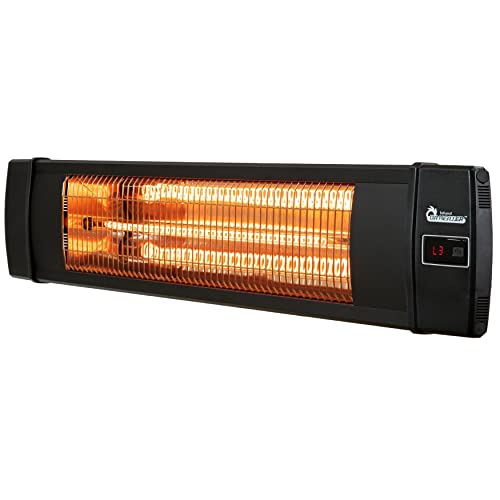
Type: Electric carbon infrared heater marketed for indoor and outdoor use, including garages with adequate protection.
The DR-238 offers clean, instant infrared heat with three power settings and IP55 weather protection, making it usable in semi-exposed garage environments or attached workspaces. It operates on standard 120V and includes remote control for convenience.
Infrared heaters warm people and objects directly rather than relying solely on air temperature, which can be advantageous in partially insulated garages or spaces with high ceilings.
For owners seeking plug-and-play simplicity and odorless operation, this model provides a non-combustion option. It requires appropriate electrical capacity and mounting that aligns with safety ratings for workshop environments.
Buying Guide: Choosing A Wood Heater For Your Garage
1. Identify The Heat Source Compatibility
Determine whether you have or plan to install a hydronic wood furnace system (outdoor wood boiler). If so, a water-to-air hydronic unit like ALORAIR or ALECOIL is designed to tie directly into that loop and will distribute recovered heat efficiently.
2. BTU Output And Space Size
Calculate the garage volume (square feet × ceiling height) and insulation level to estimate required BTUs. Hydronic units listed at 100,000 BTU are capable of heating larger volumes, but effective heat delivery depends on ducting, louvers, and placement.
3. Ventilation, Emissions, And Fuel Handling
Wood-based heaters, including pellet models, require attention to ventilation and emissions. Pellet heaters are lower-smoke but still need exhaust or well-ventilated setups. Hydronic units isolate combustion to the outdoor boiler, reducing indoor combustion concerns.
4. Control And Automation
Look for features like automatic temperature switches or fan controls that start/stop based on water temperature. These reduce manual intervention and increase energy efficiency when paired with variable wood furnace output.
5. Noise And Airflow Characteristics
Centrifugal blowers often provide high pressure and quieter operation. If you use the garage as a workspace, consider whisper-quiet units to minimize disturbance.
6. Installation And Mounting Requirements
Hanging unit heaters require structural support and clearance from combustibles. Confirm that ceiling joists or wall brackets can safely support the unit weight and that mounting aligns with the unit’s specified clearances.
7. Material Durability And Corrosion Resistance
Units connected to hydronic loops should use corrosion-resistant piping (e.g., copper) and robust housings. Garages often experience moisture and temperature swings, so industrial-grade construction increases longevity.
8. Safety Features And Certifications
Prioritize heaters with overheat protection, thermal cut-outs, and ETL/UL listings. For combustion-based options, ensure proper venting and adherence to local codes for indoor combustion or gas appliances.
9. Fuel Logistics And Operating Costs
Consider ongoing fuel availability and handling. Wood and pellet systems require storage and regular feeding. Hydronic setups centralize combustion outdoors, which can reduce indoor fuel handling. Electric and gas options trade fuel logistics for utility or gas connections.
10. Maintenance And Serviceability
Review access to filters, blowers, heat exchangers, and cleaning points. Hydronic units may need occasional coil cleaning; pellet heaters require ash cleanout. Evaluate local service support for more complex systems.
11. Heat Distribution And Placement Strategies
Decide between a single high-output unit or multiple zoned units. Ceiling-mounted or hanging units free floor space and distribute heat broadly, while portable pellet or infrared units can provide localized warmth.
Tips for Getting the Best HVAC Prices
- Prioritize Quality Over Cost
The most critical factor in any HVAC project is the quality of the installation. Don’t compromise on contractor expertise just to save money. - Check for Rebates
Always research current rebates and incentives — they can significantly reduce your overall cost. - Compare Multiple Quotes
Request at least three estimates before making your choice. You can click here to get three free quotes from local professionals. These quotes include available rebates and tax credits and automatically exclude unqualified contractors. - Negotiate Smartly
Once you've chosen a contractor, use the proven strategies from our guide — How Homeowners Can Negotiate with HVAC Dealers — to get the best possible final price.
12. Comparing Perspectives For Decision Making
- Hydronic Integration Perspective: Best when you already have or plan an outdoor wood furnace—provides centralized combustion control and lower indoor emissions.
- Direct Wood/Pellet Perspective: Useful when you want a wood-fueled appliance without hydronic plumbing—suitable for well-ventilated, detached garages.
- Electric/Infrared Perspective: Simpler installation and immediate heat with minimal emissions—consider when electrical capacity and operating cost are acceptable.
- Gas Unit Perspective: Delivers consistent high output with lower daily maintenance than wood—appropriate when natural gas is available and venting can be installed.
13. Practical Checklist Before Purchase
- Confirm compatibility with an existing outdoor wood boiler if applicable.
- Measure garage volume and insulation level to size BTU needs.
- Verify electrical and gas infrastructure for non-wood options.
- Review installation clearances, mounting strength, and venting needs.
- Check warranty terms, filter accessibility, and routine maintenance requirements.