
Finding the right heater for a workshop requires matching heat output, safety features, installation style, and power source to your workspace. Below is a concise comparison of selected options to help you choose the best fit.
| Product | Type | Key Strength | Coverage |
|---|---|---|---|
| Mr. Heater Portable Buddy MH9BX | Propane Radiant | Direct infrared heat, indoor-safe | Up to 225 sq. ft. |
| Comfort Zone CZ230ER Ceiling Heater | Hard-Wired Fan-Forced | Ceiling-mounted, large-area coverage | Up to 1250 sq. ft. |
| Dura Heat EUH1465 | Electric Forced Air | Compact, pivoting base | Small workshops / task heat |
| Remington REM-222A-120 | Portable Electric | Two heat settings, portable | Up to ~165 sq. ft. |
| NewAir 5600W Portable Garage Heater | High-Power Electric | High wattage, wide coverage | Up to 600 sq. ft. |
Content Navigation
- Mr. Heater Portable Buddy Heater MH9BX
- Comfort Zone Hard-Wired Ceiling Garage Heater CZ230ER
- Dura Heat EUH1465 Electric Forced Air Heater
- Remington 1500W Heavy-Duty Portable Electric Heater REM-222A-120
- NewAir 5600W Portable Electric Garage Heater
- Buying Guide: Choosing A Workshop Space Heater
- Comparative Perspectives
Mr. Heater Portable Buddy Heater MH9BX
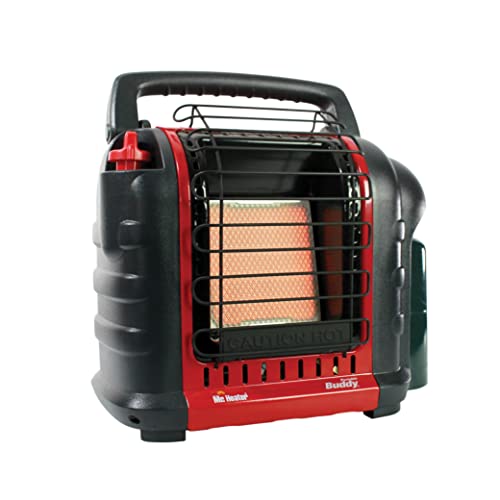
The Mr. Heater Portable Buddy MH9BX is a propane-powered radiant heater designed to deliver direct “sun-like” warmth to people and objects rather than heating all the air in a room. Its adjustable output ranges from 4,000 to 9,000 BTU, with manufacturer guidance indicating effective coverage around 225 sq. ft.
- Key Features: Infrared radiant heat, Piezo igniter for match-free start, tip-over safety switch with audible engagement.
- Safety Notes: Marketed as indoor-safe for certain ventilated spaces; follow local codes, ensure propane handling best practices, and maintain ventilation per guidelines.
- Use Case: Task heating in workshops, garages, or job sites where rapid, localized warmth is preferred over whole-space heating.
Comfort Zone Hard-Wired Ceiling Garage Heater CZ230ER

The Comfort Zone CZ230ER is a hard-wired, ceiling-mounted fan-forced heater intended to free floor space while heating large workshop areas. With 7,500 watts at 240V and coverage claims up to 1250 sq. ft., it targets garages and commercial work areas needing distributed warmth.
- Key Features: Heavy gauge steel housing, digital thermostat, 12-hour timer, adjustable louvers for directed airflow.
- Installation: Requires professional hard-wiring and secure ceiling mounting. Consider structural support and electrical circuit capacity before purchase.
- Use Case: Whole-bay heating where permanent installation and broad distribution are priorities.
Dura Heat EUH1465 Electric Forced Air Heater
Call 888-896-7031 for Free Local HVAC Quotes – Compare and Save Today!
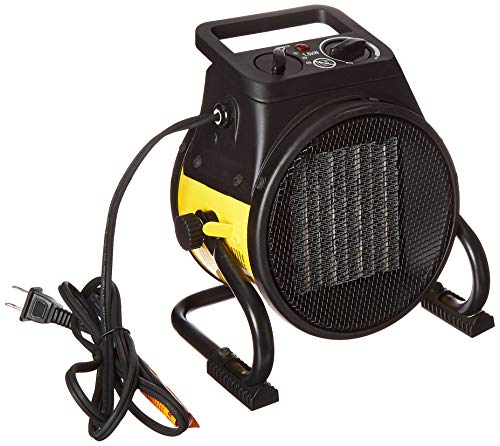
The Dura Heat EUH1465 is a compact electric forced-air heater delivering 1500W of PTC ceramic heat via a rugged steel cabinet and a pivoting base for directional task heating. It’s suited for bench areas and small workshop spaces needing quick, portable warmth.
- Key Features: PTC ceramic element for quick warm-up, heat and fan-only modes, pivoting base for aimed airflow.
- Portability: Lightweight footprint and durable shell make it suitable for moving between workstations.
- Use Case: Spot heating at a workstation, toolbench, or small enclosed workshop where portability and fast heat are important.
Remington 1500W Heavy-Duty Portable Electric Heater REM-222A-120

The Remington REM-222A-120 is a portable 1500W electric heater designed for garages and jobsites. It offers two heat settings and an adjustable thermostat for controlled warmth in compact to medium-sized workshop areas. Manufacturers describe coverage up to about 165 sq. ft.
- Key Features: Rapid heat-up, two heat settings, adjustable thermostat, heavy-duty construction for jobsite use.
- Safety: Overheat protection and built-in safety features typical of portable electric heaters.
- Use Case: Small-to-medium workshop spaces where a simple, rugged portable heater is preferred.
NewAir 5600W Portable Electric Garage Heater

The NewAir 5600W portable electric heater is a high-output fan-forced model engineered to heat larger garages and workshops. Its 5,600 watts of power and integrated thermostat aim to maintain set temperatures across wider areas, with manufacturer guidance up to 600 sq. ft.
- Key Features: High wattage fan-forced heating, thermostat with auto-fan control, steel construction and cord wrap.
- Installation & Power: Requires appropriate electrical circuit capacity and likely dedicated outlet; confirm plug type and breaker compatibility.
- Use Case: Larger two-car garages, 24×24 workshops, or spaces where whole-area heating is needed without permanent hard-wiring.
Buying Guide: Choosing A Workshop Space Heater
Selecting the right workshop heater depends on multiple variables: space size, insulation, power availability, ventilation, portability, and safety requirements. Below are key considerations with objective guidance.
Call 888-896-7031 for Free Local HVAC Quotes – Compare and Save Today!
1. Heat Output And Coverage
Heat is measured in BTU (gas) or watts (electric). Estimate your workshop volume (square feet × ceiling height). For spot heating, a lower-output portable unit (1,500W or 4,000–9,000 BTU) may suffice. For whole-space heating, choose higher outputs such as 4,800–5,600 watts or a 240V hard-wired model that lists coverage appropriate for your square footage.
2. Power Source: Electric vs. Propane
- Electric Heaters: Cleaner indoor operation, straightforward installation for plug-in models, and better for enclosed spaces. Higher-watt models need appropriate circuits or hard-wiring.
- Propane Heaters: Portable and often produce strong radiant heat in areas without high-capacity electrical service. Require ventilation and adherence to safety codes and fuel storage rules.
3. Heat Distribution Method
- Radiant (Infrared): Heats objects and people directly, efficient for localized task areas; less effective at raising ambient air temperature in large rooms.
- Fan-Forced (Convection): Circulates warm air to elevate ambient temperature across the space; better for whole-room comfort but may stir dust.
4. Installation And Placement
Ceiling-mounted hard-wired units maximize floor space and provide broad coverage, but require professional electrical work and mounting. Portable units offer flexibility but must be placed to avoid obstruction, flammable materials, and tripping hazards. Confirm clearance and mounting angle recommendations from the manufacturer.
5. Safety Features
- Tip-Over Switch: Essential for portable units to cut power if knocked over.
- Overheat Protection: Shuts the unit down if internal temperatures exceed safe thresholds.
- Carbon Monoxide & Ventilation: For fuel-burning units, ensure proper ventilation and consider CO monitoring in enclosed spaces.
6. Durability And Build
Workshops can be dusty and rugged environments. Heavy-gauge steel housings, protective finishes, and sturdy handles improve longevity. Verify IP ratings or manufacturer guidance if the heater will be exposed to moisture or heavy dust.
7. Controls And Convenience
- Thermostat Control: Helps maintain target temperatures and improves energy efficiency.
- Timers & Remote: Useful for preheating or hands-free adjustments.
- Adjustable Louvers / Pivoting Base: Provide directional control of airflow for task-focused heating.
8. Electrical Requirements
High-wattage units may require 240V circuits or dedicated breakers. Before purchase, confirm your workshop’s panel capacity, outlet type, and whether installation by a licensed electrician is required. Using a unit on undersized wiring can be a fire risk.
9. Noise And Air Quality
Fan-forced heaters produce operational noise; if a quiet environment is needed, compare sonicspecs or choose quieter models. Fans can also circulate dust and fumes—ensure proper filtration or limit use near sensitive processes.
10. Maintenance And Serviceability
Check for replaceable filters, accessible panels for debris cleaning, and availability of replacement parts. Regular cleaning and following maintenance recommendations extend service life and maintain efficiency.
Comparative Perspectives
When comparing options, consider these objective trade-offs:
Tips for Getting the Best HVAC Prices
- Prioritize Quality Over Cost
The most critical factor in any HVAC project is the quality of the installation. Don’t compromise on contractor expertise just to save money. - Check for Rebates
Always research current rebates and incentives — they can significantly reduce your overall cost. - Compare Multiple Quotes
Request at least three estimates before making your choice. You can click here to get three free quotes from local professionals. These quotes include available rebates and tax credits and automatically exclude unqualified contractors. - Negotiate Smartly
Once you've chosen a contractor, use the proven strategies from our guide — How Homeowners Can Negotiate with HVAC Dealers — to get the best possible final price.
- Portability vs Permanence: Portable plug-in heaters offer flexibility; ceiling or hard-wired units provide consistent whole-space heating and clear floor space.
- Localized Task Warmth vs Whole-Room Comfort: Radiant propane heaters excel at immediate localized heat; high-watt electric fan heaters better raise overall ambient temperatures.
- Upfront Installation vs Ongoing Fuel Needs: Electric heaters avoid fuel logistics but may need circuit upgrades. Propane units sidestep electrical upgrades but require fuel storage and ventilation management.
- Safety Considerations: Fuel-burning units require additional ventilation and CO awareness; electric units emphasize correct electrical setup and thermal protection.