
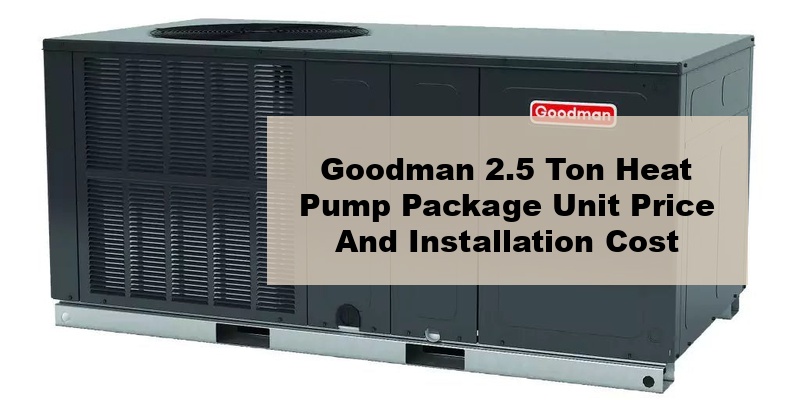
Goodman 2.5 ton heat pump package units offer a compact, all-in-one solution for heating and cooling in many American homes. The price of the equipment plus installation varies widely based on efficiency, features, and local labor costs. Understanding typical price ranges, what drives those costs, and the services included in installation helps homeowners budget effectively and avoid surprises. This guide provides practical, up-to-date information on the price of a Goodman 2.5 ton heat pump package unit and the associated installation costs, with tips to maximize value.
Content Navigation
Price Range For Goodman 2.5 Ton Heat Pump Package Unit
The equipment cost for a Goodman 2.5-ton packaged heat pump typically ranges from about $2,700 to $4,800, depending on SEER efficiency, features, and model line. More basic configurations with 14 SEER single-stage operation tend to sit toward the lower end, while higher-efficiency 16–18 SEER or two-stage options push the unit price higher. When buyers opt for advanced controls or energy-management features, the unit price can increase further. In most markets, these figures reflect the outdoor, all-in-one package without installation labor.
In addition to the unit price, installation costs substantially affect the total. Local labor rates, accessibility, duct condition, and electrical work determine final numbers. A typical installed price for a Goodman 2.5-ton heat pump package unit often falls in the range of $5,000 to $9,500. This total includes the new unit, basic mounting, refrigerant connections, startup, and standard duct and electrical work. Regions with higher living costs or complex installs can push totals higher, while simpler, well-prepared replacements may be at the lower end.
For quick reference, the following table summarizes typical ranges homeowners may encounter when purchasing a Goodman 2.5-ton heat pump package unit and having it installed. Prices vary by model, location, and contractor, so these figures are intended as a general guide rather than a guarantee.
| Cost Component | Typical Range |
|---|---|
| Unit Price (Goodman 2.5-ton packaged unit) | $2,700 – $4,800 |
| Installation Labor | $2,000 – $4,000 |
| Total Installed Cost | $5,000 – $9,500 |
Key takeaway: The lower end represents basic, standard-efficiency configurations with straightforward installs, while the higher end reflects premium SEER ratings, added features, and more complex electrical or ductwork work.
What Influences The Price Of A Goodman Package Unit
Several factors influence both the unit price and the installation cost of a Goodman 2.5-ton heat pump package unit. The most impactful are efficiency and control options. A 14 SEER, single-stage unit is typically cheaper than a 16–18 SEER, two-stage, or inverter-driven model. Higher efficiency reduces long-term operating costs, which can justify the upfront premium for some homeowners.
Call 888-896-7031 for Free Local HVAC Quotes – Compare and Save Today!
Another major driver is the condition and configuration of the home’s ductwork and indoor components. If ducts are undersized, leaky, or require changes to accommodate a new package unit, installation costs can rise significantly. The route and location of the outdoor unit also matter; a hard-to-reach installation site may require additional labor, brackets, or crane work, increasing both time and expense.
Regional labor rates and permitting requirements shape total costs as well. Urban areas with higher wages or stringent codes can push labor charges higher. Some neighborhoods require permits, inspections, and refrigerant handling fees, which add to the project cost. Finally, ongoing maintenance and warranty considerations influence long-term value, with many homeowners opting for maintenance plans that provide preventive service and priority service windows.
Contractor differences also play a role. Some installers include certain warranties, system checkups, or rebates in their package, while others itemize them as add-ons. It’s important to compare quotes that clearly outline equipment, labor, permits, and any optional services to avoid unexpected charges later.
Installation Costs And What’s Included
Installation costs cover a range of services beyond simply placing a new unit. A standard installation typically includes removing the old system, sizing and routing refrigerant lines, securing the outdoor cabinet, and connecting electrical power and controls. Startup, testing refrigerant charge, thermostat setup, and basic commissioning are usually completed as part of the package. In many cases, a basic installation also includes a new condensate drain, pad, and basic duct connections for the packaged unit.
Common items that can affect cost include ductwork modifications, upgrading the electrical service panel or circuit breakers to support the unit’s power requirements, and upgrading or extending thermostat wiring. If the home lacks adequate ductwork for a 2.5-ton package, or if existing ducts are leaky or poorly insulated, contractors may propose duct sealing or new duct sections, which add to both material and labor costs. Permits and inspections, where required, add a separate line item on the invoice.
Additional services that some homeowners request or that contractors routinely offer include extended warranties, UV light air purification, additional filtration, humidity control modules, or smart thermostat integration. These options can improve indoor air quality and comfort but add to the total installed price. When considering these, homeowners should weigh upfront costs against potential energy savings and comfort benefits over time.
Call 888-896-7031 for Free Local HVAC Quotes – Compare and Save Today!
Model Variants And Efficiency Ratings
Goodman offers multiple variants of 2.5-ton packaged heat pumps, varying primarily by efficiency (SEER), heating performance, and control options. More affordable configurations typically feature 14 SEER with single-stage heating, while mid-range models may offer 16 SEER with some multi-speed or two-stage capabilities. High-efficiency options, often 18 SEER or higher, may incorporate advanced compressors or inverter technology to maximize seasonal efficiency and humidity control. While these higher-end models carry a higher sticker price, they can deliver meaningful energy savings in temperate and hot climates alike.
Choosing the right efficiency level depends on climate, electricity costs, and how long a homeowner plans to stay in the home. In hot southern zones with high cooling loads, higher SEER models can yield noticeable energy savings and faster payback. In milder regions, a mid-range SEER unit might be the most cost-effective option. ENERGY STAR-qualified Goodman package units are typically available in several efficiency tiers, and some contractors can help homeowners assess the expected payback based on local utility rates.
Maintenance needs and warranty terms may also differ by model. Higher-efficiency units often require precise refrigerant charge and airflow management to maintain rated performance. Prospective buyers should request detailed specifications, performance data, and a written comparison of SEER ratings, heating stages, and ambient operating ranges before selecting a model. This ensures the chosen unit aligns with home size, climate, and comfort expectations.
Financing, Warranties, And Long-Term Savings
Most Goodman package units come with a warranty package that protects against manufacturing defects and component failures. A typical parts warranty spans 10 years, with the compressor often receiving longer coverage. Warranties usually require proper installation, system registration, and adherence to maintenance guidelines. Labor warranties vary by contractor, so homeowners should confirm whether labor is covered and for how long, and whether there are any exclusions for certain components or service calls.
Financing options are commonly available through HVAC contractors, manufacturers, or third-party lenders. These can include promotional APRs, deferred-interest plans, or monthly payment programs designed to spread the cost of the unit and installation. Homeowners should compare total costs, including interest and any fees, across lenders. It’s also prudent to inquire about energy-efficiency incentives, rebates, and state or utility-based programs that can help offset upfront costs.
Incentives and credits for energy efficiency can influence the overall economics of a Goodman 2.5-ton heat pump package unit. Federal, state, or local programs may offer tax credits, rebates, or rebates for upgrading to high-efficiency equipment. Homeowners should verify current programs with a tax professional or local energy office and ensure that contractors provide proper documentation to qualify for any credits or rebates. Strategic planning around incentives can shorten the payback period and improve the project’s overall value.
Choosing The Right Goodman Package Unit For Your Home
Selecting the appropriate Goodman 2.5-ton heat pump package unit requires a careful assessment of home size, insulation, and climate. A professional HVAC contractor should perform a load calculation, such as a Manual J analysis, to determine the correct cooling and heating capacity for the space. This ensures the unit can meet comfort demands without excessive cycling or energy waste. Homeowners should also consider ductwork condition, noise levels, and the outdoor unit’s location when evaluating options.
To secure the best value, obtain multiple quotes and compare equipment specifications, installation scope, and warranty terms. Ask contractors to detail what is included in the installation price, particularly any required ductwork, electrical upgrades, permits, or disposal fees. Verify that quotes specify SEER ratings, compressor type, and whether a two-stage or single-stage configuration is proposed. Finally, review eligibility for energy incentives, and confirm that the chosen unit aligns with future plans, such as potential expansions or changes in occupancy.
In summary, the Goodman 2.5-ton heat pump package unit can be a cost-effective solution for many homes, delivering a balance of upfront price, efficiency, and simplicity. By understanding the price ranges, identifying cost drivers, and working with a qualified installer, homeowners can achieve reliable comfort while controlling long-term operating costs. The key is clear communication, thorough comparisons, and careful consideration of efficiency versus upfront expenditure to maximize value over the life of the system.
Tips for Getting the Best HVAC Prices
- Prioritize Quality Over Cost
The most critical factor in any HVAC project is the quality of the installation. Don’t compromise on contractor expertise just to save money. - Check for Rebates
Always research current rebates and incentives — they can significantly reduce your overall cost. - Compare Multiple Quotes
Request at least three estimates before making your choice. You can click here to get three free quotes from local professionals. These quotes include available rebates and tax credits and automatically exclude unqualified contractors. - Negotiate Smartly
Once you've chosen a contractor, use the proven strategies from our guide — How Homeowners Can Negotiate with HVAC Dealers — to get the best possible final price.