
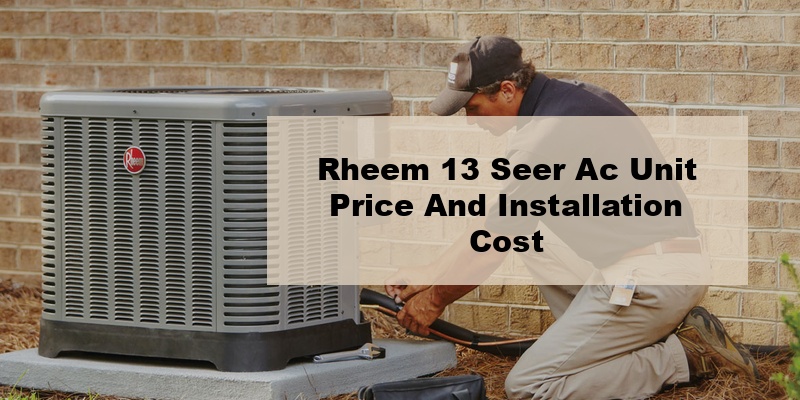
The Rheem 13 SEER air conditioner offers a balance between upfront price and operating costs, making it a popular choice for budget-conscious homeowners who want reliable cooling without the higher price tag of more efficient models. This guide breaks down typical price ranges for a Rheem 13 SEER A/C unit, installation costs, and the factors that influence final pricing in the United States. It also provides practical tips to compare quotes, estimate project costs, and evaluate whether upgrading to a higher SEER rating makes sense over the long term.
Content Navigation
- What Is A Rheem 13 Seer Air Conditioner?
- Rheem 13 Seer Model Lineup And Price Range
- Installation Cost Components
- Typical Installed Cost By System Size
- Should You Upgrade To A Higher SEER?
- Warranty, Service Life, And Tax Credits
- Cost-Saving Tips And How To Get The Best Quote
- Where To Buy And Hire A Contractor
What Is A Rheem 13 Seer Air Conditioner?
A Rheem 13 SEER air conditioner is a split-system cooling unit that uses a single-stage compressor and a standard outdoor condenser paired with an indoor evaporator coil or air handler. The SEER, or Seasonal Energy Efficiency Ratio, measures cooling output divided by energy use over a typical season. A 13 SEER rating is on the lower end of modern residential efficiency but is often available as a lower-cost option, especially in areas with milder summers or for replacements where ductwork and electrical updates are limited. While 13 SEER units cost less upfront, they generally consume more electricity over time compared with higher-SEER models, which can affect long-term operating expenses. For buyers, the key trade-off is initial affordability versus energy savings and potential rebates or incentives offered in some regions. For more details, manufacturers and energy guides note that efficiency and reliability remain strong with Rheem’s 13 SEER lineup. See Rheem’s product information for model specifics and compatibility with existing ductwork at Rheem.com and validate regional options with a local dealer.
Rheem 13 Seer Model Lineup And Price Range
Rheem’s 13 SEER offerings typically include outdoor condenser units designed to pair with a matching indoor coil or air handler. The price the consumer sees for a 13 SEER Rheem system depends on the outdoor unit, indoor component, and any required installation work. As a rough guide, the following ranges reflect typical consumer prices before installation labor and duct work, with variations by region and retailer. Outdoor condenser units for 13 SEER systems commonly fall in the range of $1,700 to $2,900. Indoor air handlers or coils, which may be included in a complete system or sold separately, commonly range from $1,600 to $2,800. When combined, a complete 13 SEER Rheem system (outdoor condenser plus indoor coil/air handler) often lists between $3,300 and $5,600 before professional installation. It is essential to note that prices vary by model, dealer promotions, and regional supply. For current pricing and model specifics, consult regional Rheem distributors or major retailers such as Home Depot or Lowe’s and verify model compatibility with a local installer.
Installation Cost Components
Installing a 13 SEER Rheem system involves more than the unit price. Labor and materials significantly affect the final bill. Major cost components include:
- Labor for removing the old system and installing the new condenser, air handler, and refrigerant lines
- Electrical work and a new disconnect switch or breaker panel adjustment
- Refrigerant charging and system vacuuming to remove moisture
- Ductwork modifications or sealing to ensure efficient airflow
- Permits and inspections mandated by local authorities
- New condensate line installation and drainage considerations
- Disposal of the old equipment and any required site cleanup
- Optional add-ons such as a programmable thermostat, zoning, or smart control systems
In general, labor and materials can add substantially to the base equipment price, with total installed costs widely varying by region, existing ductwork, and accessibility. Home improvement sources estimate that typical central air installation ranges from roughly $3,800 to $7,500 for a complete system, depending on efficiency and scope of work, with higher-end projects exceeding this range in some markets. For reference, national averages from consumer-facing platforms and industry outlets are cited, and regional quotes should be sought for accuracy. See guidance at HomeAdvisor and Angi for current regional estimates.
Typical Installed Cost By System Size
System size, measured in tons, strongly influences both equipment and installation costs. The following table provides a general framework for installed price ranges of Rheem 13 SEER systems, excluding extensive duct upgrades. Actual costs will depend on the exact tonnage, existing ductwork, and local labor rates.
Call 888-896-7031 for Free Local HVAC Quotes – Compare and Save Today!
| System Size (Tons) | Estimated Installed Cost Range (Unit + Labor) | Notes |
|---|---|---|
| 1.5–2 | $4,000–$6,500 | Typical for small homes with standard ductwork |
| 2.5–3 | $4,800–$7,500 | Common mid-range size for many households |
| 3.5–4 | $5,500–$9,000 | Higher labor due to longer refrigerant runs or duct upgrades |
| 4–5 | $7,000–$12,000 | Large homes or complex duct systems |
Should You Upgrade To A Higher SEER?
Choosing a higher SEER rating—such as 14, 15, or 16 SEER—can yield meaningful energy savings, especially in warmer climates where air conditioning runs for many months each year. A higher SEER compressor and coil design reduces electricity use per cooling season, which can offset higher upfront costs over time. The payback period depends on factors such as local electricity rates, climate, insulation, and usage patterns. For example, upgrading from 13 SEER to 16 SEER or higher could reduce cooling energy use by 10% to 30% annually, depending on home efficiency and climate. However, higher efficiency systems typically require a larger initial investment and may involve more extensive ductwork or control-system upgrades. Home energy guidance and price data from reputable sources emphasize evaluating long-term savings versus upfront costs; consult a licensed HVAC contractor to estimate local payback for your home. For general guidance, see Energy Star recommendations and independent cost analyses at Energy.gov and major retailer price trends at Home Depot and Angi.
Warranty, Service Life, And Tax Credits
Rheem furnishes warranties that vary by model and installation conditions. Typical outdoor condenser warranties range from 5 to 10 years on compressor and parts, with some indoor components covered under different terms. Extended warranties may be available through the installer or retailer and often require registration and proper maintenance. The service life of a 13 SEER Rheem system is commonly 12 to 15 years with proper maintenance, though this can vary with usage and climate. Tax incentives and rebates for HVAC upgrades exist in some regions, particularly for energy-efficient equipment or heat pump configurations. Federal and state programs may change; owners should verify current offerings with the Internal Revenue Service and local utilities. See Energy.gov’s and IRS or state energy program pages for current credits and rebates.
Cost-Saving Tips And How To Get The Best Quote
Consumers can manage costs and improve outcomes by following these best practices:
- Obtain at least three written quotes from licensed HVAC contractors who are familiar with Rheem 13 SEER systems
- Ask about duct inspection and sealing as part of the project to prevent energy losses
- Request a single quote that itemizes equipment, labor, permits, and any ductwork
- Inquire about existing duct condition, refrigerant line set length, and insulation, as these affect both performance and price
- Discuss maintenance plans and expected post-installation service costs
- Check for applicable local rebates, utility incentives, and any available financing options
- Review manufacturer warranties and contractor workmanship guarantees
Reputable consumer resources and contractor networks provide guidance on obtaining reliable estimates; compare apples-to-apples quotes and verify licenses and insurance. For a broad overview of pricing trends and contractor guidance, see HomeAdvisor and Angi.
Where To Buy And Hire A Contractor
Buyers should work with licensed HVAC professionals who can assess ductwork, electrical capacity, and local building codes. Start by contacting Rheem-certified dealers in the area or visiting major retailers that handle Rheem products. Request a full-system evaluation, including a load calculation (often a Manual J calculation) to determine whether a 13 SEER setup meets current home needs and climate requirements. Always verify contractor licenses, confirm their installation practices align with local codes, and review the warranty terms and service options. For dealer networks and installation guidance, visit Rheem’s official site at Rheem.com and cross-check with regional distributors listed by local retailers like Home Depot and Lowe’s.
Tips for Getting the Best HVAC Prices
- Prioritize Quality Over Cost
The most critical factor in any HVAC project is the quality of the installation. Don’t compromise on contractor expertise just to save money. - Check for Rebates
Always research current rebates and incentives — they can significantly reduce your overall cost. - Compare Multiple Quotes
Request at least three estimates before making your choice. You can click here to get three free quotes from local professionals. These quotes include available rebates and tax credits and automatically exclude unqualified contractors. - Negotiate Smartly
Once you've chosen a contractor, use the proven strategies from our guide — How Homeowners Can Negotiate with HVAC Dealers — to get the best possible final price.