
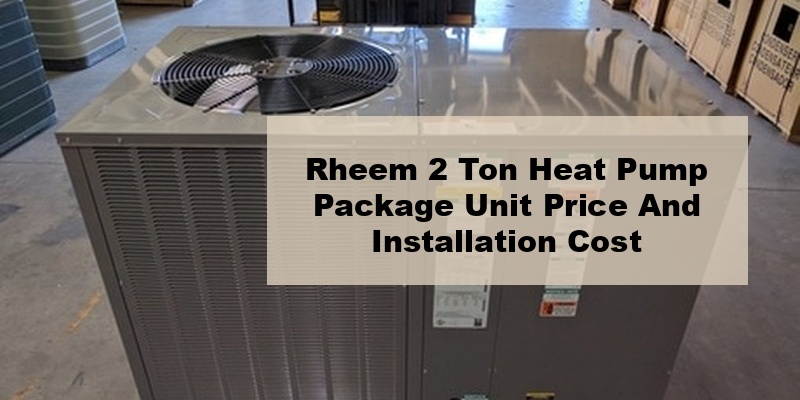
Rheem’s 2 ton heat pump packaged unit provides an all-in-one solution for heating and cooling in homes with limited indoor space or where a compact external unit is preferred. Understanding both the equipment price and the installation cost is essential for budgeting a retrofit or new installation. This article breaks down typical price ranges for the Rheem 2 ton heat pump package unit, outlines factors that influence installation costs, and covers permits, electrical work, duct changes, warranties, rebates, and maintenance. It aims to help American homeowners make informed choices that balance upfront investment with long-term energy savings.
Content Navigation
Pricing Overview For A Rheem 2 Ton Heat Pump Package Unit
Prices for a Rheem 2 ton heat pump package unit vary by model, efficiency rating, refrigerant type, and regional availability. A reasonable range for the packaged unit itself is roughly $2,500 to $4,000, with higher-efficiency models commanding closer to the upper end. When installed as a complete system, the total installed cost commonly falls between $6,000 and $12,000, depending on travel distance, accessibility, and required modifications. Note that regional labor markets, ductwork needs, and electrical upgrades can push the total higher or lower.
Key factors that influence price include efficiency (SEER and HSPF), included features (advanced controls, humidification options, or zoning), existing ductwork condition, and whether the installation requires a new electrical panel, gas line disconnection, or extensive refrigerant line work. Although Rheem offers multiple 2 ton packaged options, the exact price will reflect the chosen model, warranty terms, and local dealer pricing.
For budgeting purposes, homeowners should anticipate a two-part cost: the equipment price and the installation cost. The first covers the unit and any required accessories; the second covers labor, permits, electrical work, duct modifications, and start-up checks.
What Is A Rheem 2 Ton Heat Pump Package Unit
A Rheem 2 ton heat pump package unit is a self-contained outdoor cabinet that houses the compressor, condenser coil, evaporator coil, and air handling components in a single enclosure. This design eliminates the need for a separate indoor air handler, making it ideal for homes with limited attic or basement space. The 2 ton (approximately 24,000 BTU per hour) rating serves small to mid-sized homes or spaces with modest cooling and heating loads. Efficiency is expressed by SEER (seasonal energy efficiency ratio) and HSPF ( Heating Seasonal Performance Factor), with higher numbers indicating lower operating costs. In many markets, Rheem packaged units are chosen for quick replacement, easier installation, and streamlined warranty coverage.
When evaluating models, consumers should compare SEER and HSPF ratings, noise levels (measured in dB), frost protection features, warranty length, and compatibility with smart thermostats. All-in-one units may have fewer duct connections to manage, but proper sizing and professional installation remain crucial to optimize performance and reliability.
Call 888-896-7031 for Free Local HVAC Quotes – Compare and Save Today!
Cost Components
Understanding the breakdown helps homeowners plan and pinpoint savings opportunities. A typical installed price includes several distinct components that can be adjusted based on local conditions and project scope.
Equipment Cost
The Rheem 2 ton packaged unit price is the foundation. Depending on the model, the equipment cost can range from $2,500 to $4,000. Higher efficiency and feature-rich variants may push this higher, but they often deliver long-term energy savings and enhanced comfort.
Labor And Installation
Labor costs cover site preparation, unit mounting, refrigerant connections, charging, start-up, and system testing. Regional labor rates significantly affect total cost. A typical range for professional installation is $2,000 to $5,000, with higher-end markets or complex ductwork increasing the price.
Electrical Work
Most installations require electrical work to connect the unit to the home’s service panel, including wiring, breakers, and circuit protection. Depending on the existing electrical setup, this may cost between $200 and $1,000. In older homes or when a panel upgrade is needed, costs rise.
Ductwork And Air Distribution
Many installations involve some ductwork assessment, sealing, or modifications to ensure proper air flow and balance. Expect $500 to $2,500 for duct changes or new runs, especially in homes with suboptimal current duct layouts.
Permits, Inspections, And Disposal
Local permits and inspections are a routine part of installation in many jurisdictions, typically $100 to $300. Disposal of old equipment and refrigerant recovery can add $50 to $300 depending on the contractor and disposal location.
Call 888-896-7031 for Free Local HVAC Quotes – Compare and Save Today!
Refrigerant And Start-Up
Refrigerant charges and system start-up ensure the unit operates as designed. This portion generally falls between $150 and $500 depending on refrigerant type, line length, and required testing.
Cost Summary Table
| Cost Component | Estimated Price Range (USD) |
|---|---|
| Equipment (Rheem 2 Ton Packaged Unit) | $2,500–$4,000 |
| Installation Labor | $2,000–$5,000 |
| Electrical Work | $200–$1,000 |
| Ductwork Modifications | $500–$2,500 |
| Permits And Inspections | $100–$300 |
| Refrigerant And Start-Up | $150–$500 |
| Disposal | $50–$300 |
Using these ranges, the typical installed cost for a Rheem 2 ton heat pump packaged unit commonly falls between $6,000 and $12,000, though exceptional conditions can push costs outside this range. Homeowners should obtain multiple written quotes and verify what’s included in each estimate to avoid surprises.
Installation Process Overview
Efficient installation minimizes disruption and ensures reliable performance. While specifics vary by home, the process generally follows these steps.
-
Pre-Installation Assessment: A technician evaluates load requirements, existing ductwork, electrical capacity, and the best location for outdoor equipment.
-
Permitting And Scheduling: Local permits are pulled, and a timeline is established to coordinate utility access and inspections.
-
Site Preparation: The installation site is prepared, including clearance around the unit and a stable pad or mounting surface.
-
Electrical And Gas/Air Connections: The unit is wired to the electrical panel, lines are connected, and refrigerant lines are insulated and tested.
-
Ductwork Evaluation Or Modifications: Ductwork is sealed, balanced, and tuned to optimize airflow and comfort.
-
System Charging And Start-Up: Refrigerant is charged to the correct level, and the system is started, tested, and calibrated.
-
Performance Verification: The technician verifies temperatures, airflow, and humidity control, and provides maintenance recommendations.
Energy Efficiency, Operating Costs, And Comfort
Efficiency ratings play a central role in long-term energy costs. A Rheem 2 ton package unit may be offered in multiple SEER and HSPF configurations. Higher SEER and HSPF values generally translate to lower operating costs in exchange for higher upfront equipment prices. Typical ranges include:
- SEER: 14–18 depending on model
- HSPF: 8.0–9.5 (seasonal heating efficiency)
- Noise: measured in decibels, with modern models often under 60–70 dB at typical operating conditions
- Smart controls: compatibility with modern thermostats and Wi-Fi interfaces
Estimated annual operating costs depend on climate, insulation, usage patterns, electricity rates, and system efficiency. In general, upgrading to a higher-SEER unit can yield meaningful savings over time, especially in regions with hot summers and significant cooling needs. Homeowners should use unit efficiency data alongside local energy prices to estimate annual savings and payback periods.
Tip: A professional load calculation (manual J) ensures the 2 ton unit is appropriately sized for the home, preventing short cycling, excessive run times, and comfort issues that can offset efficiency gains.
Financing, Warranties, And Rebates
Financing options help spread the upfront cost. Many contractors offer promotional financing or partner with third-party lenders. Warranties vary by model and installation specifics; typical coverage includes a manufacturer parts warranty, with a common term of 10 years on compressor and critical components, though some elements may have shorter periods. “Labor warranty” is less common and often limited by the installer’s policy. Always confirm the exact warranty terms in writing.
Rebates and incentives can reduce the net price. Federal and state programs, regional utility rebates, and ENERGY STAR offers may apply, but eligibility depends on model, installation date, and local incentives. Homeowners should consult official sources such as DSIRE (Database of State Incentives for Renewables & Efficiency) and the local utility to identify current opportunities. Check eligibility early to maximize potential savings.
Maintenance, Longevity, And Care
Proper maintenance extends equipment life and preserves efficiency. Annual professional service is recommended, focusing on refrigerant checks, electrical connections, thermostat operation, condensate drainage, and coil cleanliness. Homeowners should replace or clean air filters every 1–3 months, depending on usage and indoor air quality. With regular service and appropriate load sizing, a Rheem 2 ton heat pump packaged unit can last around 15 to 20 years, though life expectancy varies with climate, usage, and maintenance quality.
Frequently Asked Questions
Q: Are Rheem 2 ton heat pump package units suitable for small to midsize homes? A: Yes, they are commonly selected for homes with limited indoor space or where a single outdoor cabinet simplifies installation. Always perform a proper load calculation to verify the 2 ton size matches the home’s heating and cooling needs.
Q: How long does installation typically take? A: Most installations are completed within 1–3 days, depending on ductwork adjustments, electrical work, and permitting. Complex or multi-zone setups may take longer.
Q: Can I install a Rheem 2 ton packaged unit myself? A: Professional installation is strongly recommended. Incorrect sizing, refrigerant handling, electrical work, or duct alterations can lead to suboptimal performance and safety risks.
Q: What should I ask for in a written estimate? A: Confirm equipment price, installation labor, permits, electrical work, duct modifications, refrigerant charge, start-up, warranty details, and any disposal or cleanup charges. Compare multiple quotes to ensure clarity and value.
Tips for Getting the Best HVAC Prices
- Prioritize Quality Over Cost
The most critical factor in any HVAC project is the quality of the installation. Don’t compromise on contractor expertise just to save money. - Check for Rebates
Always research current rebates and incentives — they can significantly reduce your overall cost. - Compare Multiple Quotes
Request at least three estimates before making your choice. You can click here to get three free quotes from local professionals. These quotes include available rebates and tax credits and automatically exclude unqualified contractors. - Negotiate Smartly
Once you've chosen a contractor, use the proven strategies from our guide — How Homeowners Can Negotiate with HVAC Dealers — to get the best possible final price.