
Finding the right wall heater thermostat means balancing accurate temperature control, compatibility, and installation needs. The table below summarizes five top wall heaters and thermostat kits available on Amazon, highlighting type, control features, and compatibility to help you compare at a glance.
| Product | Type | Key Thermostat Feature | Compatibility |
|---|---|---|---|
| Cadet Com-Pak CSC151TW | Complete Electric Wall Heater | Built-In Mechanical Thermostat | Standalone wall heater |
| Cadet CTT1W Thermostat Kit | Built-In Mechanical Thermostat Kit | Adjustable Dial 40–85°F | Com-Pak CS/CM/CST Series |
| Cadet Com-Pak CSC202TW | Complete Electric Wall Heater | Built-In Mechanical/Fan Circulation | Standalone wall heater |
| Cadet Energy Plus CEC163TW | Complete Unit With Digital Thermostat | Onboard Digital Display, Push Buttons | Replaces Com-Pak series |
| Heat Storm HS-1500-PHX-WIFI | Infrared Wi‑Fi Wall Mounted Heater | Wi‑Fi App And Digital Thermostat | Wall mount, smart home |
Content Navigation
- Cadet Com-Pak Electric Wall Heater CSC151TW
- Cadet Com-Pak Single Pole Thermostat Kit CTT1W
- Cadet Com-Pak Electric Wall Heater CSC202TW
- Cadet Energy Plus Wall Heater CEC163TW
- Heat Storm HS-1500-PHX-WIFI Infrared Wi‑Fi Wall Heater
- Dreo Smart Wall Heater WH719S
- Buying Guide: Choosing The Right Wall Heater Thermostat
Cadet Com-Pak Electric Wall Heater CSC151TW

The Cadet Com-Pak CSC151TW is a complete wall heater with a built-in mechanical thermostat. It provides 1500 watts at 120 volts with a 5120 BTU rating suitable for many small to medium rooms.
Features include a factory-integrated thermostat that maintains set temperatures without separate controls. As a packaged unit, it combines the heating element, fan, grille, and thermostat into one assembly for streamlined installation where compatible wiring exists.
Installation requires matching the unit voltage and wall opening, and the integrated thermostat is ideal when users want simple temperature setting without extra wiring to separate controllers. Safety features typical to Cadet units protect against overheating.
Cadet Com-Pak Single Pole Thermostat Kit CTT1W

Call 888-896-7031 for Free Local HVAC Quotes – Compare and Save Today!
The Cadet CTT1W is a replacement built-in thermostat kit designed for Com-Pak CS, CT, and CM series heaters. It operates as a single-pole thermostat rated at 22 amps for 120/208/240 volt systems.
Controls: The adjustable dial regulates temperatures from 40°F to 85°F (4°C to 29°C), enabling simple manual temperature control without digital programming. Installation involves disconnecting the original thermostat from the subbase and wiring this kit into place.
This kit is focused on compatibility and straightforward installation. It is suitable when the existing heater housing is intact and only the thermostat needs replacement for improved or restored control.
Cadet Com-Pak Electric Wall Heater CSC202TW
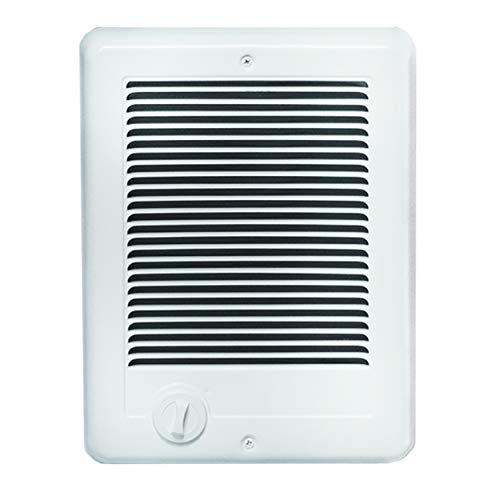
The Cadet CSC202TW is a higher-capacity Com-Pak wall heater offering selectable wattage for 2000/1500 watt options at 240/208 volts. The unit includes a thermostat and a fan for faster heat distribution.
Key features: Fast heating coil element designed to warm up areas quickly and an efficient, quiet fan to move warm air. Safety systems shut the unit off if operating temperatures exceed safe thresholds.
Call 888-896-7031 for Free Local HVAC Quotes – Compare and Save Today!
Use cases include rooms up to around 200 sq. ft., and the fan-assisted design improves comfort consistency when paired with the integrated thermostat control.
Cadet Energy Plus Wall Heater CEC163TW

The Cadet Energy Plus CEC163TW upgrades the Com-Pak design with an onboard digital thermostat. It supports multiple wattage/voltage combinations and features a digital display with push-button controls.
Features: digital temperature readout, simple push-button operation, and thermal safeguard protection that disables the unit if it overheats. It’s designed so older Com-Pak wall cans can be reused, reducing wall repairs when upgrading.
The digital thermostat provides more precise control and ease of reading than mechanical dials, useful in spaces where accurate setpoint maintenance improves comfort or energy management.
Heat Storm HS-1500-PHX-WIFI Infrared Wi‑Fi Wall Heater

The Heat Storm HS-1500-PHX-WIFI is a wall-mounted infrared heater with a Wi‑Fi-enabled digital thermostat, allowing remote temperature control from a smartphone app. It includes a touchscreen, remote, and safety shutoffs.
Smart features: App control enables scheduling, remote adjustments, and potential integration with other smart home devices. The digital thermostat offers setpoint control and the infrared element provides direct radiant heating.
This model focuses on smart home convenience and remote control, making it suitable for bedrooms, offices, and spaces where app-based schedules and voice/remote control can enhance usability.
Dreo Smart Wall Heater WH719S

The Dreo WH719S is a smart wall-mounted electric heater with a precise adjustable thermostat (41 to 95°F with 1°F accuracy), PTC ceramic element, wide vertical oscillation, and app/Alexa or Google Home compatibility.
Thermostat capabilities: remote scheduling, accurate setpoint control, and 24-hour timer functions. Oscillation improves heat distribution, and the PTC element provides responsive temperature changes.
This unit emphasizes precise temperature control and smart integration, useful for users who want both accurate digital setpoints and remote or voice-based operation.
Buying Guide: Choosing The Right Wall Heater Thermostat
Selecting a wall heater thermostat depends on room size, electrical setup, control preference, and compatibility. Below are critical factors to evaluate.
Thermostat Type And Accuracy
- Mechanical vs Digital: Mechanical dials are simple and reliable but less precise. Digital thermostats provide finer setpoint control and clearer readings.
- Smart/Wi‑Fi Thermostats: Offer remote control, scheduling, and integration with voice assistants. Consider security and network reliability when choosing Wi‑Fi models.
Compatibility And Installation
- Match Voltage And Wiring: Ensure the thermostat or heater matches your home’s voltage (120V vs 240V) and amperage ratings.
- Kit Vs Complete Unit: Thermostat kits are ideal when replacing a controller in an existing housing. Complete units are best for full replacement or new installs.
- Reuse Wall Can: Some models reuse existing wall cans to avoid drywall repair and simplify installation.
Heating Performance And Coverage
- Wattage And BTU: Confirm wattage is appropriate for intended room size. Typical 1500W units suit small to medium rooms; higher wattage or fan-assisted units reach larger spaces faster.
- Heating Method: Infrared/radiant heaters provide direct warmth to objects and people. Convection/fan-assisted units circulate warm air for even temperature distribution.
Safety Features
- Overheat Protection: Automatic shutoff prevents damage and fire risk if temperatures exceed safe levels.
- Tip-Over And Thermal Safeguards: Many wall units include thermal cutoffs; portable models add tip-over protection.
User Controls And Convenience
- Ease Of Use: Simple dials require no programming. Digital and app controls provide scheduling and more precise setpoints.
- Remote And Voice Control: Remote control or voice assistant compatibility improves daily convenience, especially for smart home setups.
Noise And Airflow Considerations
- Fan Noise: Fan-assisted units offer faster distribution but can produce noise. Check motor design and user descriptions for quiet operation if noise is a concern.
- Oscillation And Louvers: Wider airflow patterns and oscillation improve heat circulation; fixed louvers focus output directionally.
Energy Efficiency And Control Strategies
- Setback Schedules: Use programmable or app schedules to lower energy use when rooms are unoccupied.
- Accurate Thermostats: Precise control reduces cycling and overshoot, improving comfort and energy use.
Comparison Perspectives
- Replacement Kits vs New Units: Kits like the Cadet CTT1W are cost-effective when the housing is fine; digital complete units replace older mechanical systems when upgraded control is desired.
- Smart vs Basic: Smart thermostats (Wi‑Fi/digital) provide features for remote management and energy scheduling; basic thermostats are simpler and may be preferred in residential settings without a smart-home focus.
- Heating Method Suitability: Infrared units (radiant) are preferred for spot heating; convection units for whole-room temperature consistency.
When deciding, verify electrical compatibility, prioritize the level of control you need (manual, digital, or smart), and consider installation scope. These considerations will guide you to the thermostat type that best matches your home and comfort goals.
Tips for Getting the Best HVAC Prices
- Prioritize Quality Over Cost
The most critical factor in any HVAC project is the quality of the installation. Don’t compromise on contractor expertise just to save money. - Check for Rebates
Always research current rebates and incentives — they can significantly reduce your overall cost. - Compare Multiple Quotes
Request at least three estimates before making your choice. You can click here to get three free quotes from local professionals. These quotes include available rebates and tax credits and automatically exclude unqualified contractors. - Negotiate Smartly
Once you've chosen a contractor, use the proven strategies from our guide — How Homeowners Can Negotiate with HVAC Dealers — to get the best possible final price.