
Quick Overview: This guide compares vented and vent-free propane heaters that operate without household power or with minimal battery ignition, focusing on safety features, heating method, and installation suitability. The table below lists the selected models and key specs for quick comparison.
| Model | Type | BTU | Notable No-Electric Feature |
|---|---|---|---|
| Comfort Glow 11,000 BTU Direct Vent | Vented / Direct Vent | 11,000 | Matchless Piezo Ignition, Sealed Burn (no household power) |
| Comfort Glow 17,000 BTU Direct Vent | Vented / Direct Vent | 17,000 | Matchless Piezo Ignition, Sealed Burn (no household power) |
| Comfort Glow Vent-Free 30,000 BTU Radiant | Vent-Free / Radiant | 30,000 | Operates Without Electricity |
| Dyna-Glo IR30PMDG-1 30,000 BTU Infrared | Vent-Free / Infrared | 6,000–30,000 | Gas-powered radiant heat (no household power specified) |
| Dyna-Glo 24–30,000 BTU Blue Flame | Vent-Free / Blue Flame | 24,000–30,000 | Blue flame convection heating (liquid propane ready) |
Content Navigation
Comfort Glow 11,000 BTU Direct Vent Heater
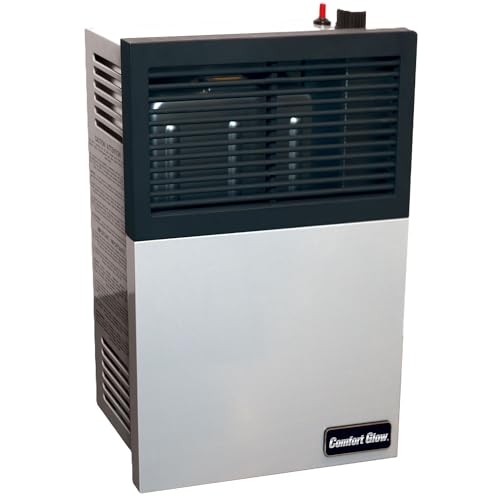
This direct vent propane heater uses a sealed combustion system to draw combustion air from outdoors and vent exhaust directly outside, separating flame air from room air for improved indoor air quality. The unit delivers 11,000 BTU and is rated for spaces up to about 375 sq. ft.
Key listed features include a sealed burn system, Matchless Piezo Ignition (no household electricity required for ignition), and a built-in pressure regulator and safety pilot that prevent gas flow if the pilot is extinguished. The space-saving wall-mounted design makes it suitable for smaller rooms, additions, or where a direct-vent run to the exterior is feasible.
Important considerations from the product data: the unit’s safety relies on the sealed combustion and pilot system. Proper venting and installation to manufacturer specs are required to maintain the listed performance and safety protections.
Comfort Glow 17,000 BTU Direct Vent Heater

Call 888-896-7031 for Free Local HVAC Quotes – Compare and Save Today!
The 17,000 BTU direct vent model is designed for larger rooms up to roughly 570 sq. ft. It shares the sealed combustion approach that vents exhaust outdoors while using outside air for combustion, reducing the risk of indoor air contaminants.
Features noted by the manufacturer include Matchless Piezo Ignition, a safety pilot with built-in pressure regulator, and a compact wall-mount profile for installation versatility. The sealed system eliminates the need for household electricity for operation or pilot lighting.
Because this model is vented, expect a dedicated vent penetration or wall/roof termination and adherence to clearances. The sealed burn provides continuous combustion safety features but requires correct vent sizing and routing per the manual.
Comfort Glow Vent-Free 30,000 BTU Radiant Propane Heater
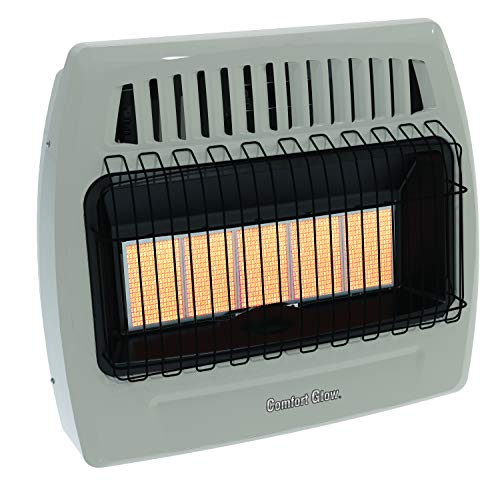
This vent-free radiant propane heater provides up to 30,000 BTU and is described as operating without the need for electricity, making it useful in power outages or off-grid settings. Radiant heating warms objects and people directly rather than relying solely on room convection.
The product lists wall mounting and optional floor mounting kit, and emphasizes high radiant efficiency. Being vent-free, combustion products are released into the room, so room size, ventilation, and adherence to local codes are critical.
Call 888-896-7031 for Free Local HVAC Quotes – Compare and Save Today!
Per the manufacturer details, vent-free radiant systems offer high efficiency and rapid warmth but require monitoring of indoor air quality and oxygen levels. Confirm local code allowance for vent-free use before installation, since regulations vary.
Dyna-Glo IR30PMDG-1 30,000 BTU Infrared Heater

The Dyna-Glo IR30PMDG-1 uses infrared technology to radiate heat to objects and people, then those objects re-radiate heat to the room. The unit offers a wide output range from 6,000 to 30,000 BTU, rated for up to approximately 1,000 sq. ft.
Listed as liquid propane ready with infrared radiant heating, this vent-free heater emphasizes warm-surface heat delivery rather than moving large volumes of air. The product description notes the variable BTU range, which supports zone heating and fuel flexibility.
As a vent-free infrared unit, it does not require household power for heat production, though check installation requirements and whether an ignition source is self-contained or needs battery assistance.
Dyna-Glo 24–30,000 BTU Blue Flame Wall Heater

This blue flame, vent-free wall heater provides convective heat by warming air that circulates naturally through the room. It’s marketed for variable output between 24,000 and 30,000 BTU and rated for spaces up to about 1,000 sq. ft.
Blue flame technology is effective for whole-room convection heating and offers consistent temperature distribution for occupied spaces. The unit is listed as liquid propane ready; manufacturer guidance restricts fuel conversion when indicated.
Given its vent-free design, the heater disperses combustion byproducts into the room and requires attention to ventilation, occupancy, and code compliance. Confirm whether an internal ignition or battery pilot is used for operation without household electricity.
Buying Guide: Choosing A Vented Or No-Electric Propane Heater
This buying guide highlights key factors to evaluate when selecting a vented propane heater that operates without household electricity or a vent-free alternative designed for off-grid use.
Vented (Direct Vent) vs Vent-Free
- Direct Vent (Vented): Draws combustion air from outside and vents exhaust outdoors. Safer for indoor air quality and often allowed where vent-free is restricted. Often does not require household power if using piezo ignition.
- Vent-Free: Releases combustion products into the conditioned space. Offers high efficiency and easier installation but depends on good ventilation and compliance with local codes.
Ignition And Electricity Needs
- Piezo / Matchless Ignition: Common on direct vent units and eliminates the need for household electricity for the pilot. Ideal for power-outage situations.
- Battery Ignition: Uses small batteries—still independent of household AC power but requires periodic battery replacement.
- Electronic / Programmable Units: Provide advanced controls but require house power or constant battery backup; not ideal if zero-electric operation is required.
Safety Features To Prioritize
- Sealed Combustion / Sealed Burn: Critical for direct vent units to ensure combustion air and exhaust are isolated from indoor air.
- Oxygen Depletion Sensor (ODS): Shuts the unit off if oxygen levels fall—common in vent-free models; check for this protection.
- Pressure Regulators and Safety Pilots: Prevent uncontrolled gas flow and provide shutoff in the event the pilot goes out.
Heat Type And Room Application
- Radiant (Infrared): Heats objects and people directly—effective in drafty or high-ceiling spaces and for spot heating.
- Blue Flame (Convection): Heats the air for whole-room comfort; better for consistent ambient temperature.
- BTU Rating And Space Size: Match BTU output to room cubic footage. Manufacturer guidance commonly lists square-foot coverage; adjust for insulation, ceiling height, and climate.
Installation Considerations
- Vent Runs: Direct vent units require proper penetration, termination, and sometimes a concentric vent; factor in installation cost and feasibility.
- Clearances And Mounting: Adhere to specified clearances from combustibles and choose wall or floor mounting per model instructions.
- Local Codes And Permits: Vent-free units are restricted in some jurisdictions. Check local building codes and permitted fuel types before purchase.
Air Quality And Ventilation
- Vent-Free Units: Require adequate ventilation and sometimes restrictions on continuous operation. Consider CO and combustion byproduct monitoring and ODS-equipped units.
- Direct Vent Units: Reduce in-room combustion byproducts and generally impose fewer indoor air-quality concerns when installed correctly.
Maintenance And Longevity
- Annual Inspection: Inspect burner ports, thermocouples, and vent integrity annually or per manufacturer recommendations.
- Filter And Vent Cleanliness: Keep intake and exhaust terminations free of debris, nests, or snow buildup to maintain safe operation.
Comparison Perspectives
- Safety-First: If indoor air quality or code restrictions are primary concerns, a direct vent model with sealed combustion is preferable.
- Off-Grid / Power-Outage Use: For locations with frequent outages, prioritize units with Matchless Piezo ignition or true no-electric operation.
- Heating Style: Choose radiant/infrared for targeted warmth or blue flame convection for even ambient heating.
- Installation Constraints: If venting to the exterior is impractical, a vent-free unit may be the only option—confirm code allowance and ventilation plan.
Use the features, safety elements, heat delivery type, and installation needs described above to match the heater to the intended space and operating constraints. Always follow manufacturer installation instructions and local building codes for safe and compliant operation.
Tips for Getting the Best HVAC Prices
- Prioritize Quality Over Cost
The most critical factor in any HVAC project is the quality of the installation. Don’t compromise on contractor expertise just to save money. - Check for Rebates
Always research current rebates and incentives — they can significantly reduce your overall cost. - Compare Multiple Quotes
Request at least three estimates before making your choice. You can click here to get three free quotes from local professionals. These quotes include available rebates and tax credits and automatically exclude unqualified contractors. - Negotiate Smartly
Once you've chosen a contractor, use the proven strategies from our guide — How Homeowners Can Negotiate with HVAC Dealers — to get the best possible final price.