
Quick Overview: This guide compares five 240V ceiling or convertible heaters suitable for garages, workshops, patios, and light commercial spaces. Each product summary highlights installation type, power range, control features, and safety elements to help you choose a model that fits your space and electrical setup.
| Product | Power / Voltage | Mount Style | Key Features |
|---|---|---|---|
| Comfort Zone Garage Heater, 5,000-Watt | 5,000 W / 240V | Ceiling Mounted / Hard-Wired | Fan-forced, louvers, adjustable angle, steel body |
| Dr. Infrared Heater 10,260 BTU / 3000W | 3,000 W / 220–240V | Ceiling Or Wall Mount | Carbon infrared, IP55 weatherproof, remote |
| Comfort Zone CZ225ER 6,000-Watt Digital | 6,000 W / 240V | Ceiling Mounted / Hard-Wired | Digital thermostat, remote, timer, fan-forced |
| TEMPWARE 7,500-Watt Digital Ceiling Heater | 6,250–7,500 W / 240V | Ceiling Mounted / Hard-Wired | Digital controls, ECO mode, timer, adjustable louvers |
| Euhomy 10,000-Watt Hard-Wired Ceiling Heater | 7,500–10,000 W / 240V | Ceiling Or Wall Mounted / Hard-Wired | High BTU, multiple angle installs, ECO mode, remote |
Content Navigation
- Comfort Zone 5,000-Watt Ceiling Heater
- Dr. Infrared 3000W Infrared Heater
- Comfort Zone CZ225ER 6,000-Watt Digital Ceiling Heater
- TEMPWARE 7,500-Watt Digital Fan-Forced Ceiling Heater
- Euhomy 10,000-Watt Hard-Wired Ceiling Heater
- Buying Guide: How To Choose A 240V Ceiling Heater
- 1. Power Requirement And Coverage
- 2. Mounting Type And Installation
- 3. Heat Delivery Method: Fan-Forced vs Infrared
- 4. Controls And Convenience
- 5. Safety Features And Certifications
- 6. Energy Management And Modes
- 7. Noise And Air Movement
- 8. Durability And Build
- 9. Installation Flexibility And Directional Control
- 10. Comparing Long-Term Operating Costs
- 11. Sizing Checklist
Comfort Zone 5,000-Watt Ceiling Heater

This fan-forced ceiling heater is designed for spaces where floor space is limited. It installs as a hard-wired ceiling unit and directs airflow with louvers and an adjustable mounting angle. The heavy-gauge steel construction aims to resist temperature fluctuations common in uninsulated areas.
Key functional elements listed by the manufacturer include efficient ceiling mount design, adjustable louvers for targeted heating, and overheat protection. Ideal for garages, storage areas, or small workshops that need centralized heat with minimal footprint.
Dr. Infrared 3000W Infrared Heater
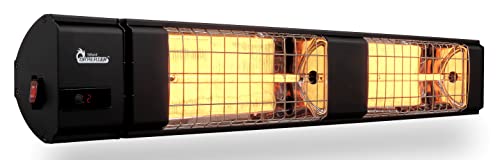
This infrared unit operates at 220–240V and delivers instant radiant heat via a carbon infrared element rated at approximately 10,260 BTU. The unit supports ceiling or wall mounting with included hardware and is equipped with a remote control for convenience.
Call 888-896-7031 for Free Local HVAC Quotes – Compare and Save Today!
Manufacturer features emphasize weatherproof IP55 rating for outdoor use, odorless operation for indoor settings, and two power levels with standby mode. The design suits covered patios, garages, and mixed indoor/outdoor spaces that benefit from radiant heat rather than fan-forced airflow.
Comfort Zone CZ225ER 6,000-Watt Digital Ceiling Heater

The CZ225ER is a hard-wired 240V ceiling heater that adds a digital thermostat, remote control, and a 12-hour timer to a fan-forced heating platform. Adjustable directed airflow vents aim to reduce cold spots across larger spaces.
Manufacturer notes include durable heavy-gauge steel construction, overheat protection, and wide air distribution. This model targets users who want programmable heating schedules and digital control layered on a heavy-duty ceiling unit.
TEMPWARE 7,500-Watt Digital Fan-Forced Ceiling Heater
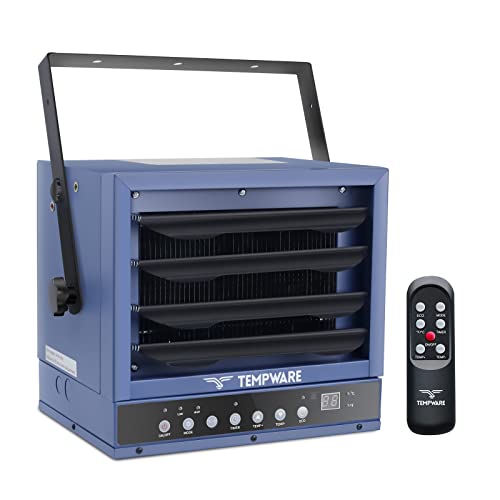
This TEMPWARE ceiling heater provides a high-power option with adjustable louvers and a variable mounting angle. It lists a maximum BTU output intended to heat up to large areas and supports ECO mode and a 1–12 hour timer for energy management.
Call 888-896-7031 for Free Local HVAC Quotes – Compare and Save Today!
Manufacturer features also include a built-in thermostat range and overheat protection. The unit is described as hard-wired 240V with digital remote control for presetting and on/off scheduling, aimed at workshops or larger garages.
Euhomy 10,000-Watt Hard-Wired Ceiling Heater
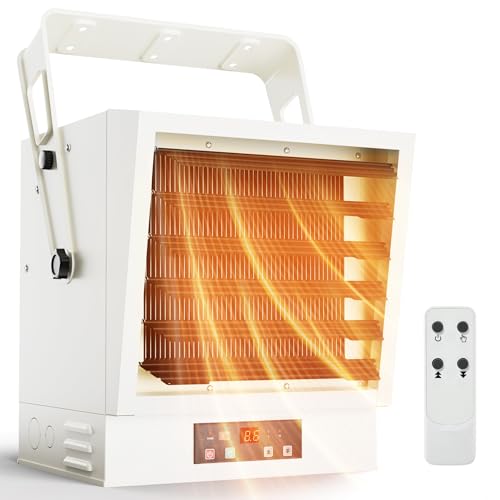
The Euhomy hard-wired unit offers one of the highest output ranges among ceiling heaters here, covering up to larger square footage according to manufacturer specifications. It supports both ceiling and wall installation with multiple angle adjustments for directional airflow.
Manufacturer features highlight ECO energy-saving mode, a remote control, timer, overheat protection, and a broad temperature range. The unit’s steel construction and higher wattage target large garages, warehouses, and workshop spaces requiring robust heating capacity.
Buying Guide: How To Choose A 240V Ceiling Heater
This buying guide covers key considerations when evaluating 240V ceiling heaters, presented as objective factors to compare models and make an informed choice for your space.
1. Power Requirement And Coverage
Match heater wattage to room size. As a rough guideline, higher wattage (6,000–10,000 W) covers larger or poorly insulated spaces; 3,000–5,000 W suits smaller garages or work areas. Consider ceiling height and insulation when estimating effective coverage.
2. Mounting Type And Installation
Ceiling-mounted units save floor space and provide centralized distribution. Some models are hard-wired 240V only and require a qualified electrician for installation. Others offer wall-mount options or plug-in variants—confirm the wiring and mounting requirements before purchase.
3. Heat Delivery Method: Fan-Forced vs Infrared
- Fan-Forced: Moves warm air around the room, useful for even distribution in large spaces.
- Infrared (Radiant): Heats objects and people directly, beneficial for outdoor-covered areas or when rapid localized warmth is preferred.
4. Controls And Convenience
Digital thermostats, remotes, and programmable timers allow precise temperature control and scheduling. For garages used intermittently, a timer or remote can improve comfort and reduce energy use.
5. Safety Features And Certifications
Look for overheat protection, proper listing (ETL/UL), and sturdy metal housings. Weather ratings (e.g., IP55) matter if you plan to use a unit on covered patios or semi-exposed areas.
6. Energy Management And Modes
Energy-saving modes (ECO) and variable power settings help control consumption. Compare available power stages, thermostatic control range, and automatic shutoff features to align with operating habits.
7. Noise And Air Movement
Fan-forced units produce airflow noise; if noise sensitivity is a concern in a workspace, check noise ratings or choose infrared radiant heaters that operate more quietly.
8. Durability And Build
Heavy-gauge steel housings resist wear in garages and workshops. Consider rust-resistant finishes and grille designs if humidity or dust exposure is expected.
9. Installation Flexibility And Directional Control
Adjustable louvers and mounting angle options allow you to direct heat to workbenches or entry points. Units offering both top and wall mounting increase placement flexibility.
10. Comparing Long-Term Operating Costs
Higher wattage units heat larger areas faster but consume more power when active. Balance required runtime, insulation quality, and thermostat control to estimate monthly operating demands.
11. Sizing Checklist
- Measure square footage and ceiling height.
- Note insulation level and typical ambient temperature.
- Choose fan-forced for whole-room distribution or infrared for targeted warmth.
- Verify electrical circuit capacity and consult an electrician for hard-wired 240V installs.
Use the guide above to compare the five models reviewed. Confirm compatibility with your electrical system and mounting preferences before purchasing. Prioritize safety listings, control features, and the heating method that best matches your use case.
Tips for Getting the Best HVAC Prices
- Prioritize Quality Over Cost
The most critical factor in any HVAC project is the quality of the installation. Don’t compromise on contractor expertise just to save money. - Check for Rebates
Always research current rebates and incentives — they can significantly reduce your overall cost. - Compare Multiple Quotes
Request at least three estimates before making your choice. You can click here to get three free quotes from local professionals. These quotes include available rebates and tax credits and automatically exclude unqualified contractors. - Negotiate Smartly
Once you've chosen a contractor, use the proven strategies from our guide — How Homeowners Can Negotiate with HVAC Dealers — to get the best possible final price.