
Selecting the right commercial electric space heater depends on room size, mounting options, and safety certifications. Below is a concise comparison of five heavy-duty models suited for commercial settings like garages, workshops, warehouses, and patios.
| Product | Type | Power/Output | Mounting |
|---|---|---|---|
| Dr. Infrared Heater DR-966 | Hardwired Fan-Forced | 3,000 / 6,000 W (240V) | Wall/Ceiling |
| Comfort Zone CZ230ER | Fan-Forced Ceiling Heater | 7,500 W (240V) | Ceiling Hard-Wired |
| TEMPWARE 7500-Watt | Digital Fan-Forced Ceiling Heater | 6,250–7,500 W (240V) | Ceiling Hard-Wired |
| Dura Heat EWH5510 | Forced Air Wall/Ceiling | 5,000 W / 17,060 BTU (240V) | Hard-Wired |
| Bromic Tungsten BH0420033 | Radiant Infrared | 6,000 W (Radiant) | Wall/Ceiling Mount |
Dr. Infrared Heater DR-966 240-Volt Hardwired Shop Garage Commercial Heater

The DR-966 is a heavy-duty 240V single-phase commercial electric heater offering selectable 3,000W or 6,000W output. It is a hardwired unit designed for permanent installation in commercial environments. The unit ships with mounting bracket options for wall or ceiling placement and is UL/CUL listed for safety compliance.
Key features include a durable construction suited for garages and workshops, a fan-forced design for faster air distribution, and a requirement that the power cord is not included—professional electrical installation is expected. This model emphasizes robustness and continuous use for large, poorly insulated spaces.
Comfort Zone Hard-Wired Ceiling Mount Garage Space Heater CZ230ER

The Comfort Zone CZ230ER is a high-output, 7,500W fan-forced ceiling heater designed to maximize floor space and heat areas up to approximately 1,250 sq. ft. It mounts to the ceiling and is hard-wired, making it suitable for workshops, warehouses, and crowded commercial garages.
Call 888-896-7031 for Free Local HVAC Quotes – Compare and Save Today!
Highlighted features include heavy-gauge steel construction for durability, adjustable louvers for targeted airflow, a digital thermostat, overheat protection, and a 12-hour timer. The design promotes even heat distribution while offering precision control for variable commercial demands.
TEMPWARE Electric Garage Heater 7500-Watt Digital Fan-Forced Ceiling Mount
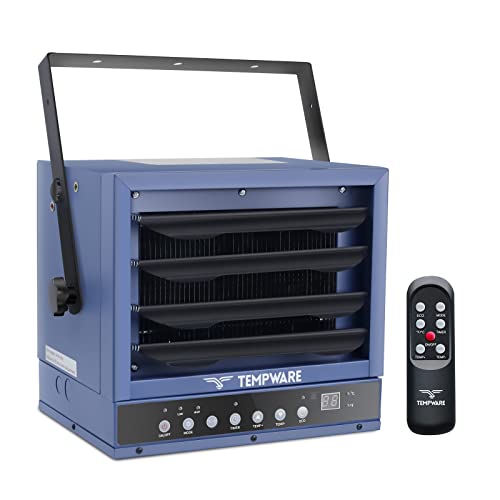
The TEMPWARE 7500-Watt ceiling heater is a feature-rich choice for commercial spaces needing flexible control. It offers multiple heat settings (6,250–7,500W), adjustable louvers, a digital thermostat, ECO mode with an ambient sensor, and a full-function remote.
Additional built-in protections include overheat shutoff and a 12-hour auto-off timer. This unit emphasizes smart energy management with an adaptive ECO function and is intended for hard-wired ceiling installations in workshops and larger garages.
Dura Heat EWH5510 Electric Forced Air Heater With Remote Control

The Dura Heat EWH5510 is a high-capacity, hard-wired electric forced-air heater rated at 5,000W (17,060 BTU), intended to cover spaces up to roughly 750 sq. ft. It is designed for professional installation and includes a remote control and adjustable thermostat.
Call 888-896-7031 for Free Local HVAC Quotes – Compare and Save Today!
Built for garage and workshop environments, the unit features a robust steel housing and an LED temperature display adjustable from 45–99°F. Safety features and installation requirements emphasize that it is a fixed, high-power solution for continuous commercial use.
Bromic Heating Smart Heat Tungsten 6000W Radiant Infrared Patio Heater

The Bromic Tungsten is a premium radiant infrared electric heater delivering 6,000W of radiant heat. Unlike fan-forced units, it emits infrared energy that heats people and surfaces directly, making it ideal for shaded outdoor commercial spaces, covered patios, and specific indoor zones where targeted warmth is preferred.
Features include frosted tubes for a softer visual glow, wall or ceiling mounting flexibility, and construction designed to resist corrosion and high temperatures. Its radiant method reduces wasted energy heating air in large open spaces where convection is inefficient.
Buying Guide: Choosing The Right Commercial Electric Space Heater
Selecting a commercial electric heater requires matching the heater type and features to your space, usage patterns, and safety requirements. Consider the following factors from multiple perspectives to guide a well-informed purchase.
Tips for Getting the Best HVAC Prices
- Prioritize Quality Over Cost
The most critical factor in any HVAC project is the quality of the installation. Don’t compromise on contractor expertise just to save money. - Check for Rebates
Always research current rebates and incentives — they can significantly reduce your overall cost. - Compare Multiple Quotes
Request at least three estimates before making your choice. You can click here to get three free quotes from local professionals. These quotes include available rebates and tax credits and automatically exclude unqualified contractors. - Negotiate Smartly
Once you've chosen a contractor, use the proven strategies from our guide — How Homeowners Can Negotiate with HVAC Dealers — to get the best possible final price.
Heating Method: Fan-Forced vs Radiant
- Fan-Forced (Convection): Uses a heating element and fan to warm air. Best For: enclosed commercial areas, garages, workshops where air recirculation offers even heat distribution. Pros: faster room air mixing, suitable for larger enclosed volumes. Cons: less efficient in open or drafty areas.
- Radiant (Infrared): Directly heats objects and people. Best For: outdoor patio areas, covered terraces, zones needing targeted heat. Pros: efficient for outdoor or semi-open spaces, instant perceived warmth. Cons: limited air warming; not ideal as the sole solution for large enclosed rooms.
Power, Coverage, And Energy Considerations
- Wattage/BTU Ratings: Match output to your space. Higher wattage typically equals greater coverage but requires appropriate electrical circuits (240V, dedicated breakers).
- Space Size And Insulation: Calculate heat load based on area, ceiling height, insulation quality, and desired temperature rise. Poorly insulated buildings need more capacity.
- Energy Management: Look For thermostats, timers, ECO modes, and remote controls to avoid continuous high-power operation. Variable-output heaters reduce runtime and energy waste.
Mounting, Placement, And Airflow
- Ceiling vs Wall Mount: Ceiling-mounted units save floor space and distribute heat broadly; wall-mounted or directional units allow targeted heating. Ensure proper mounting clearances per manufacturer.
- Airflow Direction: Adjustable louvers or pivoting bases allow precise airflow targeting. For fan-forced units, place to avoid directing hot air into obstructed zones.
- Clearance & Code Requirements: Maintain clearance from combustible materials and follow local electrical and building codes for permanent hard-wired installations.
Electrical And Installation Requirements
- Voltage And Circuit Capacity: Many commercial heaters require 240V and dedicated circuits (30A+). Confirm your facility’s electrical service can support the load.
- Professional Installation: Hard-wired models should be installed by licensed electricians to comply with UL/ETL listings and local codes.
- Hardwiring Vs Plug-In: Hard-wired units are common in commercial setups for safety and permanent operation. Plug-in units may be limited in power and unsuitable for heavy-duty use.
Safety Features And Certifications
- Certifications: Choose UL, CUL, or ETL listed products to ensure they meet recognized safety standards.
- Overheat Protection: Automatic shutoff and thermal cutouts prevent damage during blocked airflow or prolonged operation.
- Durability In Commercial Environments: Heavy-gauge steel housings, corrosion-resistant components, and sealed construction improve longevity in dusty, oily, or variable-temperature areas.
Operational Considerations
- Noise Levels: Fan-forced units produce more noise than radiant heaters; consider noise tolerance in workspaces.
- Maintenance: Access for filter cleaning, fan inspections, and electrical checks supports long-term reliability.
- Control Options: Remote controls, digital thermostats, and integration with building controls enable easier management of multiple units.
Cost Of Ownership Perspectives
- Upfront vs Running Costs: Higher-efficiency controls and thermostats can lower operating costs despite higher initial equipment or installation expense.
- Lifecycle And Repairs: Robust builds and readily available replacement parts reduce downtime and unexpected expenses in commercial operations.
- Targeted Heating Strategy: Using radiant units for occupied work zones combined with convection units for enclosed spaces can minimize total energy consumption.
Application-Specific Guidance
- Garages and Workshops: Prefer hard-wired fan-forced units with thermostats and durable housings to maintain consistent ambient temperatures for tools and personnel.
- Warehouses and Large Open Areas: Consider high-output forced-air units or multiple distributed radiant units depending on ceiling height and open-air losses.
- Outdoor Patios and Covered Areas: Use radiant infrared heaters to provide direct warmth to people and surfaces while minimizing energy lost heating air.