
The following guide compares top-rated LP (propane) infrared heaters and closely related infrared options for indoor and semi-outdoor spaces. Below is a quick comparison table of the five selected models for fast reference. Read each product section for features, suitability, and key specs.
| Product | Type | Key Output | Coverage | Notable Feature |
|---|---|---|---|---|
| Mr. Heater 30,000 BTU Vent Free Radiant Propane Heater | Vent-Free Propane Infrared | 30,000 BTU | Up To 1,000 Sq. Ft. | High Efficiency Radiant Tiles |
| Mr. Heater MHVFDF30RTT 30,000 BTU Radiant Vent Free Dual Fuel | Dual-Fuel (Propane/Natural Gas) Infrared | 30,000 BTU | Up To 1,000 Sq. Ft. | Fuel Selector + Safety Shutoff |
| Bluegrass Living Propane Vent Free Infrared With Blower | Vent-Free Propane Infrared With Blower | 18,000–20,000 BTU | Up To 950 Sq. Ft. | Thermostat Control + Blower |
| Mr. Heater MHVFRD20LPT 18,000 BTU Vent Free Radiant Propane Heater | Vent-Free Propane Infrared | 18,000 BTU | Up To 700 Sq. Ft. | Long Runtime / Fuel Efficient |
| Heat Storm HS-1500-PHX-WIFI Infrared Heater | Electric Wall-Mount Infrared | 1500 W (Electric) | Small Rooms / Zoned Areas | Wi‑Fi Control + Space Saving |
Content Navigation
- Mr. Heater 30,000 BTU Vent Free Radiant Propane Heater
- Mr. Heater MHVFDF30RTT 30,000 BTU Radiant Vent Free Dual Fuel
- Bluegrass Living Propane Gas Vent Free Infrared Space Heater With Blower
- Mr. Heater MHVFRD20LPT 18,000 BTU Vent Free Radiant Propane Heater
- Heat Storm HS-1500-PHX-WIFI Infrared Heater, WiFi Wall Mounted
- Buying Guide: How To Choose An LP Infrared Heater
Mr. Heater 30,000 BTU Vent Free Radiant Propane Heater

This vent-free propane wall heater delivers 30,000 BTU using radiant infrared tiles to warm objects and people directly. The manufacturer describes it as suitable for spaces up to 1,000 sq. ft. and notes fuel efficiency of about 1.389 lbs per hour. The radiant design is intended for supplemental heat in rooms, additions, sunrooms, and cabins. Installation requires a minimum 20 lb LP cylinder for optimal runtime and proper operation.
Mr. Heater MHVFDF30RTT 30,000 BTU Radiant Vent Free Dual Fuel
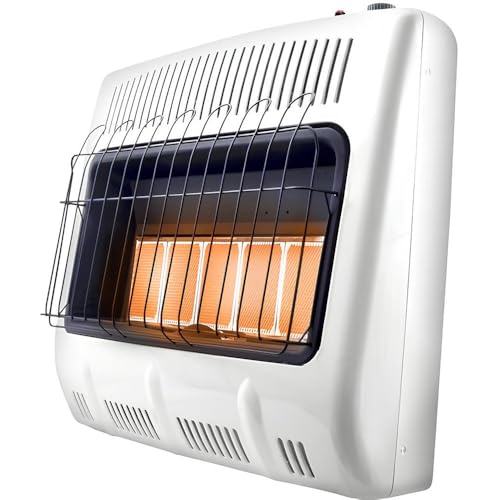
This model shares the 30,000 BTU radiant output but adds dual-fuel capability for propane and natural gas. It retains the same radiant heating approach to warm objects directly and cover up to 1,000 sq. ft. Safety features include an automatic low oxygen shut-off system and a patented two-step fuel connection to reduce the risk of incorrect hookups. A fuel selector knob allows switching between propane and natural gas.
Bluegrass Living Propane Gas Vent Free Infrared Space Heater With Blower

Call 888-896-7031 for Free Local HVAC Quotes – Compare and Save Today!
Bluegrass Living’s vent-free propane heater provides up to 20,000 maximum BTU (advertised) and is designed with a thermostat control and blower to circulate warmed air. The unit emphasizes 99.9% efficiency from vent-free burner technology and claims heating coverage near 950 sq. ft. The integrated thermostat cycles the unit to maintain set temperature, which can improve comfort in living rooms, garages, or offices.
Mr. Heater MHVFRD20LPT 18,000 BTU Vent Free Radiant Propane Heater

The 18,000 BTU vent-free propane model is a smaller-capacity infrared heater aimed at spaces up to 700 sq. ft. Its fuel consumption is listed at approximately 0.926 lbs per hour, which yields extended runtime from a standard LP cylinder. Like other vent-free infrared units, it radiates heat to objects rather than simply warming air, making it suitable for supplemental heating in rooms and cabins.
Heat Storm HS-1500-PHX-WIFI Infrared Heater, WiFi Wall Mounted

This electric wall-mounted infrared heater is a space-saving alternative for zoned heating needs where propane is not ideal or allowed. It features Wi‑Fi control for remote thermostat management, a touch screen, and tip-over safety shutoff. Although not an LP device, it demonstrates how electric infrared can complement or replace propane solutions in bedrooms, offices, and other indoor areas where vent-free gas may be restricted.
Buying Guide: How To Choose An LP Infrared Heater
This guide covers key considerations when selecting an LP infrared heater, including safety, installation, performance, and comparative trade-offs between propane and electric infrared options.
Call 888-896-7031 for Free Local HVAC Quotes – Compare and Save Today!
Tips for Getting the Best HVAC Prices
- Prioritize Quality Over Cost
The most critical factor in any HVAC project is the quality of the installation. Don’t compromise on contractor expertise just to save money. - Check for Rebates
Always research current rebates and incentives — they can significantly reduce your overall cost. - Compare Multiple Quotes
Request at least three estimates before making your choice. You can click here to get three free quotes from local professionals. These quotes include available rebates and tax credits and automatically exclude unqualified contractors. - Negotiate Smartly
Once you've chosen a contractor, use the proven strategies from our guide — How Homeowners Can Negotiate with HVAC Dealers — to get the best possible final price.
Heating Capacity And Room Size
- BTU Output: Match BTU rating to room size. Higher BTU (e.g., 30,000) suits larger open rooms and cabins; lower BTU (e.g., 18,000) fits smaller rooms.
- Coverage Estimates: Manufacturer coverage numbers are estimates. Consider room layout, ceiling height, insulation, and windows for real-world performance.
Type: Vent-Free Propane vs. Electric Infrared
- Vent-Free Propane Infrared: Radiant heat warms people and objects directly. Requires LP cylinder or gas line. Offers high instantaneous heat and higher BTU options for large spaces.
- Dual-Fuel Heaters: Provide flexibility to run on propane or natural gas. Useful where fuel availability could change or when converting between fuel sources.
- Electric Infrared: No combustion byproducts; often allowed where gas appliances are restricted. Lower maximum output per unit compared to large propane units, but simpler installation and Wi‑Fi/thermostat features are common.
Fuel Efficiency And Runtime
- Check published fuel consumption rates (lbs/hour for propane). Lower consumption yields longer runtime per LP cylinder.
- Consider required LP cylinder size; many models recommend a minimum 20 lb cylinder for sustained performance.
Installation, Venting, And Codes
- Vent-Free Models: No chimney required but must comply with local building codes and clearances. Some jurisdictions limit vent-free appliance use in sleeping rooms or tightly sealed homes.
- Professional Installation: Gas line hookup, fuel connections, and combustion air considerations often require licensed installation to meet safety codes.
Safety Features
- Low Oxygen Shutoff (ODS): Detects reduced oxygen levels and shuts the heater off to prevent dangerous conditions; recommended for vent-free gas units.
- Tip-Over and Overheat Protection: More common on electric units but worth noting if portability and placement are factors.
- Fuel Connection Safeguards: Dual-fuel units may include features preventing wrong-fuel hook-ups; these are important for safe switching between fuels.
Controls And Comfort Features
- Thermostat Control: Maintains a set temperature automatically and can improve energy efficiency.
- Blower/Fan: Blowers help distribute warmed air from radiant units. Consider models with integrated fans for more even heat distribution.
- Remote And Smart Controls: Wi‑Fi or remote control offers convenience and scheduling for electric infrared models.
Air Quality And Ventilation
- Vent-free combustion releases combustion products into the room. Ensure adequate ventilation and adherence to local code limits for indoor combustion devices.
- Electric infrared produces no combustion byproducts and is preferable for sensitive indoor air quality concerns.
Comparison Perspectives
- Performance vs. Installation Complexity: High-BTU propane units deliver strong heat but require gas connections and code compliance. Electric units are simpler to install but lower in maximum output.
- Operating Cost vs. Convenience: Propane can be cost-effective in some regions, but requires cylinder management. Electric models offer predictable electricity use and easier control.
- Safety vs. Heat Output: Vent-free gas provides high heat but demands attention to ODS and ventilation. Electric infrared offers safer indoor air at reduced peak BTU.
Maintenance And Longevity
- Propane infrared burners and tiles benefit from periodic inspection and cleaning to maintain radiant efficiency.
- Electric units may require less maintenance but check fan/element condition and ensure electrical connections remain secure.
Practical Selection Checklist
- Measure the intended space and calculate required BTU with allowances for insulation and ceiling height.
- Verify local codes for vent-free gas appliance use in your region and specific room types.
- Choose safety features appropriate to your household (ODS, automatic shutoffs, secure fuel connections).
- Decide between portability (LP cylinders) or hardwired solutions (natural gas or electric).
- Factor in control preferences: thermostat, remote, Wi‑Fi, or simple manual controls.