
Choosing an in-floor or low-profile gas heater depends on room size, venting, fuel type, and installation. Below is a concise comparison of selected heaters that suit floor-level or low-clearance installations, ventless rooms, garages, and small living areas.
| Product | Type | Max BTU | Coverage |
|---|---|---|---|
| Mr. Heater Big Maxx MHU50NG | Natural Gas Unit Heater | 50,000 | Up To 1,250 Sq. Ft. |
| Mr. Heater Big Maxx MHU80NG | Natural Gas Unit Heater | 80,000 | Up To 2,000 Sq. Ft. |
| ProCom MN300TPA (Infrared) | Ventless Infrared Floor/Wall | 30,000 | Up To 1,400 Sq. Ft. |
| Mr. Heater MHVFBF30NGT (Blue Flame) | Vent Free Blue Flame Wall/Floor | 30,000 | Up To 1,000 Sq. Ft. |
| ProCom MN300TBA (Blue Flame) | Ventless Blue Flame Floor/Wall | 30,000 | Up To 1,400 Sq. Ft. |
Content Navigation
- Mr. Heater F260550 Big Maxx MHU50NG Natural Gas Unit Heater,Black
- Mr. Heater F260560 Big Maxx MHU80NG Natural Gas Unit Heater, 80,000 BTU, Black
- ProCom MN300TPA-B Ventless Natural Gas Infrared Space Heater With Thermostat
- Mr. Heater MHVFBF30NGT 30,000 BTU Vent Free Blue Flame Natural Gas Heater
- ProCom MN300TBA-B Ventless Natural Gas Blue Flame Space Heater With Thermostat
- Buying Guide: Choosing The Right In-Floor Or Low-Profile Gas Heater
Mr. Heater F260550 Big Maxx MHU50NG Natural Gas Unit Heater,Black
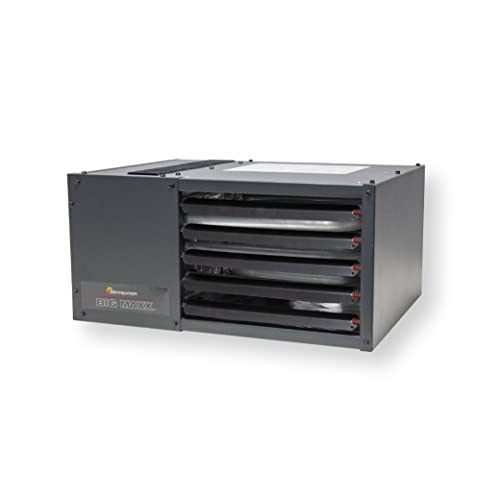
This forced-exhaust unit heater delivers 50,000 BTU for spaces up to 1,250 sq. ft. It supports vertical or horizontal venting thanks to a powered exhaust, allowing flexible placement in garages, workshops, and utility rooms.
- BTU & Coverage: 50,000 BTU for moderate to large spaces.
- Venting: Powered exhaust enables vertical or horizontal termination.
- Service Access: Outside access to thermostat, A/C terminals, and gas connection simplifies maintenance.
- Installation Consideration: Requires proper venting and clearances; suitable where a mounted unit heater is acceptable.
Mr. Heater F260560 Big Maxx MHU80NG Natural Gas Unit Heater, 80,000 BTU, Black
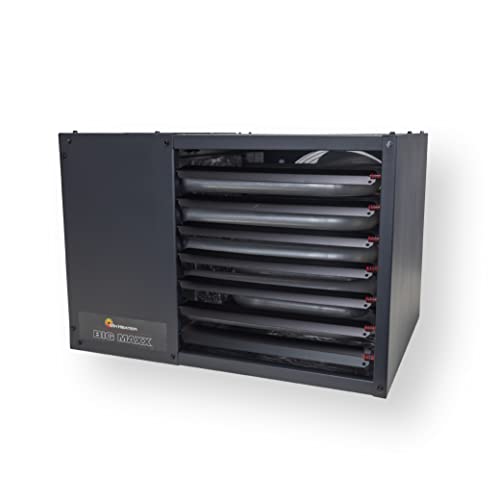
The 80,000 BTU Big Maxx unit is designed for larger garages, commercial bays, or workspaces up to 2,000 sq. ft. It supports Category 1 vertical or Category 3 horizontal venting and includes mounting brackets and a conversion kit.
- Capacity: 80,000 BTU for high-heat demand spaces.
- Included Items: Angle brackets and LP conversion kit included; thermostat and regulator not included.
- Electrical: 120 V, draws ~2.3 amps when powered exhaust is used.
- Clearance: Minimum 8 ft. clearance from floor to unit base; requires professional installation for gas connections and venting.
ProCom MN300TPA-B Ventless Natural Gas Infrared Space Heater With Thermostat

Call 888-896-7031 for Free Local HVAC Quotes – Compare and Save Today!
This ventless infrared heater produces up to 30,000 BTU using natural gas and is designed for floor- or wall-mounting. It features a built-in thermostat with High/Medium/Low settings for localized heating.
- Heating Type: Infrared warms objects and occupants directly rather than relying solely on air circulation.
- Mounting: Includes hardware for wall mount and base feet for floor placement.
- Control: Integrated thermostat for temperature regulation.
- Space Suitability: Rated up to ~1,400 sq. ft., depending on insulation and ceiling height.
Mr. Heater MHVFBF30NGT 30,000 BTU Vent Free Blue Flame Natural Gas Heater
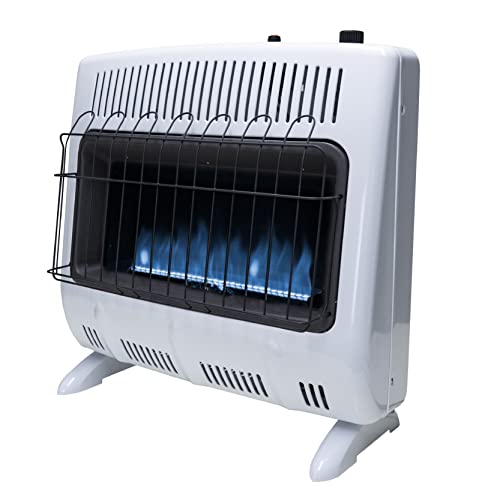
The vent-free blue flame design provides even convection heat using a blue flame burner, delivering up to 30,000 BTU for rooms up to 1,000 sq. ft. It includes a thermostat and electric ignition for convenience.
- Efficiency: Blue flame burners offer steady convection heating with efficient fuel consumption.
- Controls: Precise thermostat control and battery-powered ignition included.
- Altitude & Use: Rated effective at altitudes up to 4,500 feet; suitable for additions and sunrooms.
- Ventless Consideration: Requires adherence to local codes and sufficient indoor ventilation for safe operation.
ProCom MN300TBA-B Ventless Natural Gas Blue Flame Space Heater With Thermostat

This ventless blue flame heater offers 30,000 BTU output with a slim profile for wall or floor placement. The unit includes thermostat control and base feet, making it suitable for homes, offices, and small commercial spaces.
- Heat Delivery: Blue flame convection for even room warming up to ~1,400 sq. ft.
- Placement Flexibility: Can be mounted on a wall or placed on the floor with included feet.
- Controls: Built-in thermostat with multiple heat levels for comfort tuning.
- Design: Slim modern profile intended to integrate with interior spaces without bulky ducting.
Buying Guide: Choosing The Right In-Floor Or Low-Profile Gas Heater
Selecting the right heater involves assessing room characteristics, fuel availability, safety features, and installation constraints. Review the following factors when comparing models.
Call 888-896-7031 for Free Local HVAC Quotes – Compare and Save Today!
Heating Capacity And Room Size
Match heater BTU output to the heated area. Use insulation quality, ceiling height, and climate to estimate needs. Unit heaters (50k–80k BTU) are suited for large garages and workshops, while 30k BTU ventless units typically serve living areas up to 1,000–1,400 sq. ft.
Venting Type: Ventless vs. Vented Unit
Ventless (vent-free) burners provide high efficiency and easy installation but require adequate indoor ventilation and must comply with local codes. Vented unit heaters expel combustion products outside, making them safer for enclosed spaces like garages when proper venting is installed.
Fuel Type And Conversion
Confirm natural gas vs. propane compatibility. Some heaters include conversion kits; others require professional conversion kits and adjustment. Ensure gas line availability and regulator compatibility for safe operation.
Placement And Mounting
Decide between floor placement, wall mounting, or overhead mounting. Floor/wall units such as ventless blue flame or infrared models offer low-profile installation. Unit heaters typically mount high on walls or ceilings and require clearance specifications.
Safety Features And Regulations
Look for oxygen depletion sensors (ODS), tip-over switches (for portable units), powered combustion air, and diagnostic indicators. Verify local building codes and manufacturer guidelines for ventless heater use indoors, especially in bedrooms and sleeping areas.
Control And Thermostat Options
Integrated thermostats provide precise temperature control. Some units accept remote or wall thermostats for centralized control. Consider models with multi-level heat settings for better energy management.
Installation And Maintenance
Vented units require professional installation for safe venting and gas connections. Ventless units often have simpler installs but still need gas hookup and clearance checks. Routine maintenance includes burner cleaning and inspection of gas connections and controls.
Efficiency And Operating Costs
Ventless units achieve high combustion efficiency since heat remains indoors, but operating cost depends on local gas prices and unit BTU. Vented units may lose some heated air through exhaust but can be necessary for certain spaces.
Comparison Perspectives
- Large Workshop/Garage: Higher-BTU unit heaters with powered exhaust (50k–80k) provide robust airflow and venting flexibility.
- Living Area Or Addition: Ventless blue flame or infrared models offer even convection or direct radiant warmth with easier installation.
- Portable/Intermittent Use: Portable radiant propane heaters serve well for occasional localized heating but require ventilation and safety checks for indoor use.
- Altitude & Climate: Verify manufacturer altitude ratings and adjust settings or choose suitable burners for high-elevation installations.
Use this guide to compare features, venting requirements, and safety considerations to determine which in-floor or low-profile gas heater matches your space and local regulations.
Tips for Getting the Best HVAC Prices
- Prioritize Quality Over Cost
The most critical factor in any HVAC project is the quality of the installation. Don’t compromise on contractor expertise just to save money. - Check for Rebates
Always research current rebates and incentives — they can significantly reduce your overall cost. - Compare Multiple Quotes
Request at least three estimates before making your choice. You can click here to get three free quotes from local professionals. These quotes include available rebates and tax credits and automatically exclude unqualified contractors. - Negotiate Smartly
Once you've chosen a contractor, use the proven strategies from our guide — How Homeowners Can Negotiate with HVAC Dealers — to get the best possible final price.