
Choosing the right in-wall gas heater depends on room size, venting type, BTU output, and installation constraints. The table below summarizes the five selected gas wall heaters and ventless units covered in this guide to help you compare core specs at a glance.
| Product | Type | Max BTU | Coverage (Approx.) |
|---|---|---|---|
| Mr. Heater MHVFBF30NGT | Vent-Free Blue Flame Wall Heater | 30,000 | Up To 1,000 Sq. Ft. |
| ProCom MN300TPA-B | Ventless Infrared Wall/Space Heater | 30,000 | Up To 1,400 Sq. Ft. |
| ProCom MN100TBA-B | Ventless Blue Flame Wall Heater | 10,000 | Up To 500 Sq. Ft. |
| Dyna-Glo IR30NMDG-1 | Infrared Natural Gas Wall Heater | 30,000 | Up To 1,000 Sq. Ft. |
| Mr. Heater F260550 Big Maxx MHU50NG | Unit Heater (Wall/Ceiling Mount, Vented) | 50,000 | Up To 1,250 Sq. Ft. |
Mr. Heater MHVFBF30NGT Vent Free Blue Flame Heater
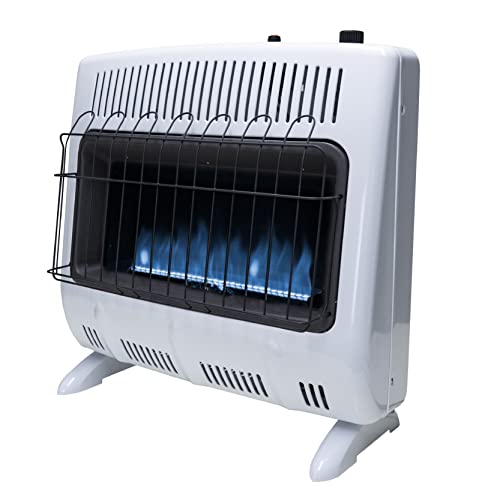
This wall-mount vent-free blue flame heater provides up to 30,000 BTU using natural gas and is designed for spaces such as cold rooms, sunrooms, or additions. The unit includes a built-in thermostat for temperature control and an electric ignition system powered by a battery for start-up.
- Coverage: Rated for up to about 1,000 sq. ft.; effective at elevations up to 4,500 ft.
- Fuel and Efficiency: Blue flame burner designed for steady convection heat and relatively efficient fuel consumption for vent-free operation.
- Controls and Safety: Integrated thermostat and battery-powered ignition; typical vent-free safety features apply (check local codes).
- Installation Notes: Intended for wall mounting; confirm clearances and local vent-free regulations before installing.
ProCom MN300TPA-B Ventless Infrared Space Heater

The ProCom MN300TPA-B is a ventless infrared wall heater producing up to 30,000 BTU. Infrared heating warms objects and people directly, rather than primarily warming the air, which can feel efficient in certain room layouts.
- Coverage: Manufacturer lists heating up to 1,400 sq. ft. for ideal conditions; actual performance depends on insulation and ceiling height.
- Thermostat Control: Built-in thermostat with High/Medium/Low settings for more precise comfort control without external thermostat equipment.
- Mounting Flexibility: Includes wall mount hardware and base feet for optional floor placement; slim profile for tighter spaces.
- Application: Suited for residential rooms and offices where ventless infrared heat is permitted by code.
ProCom MN100TBA-B Ventless Blue Flame Space Heater

Call 888-896-7031 for Free Local HVAC Quotes – Compare and Save Today!
The ProCom MN100TBA-B is a compact ventless blue flame heater producing up to 10,000 BTU, intended for smaller rooms such as bedrooms, offices, or small living areas. It includes thermostat control and optional wall or floor mounting hardware.
- Coverage: Suitable for up to about 500 sq. ft., depending on insulation and layout.
- Control Options: Thermostat with multiple heat settings for incremental control.
- Design: Slim profile and white finish designed to blend with residential interiors; includes base feet for floor placement.
- Use Case: Useful where modest heat output and ventless operation are acceptable by local code.
Dyna-Glo IR30NMDG-1 30,000 BTU Infrared Wall Heater

The Dyna-Glo IR30NMDG-1 is a natural gas infrared wall heater using radiant heat to warm objects and surfaces first. This unit is natural-gas ready (no fuel conversion permitted) and delivers up to 30,000 BTU.
- Heating Method: Infrared technology radiates heat similar to the sun, which can result in quicker perceived warmth for occupants and items in the room.
- Coverage: Rated up to ~1,000 sq. ft. under optimal conditions; actual coverage varies by insulation and ceiling height.
- Installation: Designed for wall mounting; confirm mounting clearances and gas connection placement.
- Fuel: Natural gas only for this model; no field conversion permitted.
Mr. Heater F260550 Big Maxx MHU50NG Natural Gas Unit Heater
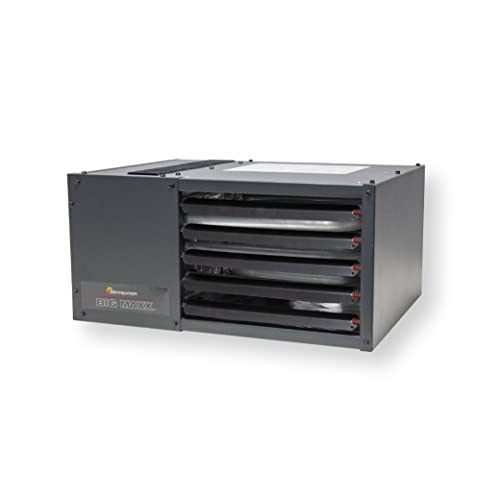
The Mr. Heater Big Maxx MHU50NG is a 50,000 BTU unit heater commonly used for garages, workshops, and larger utility spaces. It features a powered exhaust for flexible vertical or horizontal venting and outside access points for thermostat and gas connections.
- Coverage: Listed to heat up to about 1,250 sq. ft., depending on space characteristics.
- Venting: Powered exhaust allows for both vertical and horizontal venting options; this is a vented unit rather than vent-free.
- Service Access: Designed with outside-access thermostat and gas terminals to simplify installation and maintenance.
- Application: Better suited to garages, detached shops, or spaces where vented combustion is preferred or required by code.
Buying Guide: How To Choose An In-Wall Gas Heater
Selecting the best in-wall gas heater requires assessing multiple factors beyond BTU output. The sections below break down the key considerations and how they affect performance, safety, and compliance.
Call 888-896-7031 for Free Local HVAC Quotes – Compare and Save Today!
Venting Type: Ventless vs. Vented (Unit Heaters)
Ventless (vent-free) heaters (blue flame and infrared ventless models) release combustion byproducts into the conditioned space. They often provide high thermal efficiency because no heat is lost through a vent, but their use is subject to local building codes and ventilation requirements. Ventless units may require minimum room size and ceiling heights and are often restricted in bedrooms or tightly sealed homes.
Vented or power-vented unit heaters direct combustion exhaust outdoors. Vented units are typically recommended for garages, workshops, and larger spaces where indoor air quality and combustion exhaust management are priorities.
Heating Technology: Blue Flame vs. Infrared
Blue Flame Heaters primarily provide convection heat by warming air that circulates through the room. They are well suited for overall even heating in smaller to medium spaces.
Infrared Heaters radiate heat directly to objects and people, which can feel warmer faster and may be preferable in rooms with high ceilings or where spot heating is desired. Infrared performance can be influenced by furniture placement and room layout.
BTU Output And Room Size
BTU ratings indicate maximum heat output. Match BTU output to your room size and insulation level. As a rough guide:
- Up to 500 sq. ft. — 7,000 to 12,000 BTU
- 500–1,000 sq. ft. — 12,000 to 30,000 BTU
- 1,000–1,500+ sq. ft. — 30,000 to 80,000 BTU and above
These ranges vary with climate and insulation. Always consider the manufacturer’s recommended coverage and consult a professional for exact sizing.
Controls And Thermostat Options
Look for integrated thermostats or compatibility with wall thermostats for consistent temperature control. Multi-setting thermostats (High/Medium/Low) and digital thermostats improve accuracy. For unit heaters used in garages, check for outside-access thermostat wiring to simplify servicing.
Installation, Clearances, And Mounting
Confirm the heater’s required clearance from combustible materials and recommended mounting height. Ventless models typically have specific floor and wall clearance requirements. Vented unit heaters require proper vent runs and clearances for flues and termination points. Hire a qualified installer to ensure compliance with manufacturer instructions and local codes.
Safety Features And Code Compliance
Important safety features include oxygen depletion sensors (ODS) on ventless units, automatic shutoff on tip/over where applicable, and reliable ignition systems. Always verify whether ventless heaters are allowed in your state, county, or municipality; some areas restrict ventless gas appliances in sleeping areas or whole-home heating applications.
Fuel Type And Conversion
Confirm the unit’s fuel type (natural gas vs. liquid propane) and whether field conversion is permitted. Some appliances are factory-configured for natural gas only and do not allow conversion. Ensure your gas supply compatibility before purchase.
Energy Efficiency And Operating Cost Considerations
Ventless heaters can be more efficient in terms of delivered heat because they eliminate flue loss, but real-world operating cost depends on fuel price, local climate, and thermostat settings. Vented units may incur slight efficiency losses but can provide safer indoor air quality in certain installations.
Maintenance And Serviceability
Regular maintenance includes cleaning burner assemblies, checking ignition systems, verifying gas connections, and testing safety shutoffs. Units with accessible service panels or outside-access terminals simplify service tasks and lower long-term upkeep complexity.
Placement And Room Layout
Consider furniture placement, doorways, and airflow patterns. Infrared heaters provide direct radiant heat and may be best where occupants sit or stand in a specific area. Convection-style blue flame units benefit from unobstructed airflow to circulate warm air effectively.
Comparison Perspectives
- Small Rooms and Bedrooms: Low BTU ventless blue flame models (e.g., 10,000 BTU) provide adequate warmth for compact spaces where allowed by code.
- Living Areas and Medium Rooms: 30,000 BTU infrared or vent-free blue flame units are commonly sized for living rooms and family spaces under typical insulation conditions.
- Garages, Workshops, and Large Spaces: Vented unit heaters with higher BTU ratings (e.g., 50,000 to 80,000) may be preferable for detached or partially conditioned spaces where venting combustion products is practical.
- Air Quality Priorities: Prioritize vented solutions where indoor air quality must be preserved, or if local codes restrict ventless appliances.
If you plan to install an in-wall gas heater, consult a licensed HVAC technician or gas fitter to confirm proper sizing, fuel compatibility, venting requirements, and to obtain required permits. Professional installation ensures compliance with safety standards and local building codes while optimizing performance.
Tips for Getting the Best HVAC Prices
- Prioritize Quality Over Cost
The most critical factor in any HVAC project is the quality of the installation. Don’t compromise on contractor expertise just to save money. - Check for Rebates
Always research current rebates and incentives — they can significantly reduce your overall cost. - Compare Multiple Quotes
Request at least three estimates before making your choice. You can click here to get three free quotes from local professionals. These quotes include available rebates and tax credits and automatically exclude unqualified contractors. - Negotiate Smartly
Once you've chosen a contractor, use the proven strategies from our guide — How Homeowners Can Negotiate with HVAC Dealers — to get the best possible final price.