Choosing The Right Gas Heater means matching fuel type, installation, and safety to your space. Below is a quick comparison of top gas heaters selected for portability, power, and installation types.
Product
Type
BTU Range
Fuel
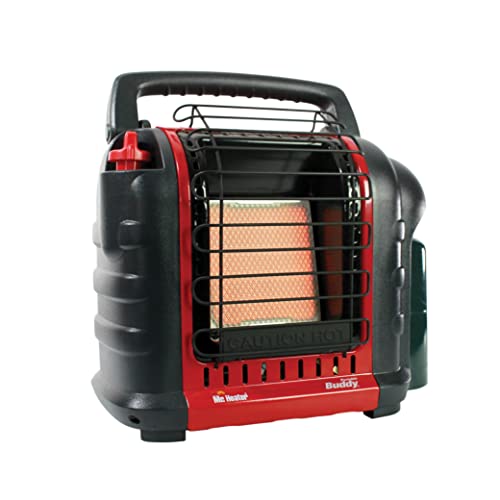
Mr. Heater Portable Buddy MH9BX
Portable Radiant Heater
4,000–9,000
Propane (LP)
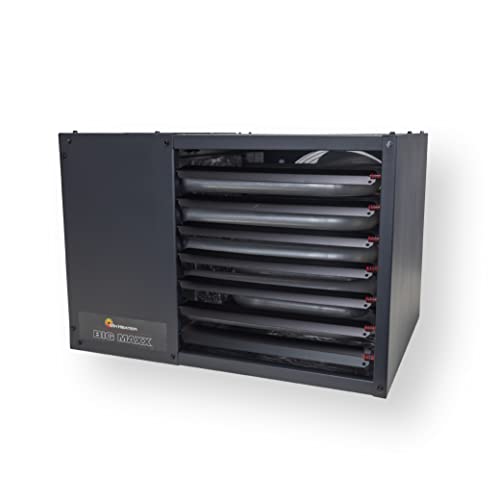
Mr. Heater Big Maxx MHU80NG
Natural Gas Unit Heater
80,000
Natural Gas
ProCom MN300HBA-B
Ventless Blue Flame
30,000
Natural Gas
Dyna-Glo IR30NMDG-1
Infrared Wall Heater
30,000
Natural Gas
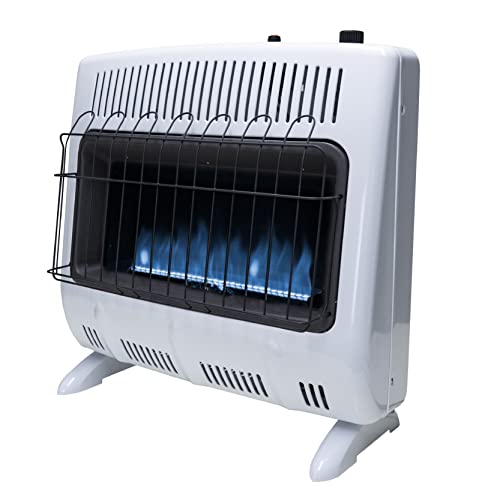
Mr. Heater MHVFBF30NGT
Vent Free Wall Heater
Up To 30,000
Natural Gas
Quick Note: BTU values and coverage are manufacturer guidance and assume typical residential or workshop conditions.
Type: Portable Propane Radiant Heater. BTU: 4,000–9,000. Coverage: Up To 225 Sq. Ft.
This unit Uses Infrared Radiant Technology to heat objects and people directly rather than heating air. It offers adjustable settings from 4,000 to 9,000 BTUs. Safety features include an improved tip-over switch that audibly engages if the unit is shaken or tipped. The heater employs a piezo igniter for matchless ignition and does not require batteries. Because it runs on portable propane, it is suited for campers, patios, small workshops, and job sites where a compact, mobile heat source is needed. Installation is minimal; use only in well-ventilated spaces appropriate for propane appliances.
Call 888-896-7031 for Free Local HVAC Quotes – Compare and Save Today!
Type: Natural Gas Unit Heater. BTU: 80,000. Coverage: Up To 2,000 Sq. Ft.
This wall- or ceiling-mountable unit is designed for large garages, shops, and commercial spaces. It ships with two angle brackets and includes an LP conversion kit for flexibility, though it is primarily a natural gas appliance. The heater operates on 120 V for fan and controls, and it requires clearance and proper venting per installation category. Performance specifications list an 80,000 BTU output for substantial area heating. The Big Maxx is intended for semi-permanent installation where forced or convected heating is needed to cover large square footage reliably.
Type: Ventless Blue Flame Heater. BTU: 30,000. Coverage: Up To 1,400 Sq. Ft.
This natural gas unit operates without electricity, relying on a push-button piezo ignition and manual heat settings. The blue flame design produces convection-style heating that warms air and surfaces in the room. It includes an oxygen depletion sensor (ODS) that shuts the heater off if oxygen levels fall below safe thresholds. Manual low/medium/high settings allow simple control. Ventless heaters require adherence to local codes and room size limitations but can provide efficient heating where venting is impractical.
Call 888-896-7031 for Free Local HVAC Quotes – Compare and Save Today!
Type: Natural Gas Infrared Wall Heater. BTU: Up To 30,000. Coverage: Up To 1,000 Sq. Ft.
This heater Uses infrared radiation to warm people and objects similar to sunlight, which can feel quicker than heating the air alone. It is natural-gas-ready and does not permit fuel conversion, so ensure fuel compatibility prior to purchase. Wall mounting focuses heat toward occupied zones, making it practical for garages, work bays, and covered patios (where allowed). Infrared units typically provide quieter operation and targeted warmth compared to forced-air systems.
Type: Vent-Free Blue Flame Wall Heater. BTU: Up To 30,000. Coverage: Up To 1,000 Sq. Ft.
This wall-mounted convection heater provides consistent blue flame warmth with an integrated thermostat and electric ignition (battery included). It is designed to heat rooms up to 1,000 sq. ft. and operates efficiently with low fuel consumption metrics specified by the manufacturer. Vent-free appliances distribute heat through natural convection and require adherence to clearance and room volume requirements set by codes and manufacturers. The thermostat allows precise temperature control for steady comfort in living spaces or additions.
Buying Guide: How To Choose A Gas Heater
Fuel Type And Availability
Select a heater that matches the fuel available at the installation site. Natural gasPropane (LP) offers portability and off-grid flexibility but needs cylinder storage and ventilation considerations.
Installation Type: Portable Versus Permanent
Portable Heaters (propane radiant units) are best for temporary heating, job sites, and camping. They require ventilation and careful placement to avoid tip-over hazards.
Wall/Ceiling Unit Heaters (natural gas unit heaters) suit garages and large shops and typically need electrical supply and secure mounting.
Ventless/Blue Flame heaters install without venting and provide efficient indoor heating but must meet local code and room size requirements.
Vented, Ventless, Or Infrared?
Vented Units remove combustion products outside; ideal when indoor air quality and continuous operation matter.
Ventless Units are more efficient at delivering heat to the room but introduce combustion byproducts into the space and rely on sensors like ODS for safety.
Infrared/Radiant Heaters heat objects and people directly; effective for targeted warmth and often perceived as quicker heat.
BTU Output And Room Size
Estimate BTU needs from room area, insulation, ceiling height, and ambient temperature. As a rough guide, 20–40 BTU per sq. ft. can be used for basic planning, with higher values for colder climates or poorly insulated spaces. Choose a heater with a BTU range appropriate for peak conditions and consider models with adjustable settings for flexibility.
Safety Features And Ignition
Tip-Over Switches are essential for portable units used in active environments.
Oxygen Depletion Sensors (ODS) shut down ventless and portable units if oxygen falls below safe levels.
Piezo Ignition avoids open matches and batteries; electric ignition may require a battery or power source.
Energy Efficiency And Operating Costs
Efficiency depends on design: vented units lose some heat through exhaust, while ventless units can convert most fuel energy to room heat. Compare thermal design (radiant vs convection) and consider how long the heater will run daily. For continuous whole-space heating, fixed natural gas units may be more economical; for intermittent spot heating, portable propane or infrared units can be more efficient in practice.
Installation, Clearance, And Local Codes
Follow manufacturer clearance specifications and local building codes. Permanent heaters often require professional installation, gas line connections, and possibly permits. Ventless appliances have room size limits and may be restricted in some jurisdictions or multi-family buildings. Confirm venting category, clearances, and required electrical supply before purchase.
Portability And Placement
Consider mobility if you need to move heat between work areas. Cabinet-style propane heaters with wheels store the tank internally and ease relocation. Wall-mounted and ceiling-mounted units are fixed and intended for prolonged coverage of a specific area.
Noise, Control, And Comfort
Infrared and radiant units are typically quieter than fan-forced unit heaters. Thermostat controls provide more precise temperature management than manual multi-position settings. If noise or fine temperature control matters, prioritize models with thermostats and quiet operation.
Maintenance And Longevity
Inspect burners, pilot systems, and gas connections annually.
Clean filters, grilles, and radiant elements per manufacturer guidance.
For vented units, check venting paths and flue integrity regularly.
Comparing Perspectives
Performance Perspective: Choose higher BTU fixed units for whole-space heating; choose radiant or portable units for targeted warmth.
Safety Perspective: Venting and ODS systems address different safety trade-offs—vented removes combustion products, ventless relies on sensors and room ventilation.
Cost Perspective: Fuel availability and usage patterns typically determine operating cost more than upfront purchase price.
Use these perspectives to balance what matters most for your situation: portability, coverage, installation complexity, and indoor air quality.
Tips for Getting the Best HVAC Prices
Prioritize Quality Over Cost The most critical factor in any HVAC project is the quality of the installation. Don’t compromise on contractor expertise just to save money.
Check for Rebates Always research current rebates and incentives — they can significantly reduce your overall cost.
Compare Multiple Quotes Request at least three estimates before making your choice. You can click here to get three free quotes from local professionals. These quotes include available rebates and tax credits and automatically exclude unqualified contractors.