
Through-the-wall gas heaters provide targeted warmth for rooms without extending central HVAC. Below is a concise comparison of five relevant models selected for vented and vent-free installations, multiple fuel types, and different heating capacities.
| Model | Fuel Type | BTU | Coverage |
|---|---|---|---|
| Comfort Glow 11,000 BTU Direct Vent LP | Liquid Propane | 11,000 | Up To 375 Sq. Ft. |
| Comfort Glow 17,000 BTU Direct Vent NG | Natural Gas | 17,000 | Up To 570 Sq. Ft. |
| Comfort Glow 25,000 BTU Direct Vent NG | Natural Gas | 25,000 | Up To 825 Sq. Ft. |
| Dyna-Glo IR30NMDG-1 30,000 BTU | Natural Gas | 30,000 | Up To 1,000 Sq. Ft. |
| ProCom MN300TPA-B 30,000 BTU Ventless | Natural Gas (Ventless) | 30,000 | Up To 1,400 Sq. Ft. |
Content Navigation
- Comfort Glow 11,000 BTU Direct Vent Liquid Propane Gas Wall Heater
- Comfort Glow 17,000 BTU Direct Vent Natural Gas Wall Heater
- Comfort Glow 25,000 BTU Direct Vent Natural Gas Wall Heater
- Dyna-Glo IR30NMDG-1 30,000 BTU Natural Gas Infrared Wall Heater
- ProCom MN300TPA-B Ventless Natural Gas Infrared Space Heater
- Buying Guide: Choosing A Through-The-Wall Gas Heater
- Fuel Type And Availability
- Vented vs. Ventless (Direct Vent vs. Vent-Free)
- BTU Output And Room Size
- Heating Technology: Convection vs. Infrared vs. Blue Flame
- Safety Features And Certifications
- Installation And Venting Requirements
- Control Options And Thermostat Compatibility
- Air Quality, Ventilation, And Moisture Considerations
- Maintenance And Serviceability
- Comparing Models: Key Tradeoffs
- Compliance And Local Codes
- Final Selection Checklist
Comfort Glow 11,000 BTU Direct Vent Liquid Propane Gas Wall Heater
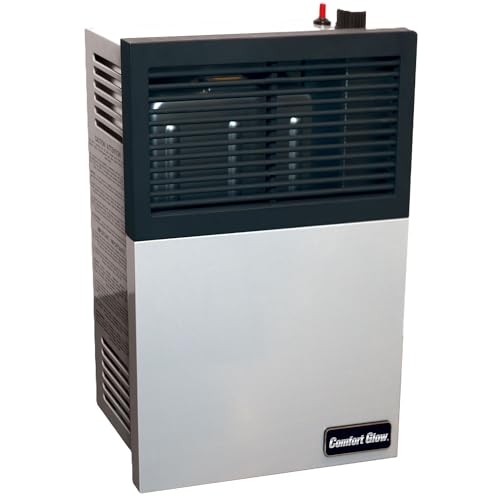
This direct vent liquid propane model is designed for smaller spaces and installs through an exterior wall to expel combustion products outdoors. The sealed burn system reduces indoor air interaction with combustion, which can be desirable where indoor air quality is a concern.
- Heating Capacity: 11,000 BTU, rated for up to 375 sq. ft.
- Safety Features: Sealed burn, Matchless Piezo Ignition, safety pilot with built-in pressure regulator.
- Design: Compact wall-mounted unit (20 H × 17 W × 7 D) for space-saving installation.
Direct-vent configuration requires a through-wall sleeve and proper exterior termination. This model suits small rooms, workshops, or add-on spaces where propane is the fuel source and balanced combustion is preferred.
Comfort Glow 17,000 BTU Direct Vent Natural Gas Wall Heater

This direct-vent natural gas unit balances indoor comfort and combustion safety by venting exhaust outdoors. It raises the effective heated area above smaller models while maintaining similar safety controls.
Call 888-896-7031 for Free Local HVAC Quotes – Compare and Save Today!
- Heating Capacity: 17,000 BTU for up to 570 sq. ft.
- Safety Features: Sealed burn system, Matchless Piezo Ignition, safety pilot with pressure regulator.
- Size: 20 H × 27.3 W × 6.5 D — wider front for greater output.
This model is suitable for mid-sized rooms, garages, or basements where natural gas is available and through-wall installation with a vent termination is feasible. The sealed combustion reduces indoor CO and combustion odors compared with vent-free units.
Comfort Glow 25,000 BTU Direct Vent Natural Gas Wall Heater

For larger spaces, this higher-output direct-vent model increases heat delivery while retaining sealed combustion benefits. It’s designed to be wall-mounted and vented externally for safe operation.
- Heating Capacity: 25,000 BTU, suitable up to 825 sq. ft.
- Safety Features: Sealed burn, Matchless Piezo Ignition, safety pilot with pressure regulator to stop gas flow if the pilot goes out.
- Dimensions: 26.5 H × 32.25 W × 8.75 D — larger footprint for higher capacity.
This unit is targeted at larger living spaces, workshops, or open-plan rooms where a substantial, localized heat source is needed. Proper through-wall venting and clearances must be observed per manufacturer specifications.
Dyna-Glo IR30NMDG-1 30,000 BTU Natural Gas Infrared Wall Heater

This infrared wall heater uses radiant heat to warm objects and people directly rather than primarily heating the air. Radiant systems can feel warmer at lower air temperatures and are effective in high-ceiling or drafty spaces.
Call 888-896-7031 for Free Local HVAC Quotes – Compare and Save Today!
- Heating Capacity: Up to 30,000 BTU, coverage up to 1,000 sq. ft.
- Technology: Infrared radiation — warms surfaces and occupants first.
- Fuel: Natural gas ready; fuel conversion may not be permitted.
Infrared units are beneficial in areas where rapid comfort is desired or where air stratification reduces convective heat effectiveness. Since this model is high-output, it’s suitable for open areas, garages, or workshops with adequate ventilation and mounting clearance.
ProCom MN300TPA-B Ventless Natural Gas Infrared Space Heater

This ventless infrared model is designed to operate without an exterior vent, delivering a high BTU output and included thermostat control. Ventless heaters exchange combustion byproducts directly into the room air, so they have installation and indoor-air considerations.
- Heating Capacity: 30,000 BTU, claimed coverage up to 1,400 sq. ft.
- Controls: High/Medium/Low thermostat control for adjustable heat output.
- Installation: Wall mount or floor placement with included hardware and base feet.
Ventless units can be easier to install because they avoid through-wall venting, but they require strict adherence to local codes, adequate combustion air, and monitoring of indoor moisture and combustion byproducts. This model is positioned for larger rooms where venting is not an option and compliant use is possible.
Buying Guide: Choosing A Through-The-Wall Gas Heater
Selecting the right through-the-wall gas heater requires balancing fuel type, safety, output, installation complexity, and room characteristics. The following factors and comparison perspectives help evaluate options objectively.
Fuel Type And Availability
Natural Gas vs. Liquid Propane: Choose based on existing fuel supply. Natural gas is commonly used where utility service exists. Propane is practical for off-grid or rural locations with tank storage. Check whether the model is dedicated to a specific fuel and whether conversion is allowed.
Vented vs. Ventless (Direct Vent vs. Vent-Free)
- Direct Vent / Sealed Combustion: Pulls combustion air from outside and exhausts outdoors. Advantages include improved indoor air quality and lower CO/odor risk. Requires a through-wall sleeve and proper termination.
- Ventless (Vent-Free): Releases combustion products into the room. Typically more efficient at delivering heat to the space but may increase indoor moisture and require code compliance and oxygen depletion safety features.
BTU Output And Room Size
Match heater BTU output to room size and insulation level. Higher BTU models heat larger areas but require larger clearances and potentially stronger mounting. Use manufacturer coverage estimates as a baseline and consider ceiling height, insulation, and window area for real-world needs.
Heating Technology: Convection vs. Infrared vs. Blue Flame
- Infrared: Radiant heat warms people and surfaces directly; effective in drafty or high-ceiling areas and often perceived as faster warmth.
- Blue Flame / Convection: Warms air, circulating heat like central systems; can be more uniform for enclosed spaces.
- Choice Impact: Consider occupant comfort preferences and room layout when choosing technology.
Safety Features And Certifications
Look for sealed-burn construction, pilot safety valves, oxygen depletion sensors (for ventless units), and pressure regulators. Certified units (e.g., ANSI, CSA) meet defined safety and performance standards. Ensure installation follows local building and gas codes.
Installation And Venting Requirements
Direct-vent models require through-wall sleeves, termination caps, and clearance to combustibles. Ventless models often have simpler physical installation but may require dedicated clearances and adequate combustion air. Verify whether professional installation or a gas permit is required where you live.
Control Options And Thermostat Compatibility
Thermostat control, multi-stage heat settings, and compatibility with room thermostats improve comfort and energy use. Some models include built-in thermostats or remote controls; confirm if external thermostat wiring or add-on modules are supported.
Air Quality, Ventilation, And Moisture Considerations
Ventless units emit combustion byproducts into living spaces, which can raise humidity and pose indoor air quality concerns in tightly sealed homes. If choosing ventless, ensure regular ventilation, CO detectors, and adherence to occupant limits recommended by the manufacturer.
Maintenance And Serviceability
Evaluate filter access, pilot assembly accessibility, and availability of replacement parts. Sealed-burn professional servicing intervals and clear instructions for pilot relighting and seasonal checks reduce operational issues.
Comparing Models: Key Tradeoffs
- Safety vs. Efficiency: Direct-vent units typically offer improved indoor air safety, while ventless units often deliver higher usable heat efficiency for the space.
- Output vs. Installation Complexity: Higher BTU, through-wall vented units require more complex installation but scale better for large spaces; ventless models can be simpler to install but have indoor-air tradeoffs.
- Infrared vs. Convection Comfort: Infrared feels warmer quickly and is suitable for open or high-ceiling areas; convection is better for enclosed, well-insulated rooms seeking even temperature distribution.
Compliance And Local Codes
Confirm local building codes and gas appliance restrictions. Some jurisdictions limit ventless gas appliance use in bedrooms or require specific ventilation measures. Obtaining permits and using licensed installers safeguards compliance and warranties.
Tips for Getting the Best HVAC Prices
- Prioritize Quality Over Cost
The most critical factor in any HVAC project is the quality of the installation. Don’t compromise on contractor expertise just to save money. - Check for Rebates
Always research current rebates and incentives — they can significantly reduce your overall cost. - Compare Multiple Quotes
Request at least three estimates before making your choice. You can click here to get three free quotes from local professionals. These quotes include available rebates and tax credits and automatically exclude unqualified contractors. - Negotiate Smartly
Once you've chosen a contractor, use the proven strategies from our guide — How Homeowners Can Negotiate with HVAC Dealers — to get the best possible final price.
Final Selection Checklist
- Confirm fuel availability (Natural Gas or Propane).
- Decide on vented (direct vent) vs. ventless based on ventilation and indoor air priorities.
- Match BTU rating to room size, insulation, and ceiling height.
- Verify safety features and certifications.
- Check installation requirements and whether professional installation is necessary.
- Evaluate control options and compatibility with existing thermostats.
- Plan for maintenance access and parts availability.