
Finding the right gas heater for a van or camper requires balancing safety, size, fuel type, and heat output. Below is a concise comparison of five relevant heaters from portable propane buddy units to natural gas infrared and RV tankless water heaters commonly used in van conversions and small campers.
| Product | Type | Fuel | Heat Output / Use |
|---|---|---|---|
| Mr. Heater Portable Buddy MH9BX | Portable Radiant Space Heater | Propane | 4,000–9,000 BTU — small van spaces |
| Xenjum RV Tankless Water Heater 65,000 BTU | Tankless Water Heater | Propane | Hot water on demand — plumbing/heating integration |
| ProCom MN300TPA-B Ventless Infrared | Infrared Wall/Free-Standing Heater | Natural Gas | 30,000 BTU — small cabin/garage use |
| ProCom MN300HBA-B Ventless Blue Flame (Manual) | Blue Flame Ventless Floor Unit | Natural Gas | 30,000 BTU — residential/unvented spaces |
| Dyna-Glo IR30NMDG-1 Infrared Wall Heater | Infrared Wall Heater | Natural Gas | Up to 30,000 BTU — wall-mounted heating |
Content Navigation
- Mr. Heater Portable Buddy Heater MH9BX – Propane Radiant
- Xenjum RV Tankless Water Heater 65,000 BTU – Propane
- ProCom MN300TPA-B Ventless Natural Gas Infrared Heater
- ProCom MN300HBA-B Ventless Blue Flame Heater With Base Feet
- Dyna-Glo IR30NMDG-1 30,000 BTU Natural Gas Infrared Wall Heater
- Buying Guide: Choosing A Gas Heater For Your Van
Mr. Heater Portable Buddy Heater MH9BX – Propane Radiant
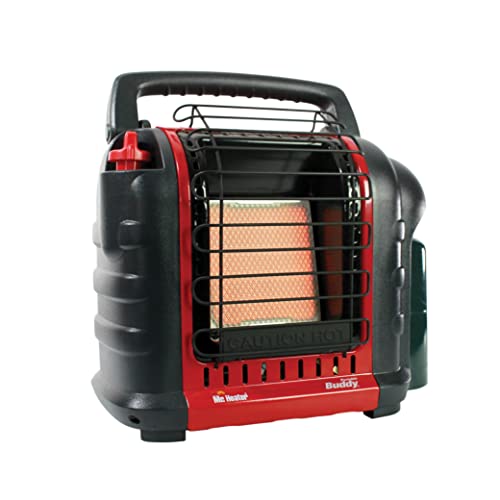
This compact propane radiant heater offers adjustable output from 4,000 to 9,000 BTU, designed to warm up to about 225 sq. ft. The unit uses infrared-style radiant heat to warm objects and people directly rather than relying on air circulation.
- Powerful Radiant Heat: Delivers sun-like radiant warmth suitable for small van interiors when used with careful ventilation and propane safety practices.
- Safety Features: Tip-over safety switch with audible engagement and an oxygen depletion safety (ODS) is included to help shut down in low-oxygen conditions (verify model specifics).
- Ignition: Piezo igniter provides match-free starts without batteries.
Notes: The unit is designed for indoor-safe use in well-ventilated areas. Careful assessment of ventilation, CO monitoring, and propane storage is required before using in a van.
Xenjum RV Tankless Water Heater 65,000 BTU – Propane
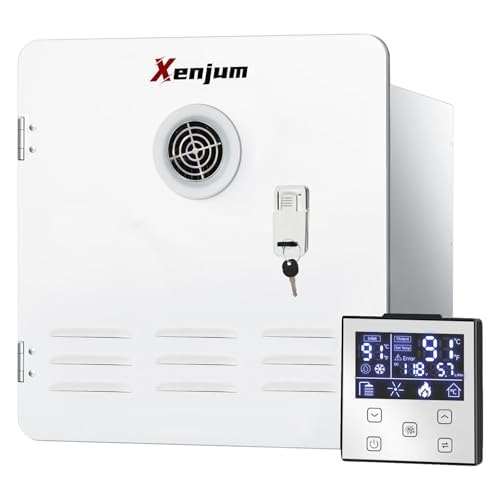
This tankless water heater is focused on hot water delivery rather than space heating, producing up to 65,000 BTU and about 3.9 GPM. For van builds, it is primarily a plumbing component but can indirectly contribute warmth by supplying hot water to radiators, heated water loops, or for quick heating tasks.
Call 888-896-7031 for Free Local HVAC Quotes – Compare and Save Today!
- Endless Hot Water: On-demand hot water for showers, sinks, and outdoor rinse stations — useful for camper comfort.
- 12V On-Demand System: Integrates electrical control for ignition and diagnostics; includes shower kit and dual outlets.
- Thermostatic Control: Set temperatures between 95°F and 124°F for consistent water output.
Notes: This is not a space heater. For van heating strategies that use hot water, combine with heat exchangers, looped radiators, or hydronic kits designed for mobile use and ensure proper installation per RV codes.
ProCom MN300TPA-B Ventless Natural Gas Infrared Heater

This ventless infrared heater delivers up to 30,000 BTU using natural gas, with thermostat control and a slim profile for wall mounting or floor placement. It’s intended for residential and office spaces rather than enclosed mobile living spaces.
- Thermostat Control: High/Medium/Low setting and thermostat-enabled operation for steady comfort.
- Installation Flexibility: Includes wall-mount hardware and base feet to allow multiple placements.
- No Electricity Required: Produces heat without needing external power for combustion (verify ignition type).
Notes: Ventless units release combustion byproducts into the ambient space. Using ventless natural gas heaters in a van is generally not recommended without strict ventilation and CO monitoring because of confined space risks.
ProCom MN300HBA-B Ventless Blue Flame Heater With Base Feet

The ProCom manual blue flame unit is a 30,000 BTU natural gas heater with push-button Piezo ignition, manual three-setting control, and an Oxygen Depletion Sensor (ODS) that shuts the unit off automatically in low-oxygen conditions.
Call 888-896-7031 for Free Local HVAC Quotes – Compare and Save Today!
- Room Coverage: Manufacturer rates up to about 1,400 sq. ft. in unobstructed residential settings.
- ODS Safety: Built-in ODS provides a safety cutoff for low-oxygen situations.
- No Electricity Required: Suitable where power is limited; ignition is mechanical.
Notes: Ventless blue flame heaters release water vapor and combustion byproducts. For van use, consider ventilation, fuel source availability, and CO detection equipment before installation.
Dyna-Glo IR30NMDG-1 30,000 BTU Natural Gas Infrared Wall Heater

The Dyna-Glo wall-mounted infrared heater uses infrared technology to radiate heat to objects and people, rated up to 30,000 BTU and intended to heat up to ~1,000 sq. ft. It’s a natural gas fixed installation that prioritizes radiant warmth.
- Infrared Heating: Radiant heat warms surfaces and occupants quickly without heavy air movement.
- Wall Mounting: Fixed installation frees floor space and positions heat where needed.
- Fuel: Designed for natural gas; conversion or alternate fuels may be restricted.
Notes: This fixed, higher-BTU unit is more appropriate for garages, shops, or cabin additions of vans with adequate ventilation and certified installation — not for small enclosed vans without professional assessment.
Buying Guide: Choosing A Gas Heater For Your Van
Selecting the right heater depends on several interrelated factors. Below are key considerations and comparative perspectives to help guide decisions for van or camper heating solutions.
Fuel Type And Availability
Propane vs. Natural Gas: Propane is common for mobile applications because tanks are compact and refillable. Natural gas heaters require a piped supply and are typically for fixed locations. Confirm fuel compatibility and local regulations.
Ventilation, Combustion, And Safety
Combustion Byproducts: Gas heaters produce carbon monoxide (CO), water vapor, and other byproducts. In confined van spaces, ensure adequate ventilation, CO detectors, and ODS (oxygen depletion sensors) are present. Ventless heaters increase indoor moisture and combustion products; professional evaluation is recommended before installation.
Size, BTU, And Heat Distribution
BTU Rating: Van interiors are small — a few thousand BTU often suffice for short-term heating. High-BTU wall units (30,000–80,000 BTU) are typically excessive for vans and are meant for larger enclosed areas.
Radiant vs. Convection: Radiant heaters (infrared) heat objects and people directly and can feel warmer sooner in a small cabin. Convection heaters warm air and can distribute heat more evenly when paired with fans or ducting.
Installation Constraints
Mounting And Clearance: Wall units require clearance, venting (if applicable), and secure mounting. Portable units are easier to deploy but need safe placement, stable surfaces, and tip-over protection.
Electrical Needs: Some units require 12V or 120V for controls or ignition; battery-free Piezo ignition models exist for off-grid setups.
Safety Devices And Certifications
Look for ODS, tip-over switches, CSA/UL listings, and CO monitoring compatibility. These features add layers of safety for mobile living.
Integration With Existing Systems
Consider whether you want a dedicated space heater, a hydronic system using hot-water heat from a tankless unit, or a hybrid approach. Tankless water heaters can serve plumbing needs and indirectly provide warmth via radiators or heat exchangers when properly integrated.
Moisture And Condensation
Combustion increases humidity. In small vans, that can cause condensation on windows and interior surfaces. Plan for ventilation, dehumidifying strategies, or insulation to manage moisture.
Portability Versus Permanent Install
Portable Units: Provide flexibility but require careful monitoring and secure storage of fuel cylinders. Permanently Installed Units: Offer integrated venting and controls but need professional installation to meet safety and code requirements.
Comparison Perspectives
- Safety-First Perspective: Prioritize units with ODS, CO detectors, and certified installations. Ventless units pose higher risk in vans; consider dedicated vented or electric alternatives for tight spaces.
- Comfort-First Perspective: Radiant propane heaters like the Mr. Heater Buddy can provide quick warmth for short periods, while hydronic or integrated systems provide longer-term, even heat.
- Off-Grid Perspective: Units with Piezo ignition or 12V control and low electrical demands are preferable. Propane is more portable and refillable for remote camping.
- Multi-Function Perspective: Tankless water heaters supply hot water and, when paired with heat exchange setups, can contribute to space heating, offering a dual-purpose solution.
Final Purchase Reminders: Verify fuel compatibility, required clearances, and local codes. Install CO and propane leak detectors, plan for ventilation and condensation control, and consult a certified RV/van technician for permanent installations.
Tips for Getting the Best HVAC Prices
- Prioritize Quality Over Cost
The most critical factor in any HVAC project is the quality of the installation. Don’t compromise on contractor expertise just to save money. - Check for Rebates
Always research current rebates and incentives — they can significantly reduce your overall cost. - Compare Multiple Quotes
Request at least three estimates before making your choice. You can click here to get three free quotes from local professionals. These quotes include available rebates and tax credits and automatically exclude unqualified contractors. - Negotiate Smartly
Once you've chosen a contractor, use the proven strategies from our guide — How Homeowners Can Negotiate with HVAC Dealers — to get the best possible final price.