
Choosing The Right Propane Heater For A Camper means balancing space heating, hot water needs, safety features, and installation constraints. Below is a quick summary of the five propane heater solutions covered in this guide, including space heaters and tankless hot water heaters suitable for camper use.
| Product | Type | Key Feature |
|---|---|---|
| Mr. Heater Portable Buddy MH9BX | Portable Radiant Space Heater | 4,000–9,000 BTU, indoor-safe |
| Mr. Heater Blue Flame MHVFBF20LPT | Wall-Mounted Vent-Free Heater | 20,000 BTU, thermostat control |
| Xenjum 65,000 BTU Tankless | Propane Tankless Water Heater | On-demand hot water, dual outlets |
| RUNSAIL 65,000 BTU Tankless | Propane Tankless Water Heater | Built-In Pressure Relief Valve |
| OEVANT 55,000 BTU Tankless | Propane Tankless Water Heater | Fast heat-up, front water outlet |
Mr. Heater Portable Buddy MH9BX
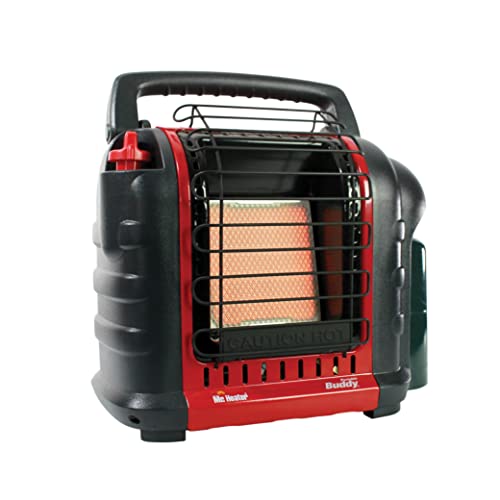
This portable radiant propane heater is designed for small spaces such as campers, workshops, and patios. It offers an adjustable output between 4,000 and 9,000 BTU, with coverage suitable for areas up to about 225 sq. ft.
Key features include infrared (radiant) heating that warms objects and people directly, a Piezo igniter for match-free startup, and an improved tip-over safety switch that audibly engages if the unit is shaken or tipped. The unit is classified as indoor-safe when used according to manufacturer instructions, but adequate ventilation and following RV-specific safety guidance remain important.
Applications: supplemental zone heat inside a well-ventilated camper while parked, quick warm-up for seated areas, or use in outdoor covered spaces. Check RV propane supply capacity and ventilation requirements before operating indoors.
Mr. Heater Blue Flame Vent-Free Heater
Call 888-896-7031 for Free Local HVAC Quotes – Compare and Save Today!
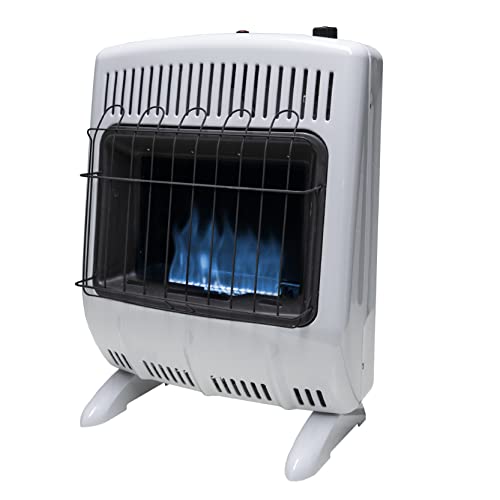
The Mr. Heater Blue Flame model is a wall-mounted, vent-free propane heater that produces up to 20,000 BTU of heat and is intended for larger rooms and hard-to-heat camper additions.
Notable attributes include a built-in thermostat for temperature control, battery-powered electronic ignition for reliable startup, and an Oxygen Depletion Sensor (ODS) which automatically shuts off the unit if oxygen levels fall below safe thresholds. The unit is rated for operation at elevations up to 4,500 ft.
Because it is vent-free, the heater releases combustion products into the living space in small, controlled amounts. This design offers efficient heat transfer and high heat output but requires strict adherence to manufacturer and RV safety standards, including fresh-air exchange and CO monitoring.
Xenjum RV Tankless Water Heater 65,000 BTU
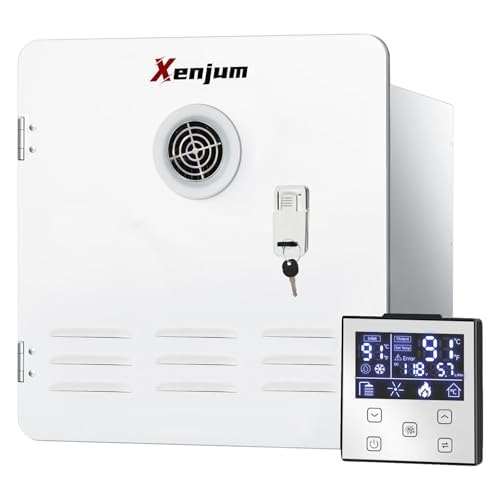
This propane tankless water heater is focused on delivering continuous hot water rather than space heating. The unit produces up to 65,000 BTU and an estimated 3.9 GPM, with dual water outlets for front and rear use and a showerhead kit included.
Features include a 12V on-demand system, a remote controller for temperature adjustments, and a microcomputer-based thermostat allowing selection between 95°F and 124°F. The dual outlet design supports both indoor showers and external rinse points.
Call 888-896-7031 for Free Local HVAC Quotes – Compare and Save Today!
For campers that prioritize hot-water performance, this model offers strong continuous flow with configurable temperature control. Installation considerations include propane supply sizing, 12V power wiring, and ensuring venting/clearances per RV standards.
RUNSAIL Tankless RV Water Heater 65,000 BTU
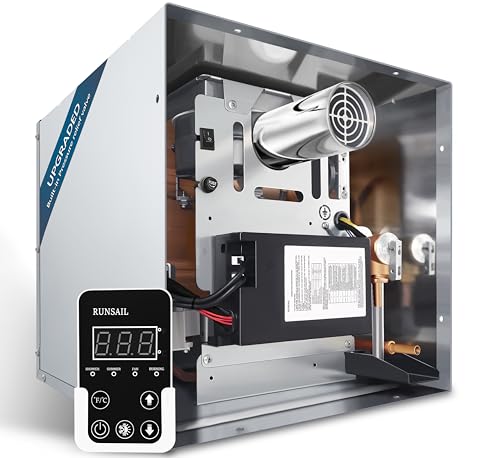
RUNSAIL’s 65,000 BTU tankless unit emphasizes safety and integration for RV installations. It offers up to 3.96 GPM and includes a built-in pressure relief valve that meets ANSI and CSA standards, simplifying installation.
The model markets improved pressure-bearing capacity and factory-installed safety components to reduce drip and unnecessary valve activation. As with other tankless systems, it provides on-demand hot water without the wait time associated with tank heaters.
Considerations for campers include physical mounting, propane supply and regulator compatibility, electrical control wiring, and pairing the unit with appropriate exterior access doors and plumbing runs.
OEVANT RV Tankless Water Heater 55,000 BTU

The OEVANT unit is a 55,000 BTU tankless water heater designed for RVs. It delivers instant hot water with a reported rapid heat-up time and includes a front water outlet and a 16×16 inch door for mounting convenience.
Features include staged combustion for stable temperatures, a microcomputer control panel for easy adjustments between typical hot-water setpoints, and a CSA certification indicating adherence to certain safety standards.
This model is targeted at RV owners who want a compact, fast-heating solution that integrates with standard RV doors and offers simplified user controls for on-road hot water demands.
Buying Guide: Choosing A Propane Heater For Your Camper
This buying guide covers essential considerations for selecting a propane heating solution for campers, including space heaters and tankless water heaters that run on propane.
1. Define The Primary Need
- Space Heating: Choose portable radiant units or vent-free wall heaters. Radiant heaters (like the Portable Buddy) warm people and objects directly and work well for spot heating. Vent-free blue flame heaters provide whole-space warmth but require ventilation and CO monitoring.
- Hot Water: Tankless propane water heaters deliver continuous hot water and avoid the cold-water recovery issue of tank heaters. They are not designed to heat living space.
2. BTU Output And Capacity
- Match BTU to the camper’s volume. Small campers often need under 10,000 BTU for supplemental heat; larger RVs or additions might need 15,000–20,000 BTU for whole-space heat.
- For hot water, check the GPM rating. Typical single-shower demand ranges from 1.5–3.5 GPM. Choose a tankless unit with sufficient BTU and GPM for simultaneous uses.
3. Safety Features
- ODS (Oxygen Depletion Sensor): Essential for vent-free space heaters; shuts unit off if oxygen is low.
- Tip-Over Switch: Important for portable heaters to prevent fires if knocked over.
- Built-In Relief Valves & Certs: For tankless water heaters, look for built-in relief valves and certifications (CSA/ANSI) to simplify installation and safety compliance.
4. Venting And Indoor Use Considerations
- Vent-Free Heaters: Efficient but emit combustion products into the cabin; require good ventilation, working CO detectors, and adherence to RV manufacturer guidelines.
- Tankless Water Heaters: Many are sealed-combustion or require exterior venting/clearances; follow RV vent door and exhaust placement instructions precisely.
5. Fuel Supply And Plumbing
- Confirm your camper’s propane delivery capacity and regulator sizing to support simultaneous appliance use.
- Tankless units require adequate water pressure and a 12V supply for electronic controls; check minimum flow rates and power draws.
6. Installation And Mounting
- Portable heaters require safe placement, stable surfaces, and clearance from combustibles.
- Wall-mounted and tankless units need proper mounting, exterior access doors, and compliant clearances; professional installation is recommended for many RV applications.
7. Controls And User Interface
- Thermostats and remote controllers improve comfort control. For hot water, digital panels and microcomputer controls maintain stable outlet temperatures.
- Look for built-in fault codes or diagnostics on tankless units to simplify troubleshooting in the field.
8. Altitude And Climate Performance
- Some units de-rate at high altitude or include altitude compensation. If you camp at higher elevations, verify manufacturer altitude ratings.
- For cold climates, prefer units with freeze protection or built-in antifreeze modes to protect water lines.
9. Maintenance And Longevity
- Regular maintenance includes checking seals, burners, and ODS sensors on space heaters and descaling or flushing water systems on tankless units.
- Consider replacement parts availability and ease of service for your chosen brand.
10. Comparative Perspectives
- Portability vs. Permanence: Portable radiant heaters are flexible but limited in whole-cabin heating. Wall-mounted vent-free units are permanent and higher output but less flexible.
- Space Heat vs. Hot Water: If you need both, consider pairing a small space heater with a tankless water heater. Tankless units do not replace space heating needs.
- Efficiency vs. Venting: Vent-free heaters are more efficient at transferring heat to the cabin but need rigorous safety practices. Tankless water heaters trade space heat for continuous hot water efficiency and convenience.
Final Tip: Review your camper’s manufacturer recommendations, propane system capacity, and safety equipment (CO detectors, smoke alarms, ventilation) before selecting and installing any propane heating appliance.
Tips for Getting the Best HVAC Prices
- Prioritize Quality Over Cost
The most critical factor in any HVAC project is the quality of the installation. Don’t compromise on contractor expertise just to save money. - Check for Rebates
Always research current rebates and incentives — they can significantly reduce your overall cost. - Compare Multiple Quotes
Request at least three estimates before making your choice. You can click here to get three free quotes from local professionals. These quotes include available rebates and tax credits and automatically exclude unqualified contractors. - Negotiate Smartly
Once you've chosen a contractor, use the proven strategies from our guide — How Homeowners Can Negotiate with HVAC Dealers — to get the best possible final price.