
Finding the right natural gas torpedo heater or an equivalent forced-air heater requires matching output, duty cycle, and installation needs to your workspace. The table below summarizes the five selected natural gas heaters and close alternatives from the product list to help you compare capacity, coverage, and notable features at a glance.
| Product | Type | Max BTU | Coverage / Notes |
|---|---|---|---|
| Mr. Heater Big Maxx MHU80NG | Unit/Forced-Air Heater | 80,000 | Ceiling/Wall mount. 2,000 sq. ft. category venting |
| Dyna-Glo IR30NMDG-1 | Infrared Wall Heater | 30,000 | Infrared radiant heat, up to 1,000 sq. ft. |
| L.B. White Tradesman 170N | Portable Forced-Air Heater (Direct-Fired) | 125,000–170,000 | High-output for construction, outdoor use; rugged build |
| ProCom MN300TBA-B | Ventless Blue Flame Space Heater | 30,000 | Indoor ventless, thermostat control, wall or floor mount |
| ProCom MN300TPA-B | Ventless Infrared Space Heater | 30,000 | Infrared ventless with thermostat; wall or floor mount |
Content Navigation
- Mr. Heater F260560 Big Maxx MHU80NG Natural Gas Unit Heater
- Dyna-Glo IR30NMDG-1 30,000 BTU Natural Gas Infrared Wall Heater
- L.B. White Tradesman 170n Portable Forced Air Heater
- ProCom MN300TBA-B Ventless Natural Gas Blue Flame Space Heater
- ProCom MN300TPA-B Ventless Natural Gas Infrared Space Heater
- Buying Guide: How To Choose The Right Natural Gas Torpedo Or Equivalent Heater
Mr. Heater F260560 Big Maxx MHU80NG Natural Gas Unit Heater
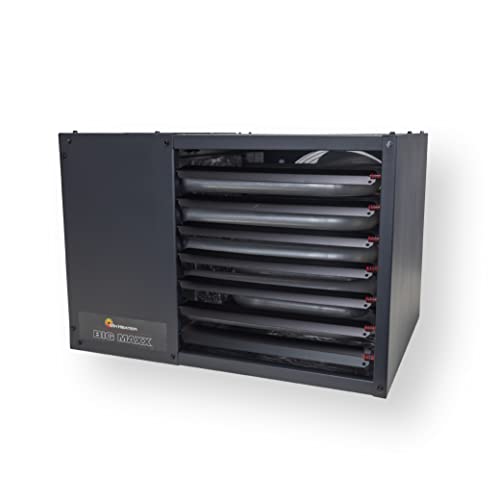
This 80,000 BTU unit is a category vented natural gas heater designed for permanent or semi-permanent installation in garages, workshops, and light commercial spaces. It relies on an electric fan to distribute heated air and is intended to warm areas up to 2,000 sq. ft.
Key Features:
- Included Items: Heater with two angle brackets and LP conversion kit (thermostat and regulator not included).
- Venting: Category 1 vertical or category 3 horizontal venting; follow local code for installation.
- Clearances: Minimum 8 ft. clearance from floor to base of unit; dimensions 29.33” L x 15.50” W x 26.37” H.
- Electrical: Requires 120 V supply for fan (2.3 amps).
Applications:
- Ceiling- or wall-mounted heating for medium to large garages and workshops.
- Spaces where centralized ducting is impractical but a fixed heater is acceptable.
Dyna-Glo IR30NMDG-1 30,000 BTU Natural Gas Infrared Wall Heater

Call 888-896-7031 for Free Local HVAC Quotes – Compare and Save Today!
The Dyna-Glo infrared wall heater uses radiant heat to warm objects and people directly, rather than heating air first. It is a natural gas ready unit that is not designed for fuel conversion and is intended for mounted indoor or sheltered outdoor applications.
Key Features:
- Technology: Infrared radiant heat—heats surfaces and people, similar to sunlight.
- Output: Up to 30,000 BTU, rated for coverage up to ~1,000 sq. ft. depending on insulation and layout.
- Fuel: Natural gas only (no conversion permitted).
Applications:
- Supplemental heating for garages, workshops, and semi-enclosed spaces where targeted radiant heat is preferred.
- Situations where reduced air movement or lower ventilation requirements are desirable.
L.B. White Tradesman 170n Portable Forced Air Heater

This unit represents a high-output portable forced-air heater commonly associated with the “torpedo” category in construction and industrial settings. It is direct-fired and designed for rugged field use, offering the highest BTU output among the selected units.
Key Features:
Call 888-896-7031 for Free Local HVAC Quotes – Compare and Save Today!
- Output Range: 125,000–170,000 BTU/hr suitable for large open job sites, warehouses, and outdoor heating tasks.
- Efficiency: Direct-fired design with claimed high combustion efficiency and an electronic spark ignition with diagnostic lights.
- Durability: Heavy-gauge combustion chamber and tri-shield coating for abrasion and corrosion resistance.
- Intended Use: Primarily construction and industrial use; follow ventilation and safety requirements for direct-fired equipment.
Applications:
- Large, open areas requiring rapid heat input where portability and ruggedness are priorities.
- Temporary heating on job sites, outdoor events, or well-ventilated commercial spaces.
ProCom MN300TBA-B Ventless Natural Gas Blue Flame Space Heater

The ProCom MN300TBA-B is a ventless blue flame natural gas heater intended for indoor residential and light commercial spaces. It emphasizes compact form and thermostat control for zone heating where venting is not possible.
Key Features:
- Output: 30,000 BTU with claimed heating up to 1,400 sq. ft., depending on insulation and layout.
- Controls: Built-in thermostat with High/Medium/Low settings for basic temperature control.
- Installation: Includes wall mount hardware and base feet for floor placement.
- Operation: Ventless design; oxygen depletion sensor and safety shut-off recommended/required by code for ventless appliances.
Applications:
- Zone heating in homes, offices, or cabins where venting to outside is impractical, subject to local codes.
- Supplemental heat for spaces with adequate combustion air and CO/ventilation considerations.
ProCom MN300TPA-B Ventless Natural Gas Infrared Space Heater

This ProCom model combines ventless infrared radiant heating with thermostat control in a compact profile suitable for rooms and offices. It is positioned as an alternative to forced-air torpedo heaters when air movement or permanent installation is a concern.
Key Features:
- Output: 30,000 BTU; marketed coverage up to ~1,400 sq. ft. under optimal conditions.
- Controls: Thermostat with High/Medium/Low heat levels; can be wall-mounted or placed on the floor.
- Design: Slim profile intended to blend with residential interiors while offering infrared heat delivery.
- Safety: Ventless operation requires adherence to combustion air and carbon monoxide safety guidelines.
Applications:
- Indoor rooms where radiant comfort and a compact footprint are preferred to large forced-air units.
- Spaces that need supplemental heat without significant ducting or fan noise.
Buying Guide: How To Choose The Right Natural Gas Torpedo Or Equivalent Heater
Selecting the right natural gas torpedo heater or alternative requires assessing environment, output needs, fuel type, installation constraints, and safety. Below are the key considerations to compare models and ensure safe, effective heating.
Heat Output And Coverage
BTU rating is the first metric: torpedo and forced-air heaters typically range from tens of thousands to over 100,000 BTU. Match BTU to volume of space (ceiling height and insulation influence performance). For rough guidance, insulated workshop spaces may require 30–80k BTU; large open job sites often need 100k+ BTU.
Heater Type: Forced-Air vs. Infrared vs. Blue Flame
- Forced-Air/Direct-Fired Torpedo: Rapidly moves large volumes of hot air; good for open, ventilated areas and construction sites. Requires ventilation when used indoors if combustion products are released into the space.
- Infrared: Radiant heat warms surfaces and people directly; effective for targeted heating with less air movement and perceived warmth at lower air temps.
- Blue Flame/Ventless: Heats room air evenly without venting; must meet local codes and require adequate combustion air and safety devices (OD sensor, CO monitoring).
Ventilation, Installation, And Mounting
Consider whether you need a portable unit or a mounted heater. Direct-fired portable torpedo heaters often work outdoors or in well-ventilated spaces. Unit heaters
Safety Features And Codes
- Oxygen Depletion Sensor (ODS): Important for ventless units; shuts off the unit if oxygen falls below safe levels.
- Carbon Monoxide Safety: Any natural gas appliance can produce CO—install CO detectors and follow local codes.
- Clearances & Mounting: Observe manufacturer-mandated clearances and secure mounting hardware for fixed units.
Duty Cycle, Durability, And Use Case
For construction and continuous high-output use choose a rugged direct-fired portable with durable housing, diagnostic ignition, and corrosion-resistant coatings. For residential supplemental heating, ventless or infrared units with thermostat control and lower noise may be preferable.
Fuel And Conversion Limitations
Some units are specific to natural gas and do not permit LP conversion. Verify the fuel compatibility and any included conversion kits before purchase. If conversion is required, ensure it is done by a qualified technician following manufacturer instructions and codes.
Electrical Requirements
Some heaters require electrical power for fans or ignition. Confirm voltage and amperage requirements and whether your installation can provide the needed circuit.
Maintenance And Serviceability
Look for models with accessible ignition systems, replaceable parts, and clear diagnostics to simplify field maintenance. High-use environments benefit from heavy-gauge construction and corrosion-resistant finishes.
Comparison Perspectives
- High Output/Portability: Choose the L.B. White Tradesman for powerful, rugged, portable heat for job sites.
- Fixed Workshop Heating: Consider the Mr. Heater Big Maxx for ceiling/wall-mounted forced-air distribution.
- Targeted Radiant Heat: Infrared units like Dyna-Glo or ProCom infrared models deliver direct comfort with less air movement.
- Indoor Ventless Convenience: ProCom ventless blue flame models offer simple installation where venting is impractical but require strict adherence to indoor-air-safety practices.
Final checklist before purchase: verify intended location (indoor vs outdoor), confirm fuel type, check local codes for ventless appliances, ensure required clearances and electrical supply, and choose the heat delivery method that matches how you want the space warmed (air movement versus radiant warmth).
Tips for Getting the Best HVAC Prices
- Prioritize Quality Over Cost
The most critical factor in any HVAC project is the quality of the installation. Don’t compromise on contractor expertise just to save money. - Check for Rebates
Always research current rebates and incentives — they can significantly reduce your overall cost. - Compare Multiple Quotes
Request at least three estimates before making your choice. You can click here to get three free quotes from local professionals. These quotes include available rebates and tax credits and automatically exclude unqualified contractors. - Negotiate Smartly
Once you've chosen a contractor, use the proven strategies from our guide — How Homeowners Can Negotiate with HVAC Dealers — to get the best possible final price.