
Choosing a large propane heater means balancing output, installation type, safety features, and the space you need to warm. Below is a quick comparison of recommended models selected for higher BTU output, suitability for larger areas, and varied installation options.
| Product | Type | Max BTU | Typical Coverage |
|---|---|---|---|
| Mr. Heater Big Maxx MHU80NG | Wall/Hangar Natural Gas/LP convertible | 80,000 | Up to ~2,000 sq. ft. |
| Amazon Basics Outdoor Propane Patio Heater | Freestanding Patio | 46,000 | Up to ~9 ft radius |
| Dyna-Glo IR30PMDG-1 Infrared Wall Heater | Wall-mounted Infrared (LP) | 30,000 | Up to ~1,000 sq. ft. |
| Mr. Heater 18,000 BTU Big Buddy Pro | Portable Radiant Propane | 18,000 | Up to ~450 sq. ft. |
| Mr. Heater MHVFBF20LPT 20,000 BTU Blue Flame | Wall-mounted Vent-Free | 20,000 | Up to ~700 sq. ft. |
Content Navigation
- Mr. Heater Big Maxx MHU80NG 80,000 BTU Natural Gas Unit Heater
- Amazon Basics 46,000 BTU Outdoor Propane Patio Heater With Wheels
- Dyna-Glo IR30PMDG-1 30,000 BTU Liquid Propane Infrared Vent Free Wall Heater
- Mr. Heater 18,000 BTU Big Buddy Pro Portable Propane Heater
- Mr. Heater MHVFBF20LPT 20,000 BTU Blue Flame Vent Free Propane Heater
- Buying Guide: Choosing A Large Propane Heater
Mr. Heater Big Maxx MHU80NG 80,000 BTU Natural Gas Unit Heater
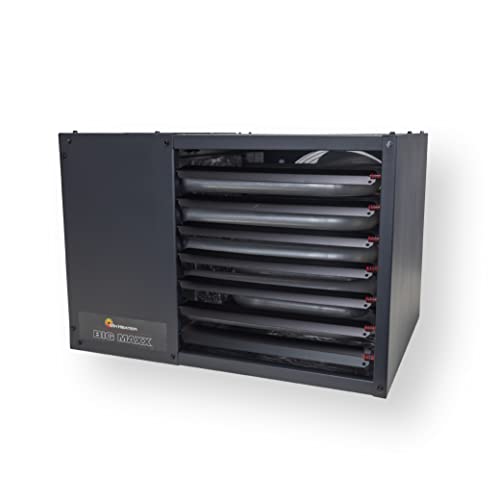
Type And Output: This is a high-capacity unit heater rated at 80,000 BTU, designed to warm large garages, workshops, and commercial spaces with coverage claims up to roughly 2,000 sq. ft.
Key Features: Includes a propane conversion kit, two angle mounting brackets, and runs on natural gas by default. It operates on 120 V with low electrical draw and specifies clearance and venting categories for safe installation.
Installation And Use: The heater requires fixed gas piping and proper venting per its category (vertical/horizontal). A professional gas hookup and attention to the specified minimum clearances are necessary for safe operation.
Safety And Considerations: This model is intended for permanent installation. It does not come with a thermostat or regulator, so plan for compatible controls. The size and venting requirements make it better suited to larger, well-ventilated spaces rather than small rooms.
Call 888-896-7031 for Free Local HVAC Quotes – Compare and Save Today!
Amazon Basics 46,000 BTU Outdoor Propane Patio Heater With Wheels

Type And Output: A freestanding commercial-style patio heater offering 46,000 BTU for outdoor seating areas, patios, and restaurant spaces with a heating radius around nine feet.
Key Features: Built-in wheels for mobility, one-touch ignition for quick start-up, and adjustable heat control. The design includes a water tank for base stability and is intended for outdoor use only.
Installation And Use: Assembly is required; the unit accepts standard propane cylinders. Because it’s designed for outdoor use, it’s suitable for uncovered patios and commercial outdoor dining spaces rather than enclosed rooms.
Safety And Considerations: As an outdoor-only appliance, this model avoids indoor venting concerns. Check local codes for commercial use and ensure a stable placement and routine inspection of hoses and fittings.
Dyna-Glo IR30PMDG-1 30,000 BTU Liquid Propane Infrared Vent Free Wall Heater

Call 888-896-7031 for Free Local HVAC Quotes – Compare and Save Today!
Type And Output: A 30,000 BTU vent-free infrared wall heater intended for propane use only. Infrared radiation warms objects and people directly rather than relying solely on air convection.
Key Features: Variable output from 6,000 to 30,000 BTU and designed to heat up to approximately 1,000 sq. ft. The unit is engineered for wall mounting and provides immediate radiant warmth.
Installation And Use: Because this model is vent-free and LP-specific, it should be installed following manufacturer spacing requirements and local building codes. It’s a viable option for sunrooms, enclosed patios, or rooms that permit vent-free appliances.
Safety And Considerations: Vent-free appliances rely on indoor combustion and must be used where ventilation and oxygen depletion sensors are appropriate. Confirm that your space is compatible with LP-only units and that local codes allow vent-free heaters.
Mr. Heater 18,000 BTU Big Buddy Pro Portable Propane Heater
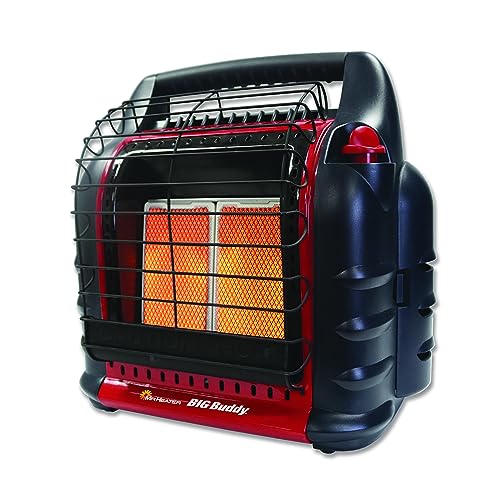
Type And Output: A portable radiant heater that offers variable settings from 4,000 to 18,000 BTU and is approved for both indoor and outdoor use. Coverage is listed up to about 450 sq. ft.
Key Features: Radiant infrared heating provides direct warmth to people and objects. The unit includes safety features like tip-over shutoff and oxygen depletion sensing, plus a piezo igniter for match-free startup.
Installation And Use: The compact, portable design accepts standard propane cylinders and is suitable for workshops, tents (if permitted), garages, and patios. It’s useful for spot heating where mobility is needed.
Safety And Considerations: While the unit is certified for indoor use, monitoring ventilation and following manufacturer safety distances are essential. At high altitudes, safety devices may activate differently; refer to the manual for altitude guidance.
Mr. Heater MHVFBF20LPT 20,000 BTU Blue Flame Vent Free Propane Heater
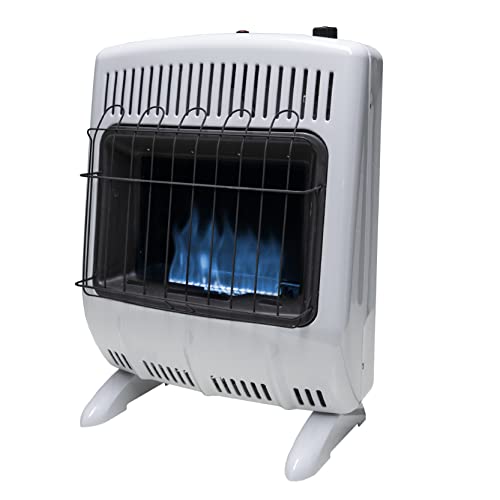
Type And Output: A wall-mounted vent-free blue flame heater delivering up to 20,000 BTU, designed to heat rooms up to around 700 sq. ft.
Key Features: Thermostat control, battery-powered electronic ignition, and an Oxygen Depletion Sensor (ODS) for automatic shutoff if low oxygen is detected. Rated to perform reliably up to certain elevation limits.
Installation And Use: Designed for indoor use where vent-free appliances are permitted. The thermostat provides temperature control for more consistent room comfort compared with simple on/off models.
Safety And Considerations: Vent-free blue flame units produce combustion byproducts into the room; proper ventilation and adherence to local codes are required. Ensure regular maintenance and consider an ODS-equipped unit for added safety.
Buying Guide: Choosing A Large Propane Heater
Selecting the right large propane heater depends on several practical factors. Below are key considerations to compare models effectively.
Tips for Getting the Best HVAC Prices
- Prioritize Quality Over Cost
The most critical factor in any HVAC project is the quality of the installation. Don’t compromise on contractor expertise just to save money. - Check for Rebates
Always research current rebates and incentives — they can significantly reduce your overall cost. - Compare Multiple Quotes
Request at least three estimates before making your choice. You can click here to get three free quotes from local professionals. These quotes include available rebates and tax credits and automatically exclude unqualified contractors. - Negotiate Smartly
Once you've chosen a contractor, use the proven strategies from our guide — How Homeowners Can Negotiate with HVAC Dealers — to get the best possible final price.
Heat Output And Coverage
- BTU Rating: Match the BTU output to the area you need to heat. Higher BTUs are required for larger or poorly insulated spaces.
- Type Affects Perceived Warmth: Infrared/radiant heaters warm people and objects directly, while blue-flame and vent-free units rely more on room air convection.
Installation Type
- Freestanding Patio Heaters: Best for outdoor seating areas; require no venting but are not suitable for enclosed spaces.
- Wall-Mounted Unit Heaters: Provide permanent heat for garages and workshops; often need professional gas and electrical hookups.
- Vent-Free Blue Flame: Easy to install and efficient but emit combustion products into the room; confirm local code allowances.
- Portable Radiant Units: Offer spot heating and mobility; suitable for temporary needs or smaller spaces.
Fuel Type And Conversion
- Propane vs Natural Gas: Some units are LP-only, others are natural gas with conversion kits. Choose based on fuel availability and conversion requirements.
- Conversion Kits: If you plan to convert fuel types, verify the unit includes or supports a certified conversion kit and follow manufacturer instructions.
Safety Features And Certifications
- Oxygen Depletion Sensor (ODS): Important for indoor vent-free heaters; automatically shuts off in low-oxygen conditions.
- Tip-Over Switch: Essential for portable and freestanding units to prevent accidents.
- Certified For Intended Use: Ensure units are listed for indoor or outdoor use per manufacturer documentation and local code requirements.
Ventilation And Local Codes
- Vent-Free Considerations: Many jurisdictions restrict or prohibit vent-free heaters; always check local building codes before installation.
- Vent Requirements: High-output unit heaters may require venting or specific clearance zones—professional installation is often recommended.
Control And Efficiency
- Thermostat Control: Built-in thermostats provide better comfort and fuel efficiency compared to fixed-output units.
- Variable Output: Adjustable BTU ranges let you tune heat to conditions and conserve fuel.
Durability And Maintenance
- Materials And Corrosion Resistance: Outdoor patio heaters should use rust-resistant materials and a stable base.
- Serviceability: Check availability of parts like thermocouples, valves, and ignition assemblies to extend lifespan.
Comparison Perspectives
- Large Area Coverage: For garages and workshops, fixed unit heaters with higher BTUs (60k–80k) provide more consistent whole-space warmth.
- Outdoor Commercial Use: Freestanding patio heaters with 40k–50k BTU suit restaurant or patio zones where ambient air displacement is expected.
- Energy Efficiency: Radiant and infrared models can feel warmer at lower air temperatures, offering efficiency advantages for spot heating.
- Indoor Safety: If indoor use is required, prioritize units with ODS and certifications for indoor operation, or choose vented/heater units with proper exhaust solutions.
Final Practical Tips
- Measure the space and calculate the required BTUs per square foot considering insulation and ceiling height.
- Confirm fuel source availability and whether conversion is needed, and if so, whether a certified kit is provided.
- Factor in installation complexity—portable vs. permanent—and budget for professional installation when required.
- Maintain regular inspections of gas lines, fittings, ignition systems, and safety devices.