
Find efficient, safe, and space-saving wall-mounted electric heaters for bedrooms, offices, and supplemental heating. Below is a quick comparison of the selected wall heater units to help you identify models with thermostat control, smart features, plug-in convenience, or built-in digital controls.
| Model | Key Feature | Best For |
|---|---|---|
| Cadet CSC151TW | Built-in thermostat, 1500W, 120V | Standard wall-mounted room heating |
| Cadet CSC202TW | 240/208V option, fan-assisted rapid heating | Faster heat distribution in medium rooms |
| Cadet CEC163TW | Digital thermostat, multiple watt/volt options | Precise temperature control and retrofit |
| Dreo WH719S | Smart controls, 120° oscillation, PTC ceramic | Remote app and voice control with wide coverage |
| ENVI Plug-in Panel | Fan-less, low-wattage, plug-in installation | Quiet 24/7 supplemental heat and allergy-friendly use |
Content Navigation
- Cadet Com-Pak Electric Wall Heater CSC151TW
- Cadet Com-Pak Electric Wall Heater CSC202TW
- Cadet Energy Plus Wall Heater CEC163TW
- Dreo Smart Wall Heater WH719S
- ENVI Plug-In Electric Panel Wall Heater
- Buying Guide: Choosing The Right Wall-Mounted Electric Heater
- Heating Capacity And Room Size
- Voltage And Circuit Requirements
- Thermostat Type And Temperature Control
- Heat Distribution Methods
- Installation Flexibility
- Safety Features
- Noise And User Comfort
- Energy Efficiency And Operating Cost
- Smart Features And Remote Control
- Maintenance And Longevity
- Comparison Perspectives
Cadet Com-Pak Electric Wall Heater CSC151TW

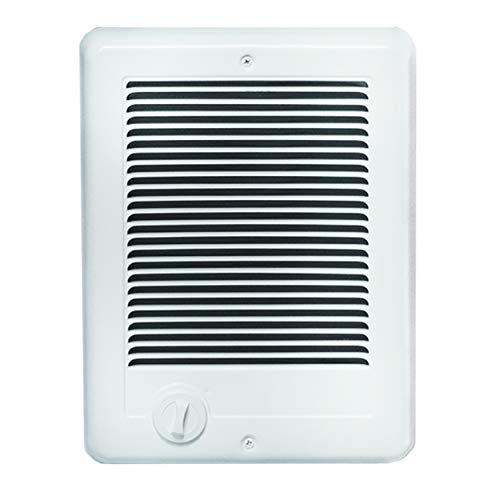
The Cadet Com-Pak CSC151TW is a complete wall heater unit with a built-in thermostat. It operates at 120 volts and 1500 watts, providing approximately 5120 BTU of heat output. The unit is designed for recessed or surface mounting depending on installation requirements.
Features listed include a complete unit with thermostat, compatibility for common wall cans, and a design aimed at typical room heating applications. The integrated thermostat enables room temperature control without a separate wall control.
Installation notes: this model requires appropriate electrical wiring for a 120V, 15A circuit and standard wall spacing. Safety features typical of Cadet units include thermal safeguards that shut the heater off if operating temperatures exceed normal limits.
Cadet Com-Pak Electric Wall Heater CSC202TW
Call 888-896-7031 for Free Local HVAC Quotes – Compare and Save Today!
The Cadet CSC202TW accepts 240/208 volts and provides dual wattage options (2000/1500 Watt). Its features emphasize fast heating using a coil element, intended to warm areas quickly and efficiently.
Key features include a fan to help circulate warm air, recommended coverage up to roughly 200 sq. ft. for the 1500W setting, and safety cutoffs that protect against overheating. The model notes ceiling installation is possible for lower-wattage variants.
This unit is suitable where a higher-voltage connection is available and where faster distribution of heat is desired. Consideration should be given to circuit capacity and whether fan-assisted circulation is preferable for the intended room layout.
Cadet Energy Plus Wall Heater CEC163TW

The Cadet Energy Plus CEC163TW integrates a digital thermostat and offers multiple voltage and wattage configurations (240/208/120V; 1600/1500/1000W). The onboard digital controls use push buttons and a large display for ease of operation.
Features include thermal safeguard protection, straightforward retrofit options using common Cadet wall cans to avoid wall patchwork, and user-friendly controls without complex programming. The model is positioned for those who want precise temperature control and a modern interface.
Call 888-896-7031 for Free Local HVAC Quotes – Compare and Save Today!
Because the unit supports several voltages and wattages, it can accommodate different installation setups and room sizes. The digital thermostat provides a more precise temperature setting than mechanical thermostats for consistent comfort.
Dreo Smart Wall Heater WH719S

The Dreo WH719S is a smart wall-mounted PTC ceramic heater featuring 120° vertical oscillation for wide heat distribution. The unit emphasizes smart control via an app, remote, and voice assistants like Alexa and Google Home.
Primary features include precise temperature control from 41 to 95°F (1°F accuracy), scheduling and remote access, and a fast, steady heating element. The wide oscillation aims to reduce cold spots and distribute warmth evenly from top to bottom.
The WH719S suits users seeking connected functionality and automated schedules. Consider the need for a nearby electrical connection rated for the heater and whether an integrated wall mount is compatible with your wall structure and room layout.
ENVI Plug-In Electric Panel Wall Heater
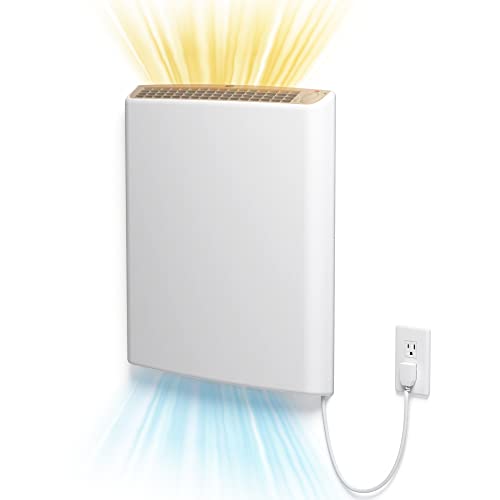
The ENVI plug-in panel is a fan-less, low-wattage wall heater designed for continuous operation. It uses patented convection stacking to deliver quiet, gentle warmth with minimal moving parts and reduced noise.
Features highlighted include safe, cool-surface operation (~90°F surface), a wall-sense safety sensor that cuts power if removed, and design benefits for allergy sufferers since it does not blow dust. It is marketed for 24/7 supplemental heating and ease of installation.
This model is appropriate for bedrooms, nurseries, or spaces where silent operation and low surface temperature are priorities. Installation is straightforward as a plug-in panel, reducing the need for hardwiring in retrofit situations.
Buying Guide: Choosing The Right Wall-Mounted Electric Heater
This guide covers the core considerations when selecting a wall heater unit for home or small commercial spaces. Comparing features across power, control, installation, safety, and operating noise will help match the right unit to your needs.
Heating Capacity And Room Size
Check the wattage and estimated BTU output relative to room square footage. Typical guidance: 1500W (about 5,000 BTU) suits small to medium rooms. Higher wattage or multiple units are needed for larger or poorly insulated spaces.
Voltage And Circuit Requirements
Confirm the available electrical supply: common wall units use 120V or 240V. Higher-voltage models deliver more power but require appropriate wiring and circuit breakers. Have a qualified electrician verify compatibility during installation.
Thermostat Type And Temperature Control
Mechanical thermostats provide basic on/off control. Digital thermostats
Heat Distribution Methods
Fan-assisted units distribute air more quickly but add audible noise and moving parts. Fan-less convection panels produce silent, steady warmth and are often better for allergy-sensitive rooms.
Installation Flexibility
Consider recessed vs. surface mounting, ceiling installation options, and whether a plug-in model is acceptable. Reusing existing wall cans (as some Cadet models allow) can simplify retrofits and avoid drywall repairs.
Safety Features
Look for thermal safeguard cutoffs, cool-surface designs for plug-in panels, tip-over protection for portable models, and wall-sense sensors for removable plug-in units. Safety certifications and listed safeguards reduce risk in continuous-use scenarios.
Noise And User Comfort
Fan-driven heaters may produce audible level differences. If the heater will be used in bedrooms or study areas, opt for fan-less or low-noise fan systems to minimize disturbance.
Energy Efficiency And Operating Cost
Electric heaters convert nearly all input power to heat, but operating cost depends on wattage, run-time, thermostat control, and insulation. Models with precise thermostats, ECO modes, or scheduling tend to reduce unnecessary run-time.
Smart Features And Remote Control
Smart heaters offer app control, scheduling, and voice integration. These features can improve convenience and energy management but require Wi‑Fi and may need periodic firmware updates or account setup.
Maintenance And Longevity
Fan-assisted units need occasional dusting and grille cleaning; fan-less panels require minimal maintenance. Check warranty coverage and availability of replacement parts for long-term reliability.
Comparison Perspectives
- Performance vs. Noise: Fan-assisted Cadet models heat rooms faster but are noisier than ENVI’s fan-less panel.
- Control vs. Simplicity: Cadet Energy Plus offers precise digital controls without app dependencies, while Dreo provides smart features and scheduling for remote management.
- Installation vs. Flexibility: Plug-in models like ENVI simplify installation; hardwired Cadet units may integrate more cleanly into wall infrastructure but require electrician work.
- Safety and Suitability: Low-surface-temperature and wall-sense sensors are preferable in households with children or pets, while thermal cutoffs are a baseline requirement in all electric wall heaters.
Use these criteria to narrow options: determine the required wattage for your room, choose the thermostat and control level you want, verify electrical compatibility, and decide whether noise or silent operation is a priority. Matching these factors to the features above will guide a well-informed selection.
Tips for Getting the Best HVAC Prices
- Prioritize Quality Over Cost
The most critical factor in any HVAC project is the quality of the installation. Don’t compromise on contractor expertise just to save money. - Check for Rebates
Always research current rebates and incentives — they can significantly reduce your overall cost. - Compare Multiple Quotes
Request at least three estimates before making your choice. You can click here to get three free quotes from local professionals. These quotes include available rebates and tax credits and automatically exclude unqualified contractors. - Negotiate Smartly
Once you've chosen a contractor, use the proven strategies from our guide — How Homeowners Can Negotiate with HVAC Dealers — to get the best possible final price.