
Choosing the right high-output torpedo heater can make the difference when heating construction sites, warehouses, and outdoor event spaces. This guide compares five relevant heavy-duty forced-air and convection heaters, including a true 200,000 BTU model and several high-output alternatives. A quick summary table is provided for fast comparison, followed by focused product reviews and a detailed buying guide.
| Model | Type | Output | Notable Feature |
|---|---|---|---|
| Dura Heat LPC200 | LP Convection | 200,000 BTU | Long run time on large cylinder, collapsible design |
| Mr. Heater MH170QFAVT | Propane Forced-Air | 125,000–170,000 BTU | Quiet burner technology, safety controls |
| ProTemp PT-140T-KFA | Kerosene/Diesel Forced-Air | 140,000 BTU | High airflow (up to 12,000 CFM), durable construction |
| Towallmark 125,000 | Diesel/Kerosene Forced-Air | Up To 125,000 BTU | Multi-fuel capability, thermostat control |
| Mr. Heater 125,000 F271390 | Propane Forced-Air | 125,000 BTU | Quiet burner, includes hose & regulator |
Dura Heat LPC200 200K BTU Heater

The Dura Heat LPC200 is a dedicated 200,000 BTU outdoor/portable LP convection heater designed to serve very large spaces. Its features include long run capability when paired with a large LP cylinder and a collapsible two-piece design for easier transport and storage. A built-in wind shield helps protect the burner flame in exposed environments.
Because this model is a convection unit, heating distribution is best for semi-enclosed or open-air areas where warm air circulation is sufficient. The collapsible design makes it more practical on job sites where transport and compact storage matter. Safety and proper ventilation remain essential when using high-output LP convection heaters.
Mr. Heater MH170QFAVT 170K BTU Heater

The Mr. Heater MH170QFAVT is a high-output forced-air propane heater offering variable performance from 125,000 to 170,000 BTU. It is rated to heat up to 4,250 sq ft under ideal conditions and features quiet burner technology, which reduces operational noise by about half compared with standard propane torpedo heaters.
Call 888-896-7031 for Free Local HVAC Quotes – Compare and Save Today!
Built-in safety features include a high-temperature limit switch and thermoelectric safety valves. The unit’s rugged construction and heavy-duty handle are intended for job site environments. As a forced-air design, it provides rapid spot heating and strong airflow, which is useful in well-ventilated or open work areas.
ProTemp PT-140T-KFA 140K Kerosene/Diesel Heater

The ProTemp PT-140T-KFA is a forced-air torpedo heater rated at 140,000 BTU, using kerosene or diesel. It emphasizes airflow performance, with matched direct-drive motors and blades reaching high CFM levels for fast heat delivery. The powder-coated steel guards contribute to corrosion resistance and durability.
This heater is energy-efficient, drawing low electrical amperage and is positioned for warehouses, construction, and workshops where liquid fuel availability is preferred. Forced-air operation provides quick warm-up and targeted heating, though ventilation and combustion air supply must be considered with liquid-fuel torpedo heaters.
Towallmark 125,000 BTU Multi-Fuel Heater
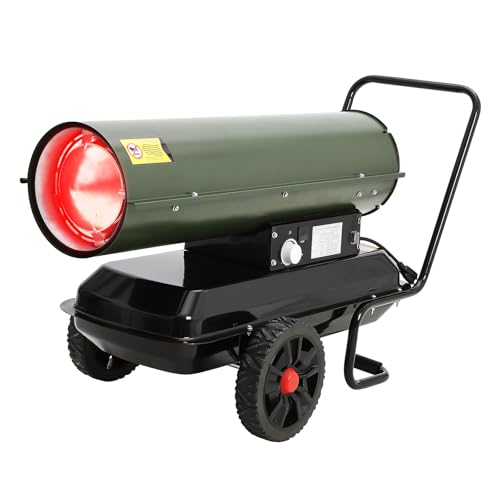
The Towallmark 125,000 BTU unit is a portable forced-air heater with multi-fuel capability — it can run on kerosene, diesel, home heating oil, and jet fuel (explicitly not gasoline). It includes thermostat temperature control and a 26L fuel tank, offering up to about 8 hours runtime on a full tank depending on settings.
Call 888-896-7031 for Free Local HVAC Quotes – Compare and Save Today!
Its portability and fuel flexibility make it useful on sites where liquid fuels are the norm. The unit’s output is suitable for medium-to-large spaces; however, it does not reach 200,000 BTU output. For applications where pure maximum BTU is required, consider larger LP or industrial units.
Mr. Heater 125,000 BTU Forced-Air Heater F271390

The Mr. Heater F271390 is a 125,000 BTU forced-air propane heater featuring quiet burner technology, a 10 ft hose and regulator for remote cylinder connection, and a high-temperature limit switch. Its forced-air design gives quick warm-up times and is commonly used for job sites and garages.
This model is an option when reliability, lower noise, and straightforward propane operation are priorities. It pairs well when slightly lower output but enhanced portability and quieter operation are preferred over maximum BTU output.
Buying Guide: How To Choose A High-Output Torpedo Heater
BTU Output And Space Size
Match BTU To Space: Calculate the approximate BTU needed based on the volume and insulation level. High-output units (100K–200K+ BTU) are suited to large, open, or drafty spaces. A true 200,000 BTU model like the Dura Heat LPC200 is intended for the largest semi-enclosed areas.
Fuel Type And Availability
Propane offers clean combustion, quick startup, and portability with standard cylinders. Diesel/kerosene torpedoes provide longer run times per tank and are common on job sites but require careful fuel handling and maintenance. LP cylinder size and onsite refueling logistics should drive the choice.
Forced-Air Vs Convection
Forced-air (torpedo) heaters deliver rapid, directional heat and are ideal for spot heating and quick warm-ups. Convection heaters distribute heat more evenly in semi-enclosed spaces but are less directional. Choose based on whether you need quick spot heat or general space warming.
Ventilation And Safety
High-BTU combustion heaters require adequate ventilation and clearance. Look for models with safety shutoffs, high-temperature limit switches, and, where relevant, thermoelectric valves. Follow manufacturer guidelines for combustion air and exhaust management.
Noise Level And Work Environment
Quiet burner technology can reduce noise roughly 50% in some models, which matters in occupied work areas. Assess whether operational noise will disrupt occupants or tasks.
Portability And Setup
Consider weight, handles, and design features like collapsible assemblies for transport. Remote cylinder connection hoses and included regulators increase flexibility for placement and safe operation.
Fuel Efficiency And Runtime
Check rated runtime on the chosen fuel and tank/cylinder size. Some LP convection models achieve long continuous operation with large cylinders, while liquid-fuel torpedoes have on-board tanks that determine runtime between refills.
Durability And Maintenance
Look for corrosion-resistant coatings, powder-coated guards, and serviceable components. Regular maintenance includes fuel filter checks, burner inspections, and keeping air intakes clear.
Control Features
Thermostats, variable output settings, and included regulators or hoses add usability. Thermostat control is helpful for maintaining steady temperatures without constant oversight.
Application-Specific Considerations
Indoor use in enclosed occupied spaces often requires electric or indirect-fired heaters; direct-fired torpedo heaters are usually reserved for ventilated or outdoor applications. Verify local codes and workplace safety requirements.
Comparison Perspectives: If maximum BTU is the priority, choose a dedicated 200K LP convection model. For rapid warm-up and spot heating with portability, high-output forced-air propane or diesel models are often preferable. Fuel logistics, required runtime, and noise constraints will determine which design best suits your site.
Tips for Getting the Best HVAC Prices
- Prioritize Quality Over Cost
The most critical factor in any HVAC project is the quality of the installation. Don’t compromise on contractor expertise just to save money. - Check for Rebates
Always research current rebates and incentives — they can significantly reduce your overall cost. - Compare Multiple Quotes
Request at least three estimates before making your choice. You can click here to get three free quotes from local professionals. These quotes include available rebates and tax credits and automatically exclude unqualified contractors. - Negotiate Smartly
Once you've chosen a contractor, use the proven strategies from our guide — How Homeowners Can Negotiate with HVAC Dealers — to get the best possible final price.