
Finding the right 220V garage heater with a thermostat means balancing power, safety features, installation type, and control options. Below is a concise comparison of the selected high-voltage garage heaters to help you narrow choices quickly.
| Product | Type | Key Feature | Voltage |
|---|---|---|---|
| CTSC 10000W Electric Garage Heater | Hardwired Ceiling/Wall | Digital Thermostat, Remote, Voltage Display | 240V |
| TEMPWARE 7500W Digital Fan-Forced Heater | Hardwired Ceiling | Built-In Thermostat, ECO Mode, Timer | 240V |
| Comfort Zone CZ225ER 6000W Ceiling Heater | Hardwired Ceiling | Digital Thermostat, Remote, Timer | 240V |
| Dr. Infrared 10,260 BTU / 3000W Infrared Heater | Ceiling/Wall Mount Infrared | 220–240V Operation, Remote | 220–240V |
| Comfort Zone CZ220BK 5000W Ceiling Heater | Hardwired Ceiling | Fan-Forced With Adjustable Louvers | 240V |
CTSC 10000W Electric Garage Heater

Brand: CTSC
This hardwired 240V heater offers up to 10,000W of fan-forced heat with a digital thermostat, remote control, timer and ECO function. The unit includes a voltage display to help identify improper supply voltage during setup. Constructed from SPCC cold-rolled steel, it lists overheat protection and ETL certification for safety.
- Controls: Digital touch panel plus remote for setpoint adjustment and timer functions.
- Heat Settings: Multiple power modes (10000W, 7500W, Fan Only) for flexible output.
- Installation: Hardwired 240V suitable for garages and workshops; sturdy ceiling or wall mounting.
- Safety: Overheat protection and ETL listing.
The voltage display is helpful for installers and troubleshooting; the digital thermostat enables maintaining a target ambient temperature without external controls. This unit targets users who need higher wattage zones and integrated electronic controls.
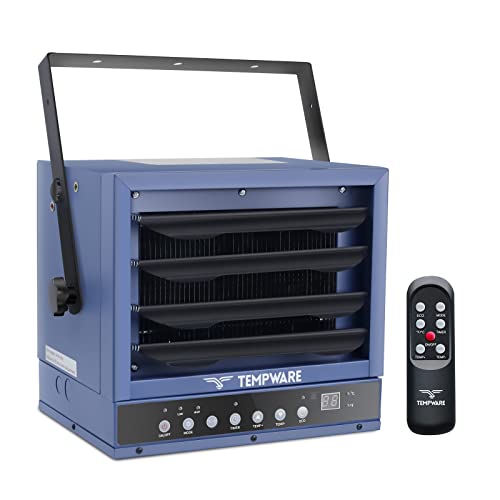
TEMPWARE 7500W Digital Fan-Forced Garage Heater
Call 888-896-7031 for Free Local HVAC Quotes – Compare and Save Today!
Brand: TEMPWARE
This 240V ceiling-mounted heater delivers up to 7,500W and includes an integrated thermostat, ECO mode and a full-function remote. Adjustable louvers and mounting angle enable targeted airflow, while the internal sensor provides overheat protection and a built-in timer (1–12 hours).
- Thermostat: Built-in temperature sensor with setpoint control from 45°F to 95°F.
- Energy Features: ECO mode optimizes output based on ambient temperature.
- Controls: Remote plus onboard controls and timer for scheduled operation.
- Installation: Hardwired ceiling installation; angle-adjustable louvers for directional heat.
The integrated thermostat and ECO function make this unit suitable for users aiming to manage runtime and energy use in garages or medium-size shops. The timer adds convenience for automated shutoff during off-hours.
Comfort Zone CZ225ER 6000W Ceiling Mount Heater

Brand: Comfort Zone
This 6,000W hardwired ceiling heater operates at 240V and features a digital thermostat, remote control, overheat protection and a 12-hour timer. The fan-forced design with adjustable vents aims to distribute warm air across larger spaces.
Call 888-896-7031 for Free Local HVAC Quotes – Compare and Save Today!
- Controls: Digital thermostat plus remote control for setpoint and timer.
- Heat Distribution: Adjustable directed airflow vents to reduce cold spots.
- Construction: Heavy-gauge steel housing intended for durability in workshop environments.
- Safety: Thermal cut-out switch and overheat protection.
This model emphasizes wide air distribution and electronic control. The built-in thermostat and timer help maintain a stable workspace temperature without separate thermostat wiring.
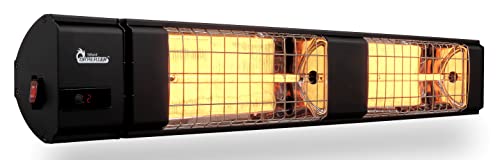
Dr. Infrared 10,260 BTU / 3000W Infrared Heater
Brand: DR. INFRARED HEATER
This infrared-style unit operates from 220–240V and uses a 3,000W carbon infrared element to produce immediate radiant heat with a listed output of 10,260 BTU. The heater is weather-resistant (IP55 listed), suitable for both indoor and outdoor-covered spaces, and includes a remote control and multiple power levels.
- Heat Type: Infrared radiant heat, which warms objects and people directly rather than relying only on air convection.
- Controls: Remote for switching between power levels and standby.
- Installation: Ceiling or wall mount with provided hardware; designed for patios, garages, and commercial areas.
- Durability: IP55 weatherproofing expands use cases to covered outdoor spaces.
Infrared units can feel different from fan-forced heaters because they warm surfaces and occupants directly. This model is a candidate when instant, directional warmth and weather resistance are priorities.
Comfort Zone CZ220BK 5000W Ceiling Mount Electric Heater

Brand: Comfort Zone
This hardwired 5,000W ceiling-mounted fan-forced heater is built with heavy-gauge steel and offers directional louvers and an adjustable mounting angle for targeted heat delivery. It lists a thermal cut-out switch for protection from overheating and is ETL compliant.
- Design: Ceiling mount conserves floor space and directs heat downward into the working area.
- Construction: Robust steel housing for durability in less-insulated spaces.
- Heat Control: Louvers and adjustable angle allow targeted heating; thermostat compatibility depends on installation choices.
- Safety: Overheat protection and thermal cut-out switch.
This model suits situations where a durable, space-saving ceiling heater with directional airflow is desirable. For thermostat control, verify included controls or use with a compatible external thermostat or controller per electrical code and manufacturer guidance.
Buying Guide: How To Choose A 220V Garage Heater With Thermostat
Selecting the right 220V garage heater involves evaluating power, heat delivery method, controls, safety, installation, and running costs. Below are the primary considerations and comparison perspectives to guide a purchase.
1. Heat Output And Space Size
Match heater capacity to your garage volume. Higher wattage (e.g., 7,500–10,000W) covers larger or poorly insulated garages faster. Infrared units deliver radiant warmth effective for small to medium zones or targeted heating, while fan-forced units move warm air throughout larger spaces.
2. Thermostat Type And Precision
Integrated digital thermostats allow set-and-forget temperature control. Look for units with a digital thermostat and clear temperature range. Remote control and timer features add convenience. For precision, consider models with onboard sensors and a narrow temperature tolerance.
3. Installation: Hardwired vs. Plug-In
220–240V units typically require a dedicated circuit and professional hardwiring or a specific NEMA outlet. Confirm local electrical code requirements and whether the heater needs a specialized receptacle (e.g., NEMA 6-30R). Ceiling mounts save floor space but require secure support and proper wiring access.
4. Safety Features
Prioritize heaters with overheat protection, thermal cut-outs, ETL or UL listings, and sensors that cut power if displaced. For households with children or pets, look for cool-to-touch surfaces or wall-mounted convectors with low surface temperatures.
5. Heat Distribution: Fan-Forced vs. Infrared
Fan-forced heaters mix air and distribute heat more uniformly, useful for whole-room comfort. Infrared heaters warm objects and people directly and can be more efficient for workstations or drafty spaces where air movement is not wanted.
6. Energy Efficiency And Operating Costs
Check ECO modes, multi-stage heat settings, and timers to reduce runtime and energy use. Lower wattage settings and thermostatic control maintain comfort with reduced consumption. Compare runtime behavior: an efficient thermostat reduces cycles and wasted energy.
7. Controls And Convenience
Digital displays, remote controls, built-in timers, and programmable modes improve usability. Consider whether you need Wi‑Fi or smart thermostat compatibility for remote monitoring and scheduling.
8. Durability And Construction
Heavy-gauge steel housings and corrosion-resistant components increase longevity in garages exposed to temperature swings, humidity, or dust. For semi-outdoor or covered patio use, look for weatherproof ratings such as IP55.
9. Noise Levels
Fan-forced units produce some airflow noise; if quiet operation is essential, assess fan-less convectors or infrared options for lower audible levels during operation.
10. Maintenance And Serviceability
Consider ease of filter cleaning (if applicable), access to fan or element components for service, and manufacturer support. Units with remote diagnostics (voltage display, error codes) can simplify troubleshooting.
Comparison Perspectives
- High Power/Whole-Garage Heating: Choose 7,500–10,000W fan-forced heaters (CTSC, high-wattage models) with digital thermostats for uniform air heating.
- Targeted/Instant Warmth: Infrared models (Dr. Infrared) provide immediate radiant heat for workstations and are effective when objects and people need direct warmth.
- Energy Savings: Units with ECO modes, timers, and precise thermostats (TEMPWARE, CTSC) enable lower operating costs when paired with smart heating practices.
- Space-Constrained Installations: Ceiling-mount fan-forced units (Comfort Zone models, TEMPWARE) free floor space and reduce trip hazards in busy workshops.
- Safety-Conscious Environments: Prioritize ETL/UL listings, thermal cut-outs and cool-to-touch designs for homes with children or frequent foot traffic.
When selecting a 220V garage heater with a thermostat, verify installation requirements, local electrical code compliance, and whether professional wiring is needed. Match the heater type to your heating goals—whole-room comfort vs. targeted radiant warmth—then weigh thermostat precision, safety features, and energy-control options.
Tips for Getting the Best HVAC Prices
- Prioritize Quality Over Cost
The most critical factor in any HVAC project is the quality of the installation. Don’t compromise on contractor expertise just to save money. - Check for Rebates
Always research current rebates and incentives — they can significantly reduce your overall cost. - Compare Multiple Quotes
Request at least three estimates before making your choice. You can click here to get three free quotes from local professionals. These quotes include available rebates and tax credits and automatically exclude unqualified contractors. - Negotiate Smartly
Once you've chosen a contractor, use the proven strategies from our guide — How Homeowners Can Negotiate with HVAC Dealers — to get the best possible final price.