
Basement heating needs vary by size, ventilation, and use. Below is a concise comparison of five gas heaters suited for basements — including vented unit heaters, infrared models, and ventless blue-flame options. This guide highlights key specs to help match a heater to your basement’s layout and safety requirements.
| Product | Type | Max BTU | Coverage |
|---|---|---|---|
| Dyna-Glo IR30NMDG-1 | Infrared Wall Heater | 30,000 | Up To 1,000 Sq. Ft. |
| Mr. Heater Big Maxx MHU80NG | Natural Gas Unit Heater (Vented) | 80,000 | Up To 2,000 Sq. Ft. |
| ProCom MN300HBA-B | Ventless Blue Flame | 30,000 | Up To 1,400 Sq. Ft. |
| Mr. Heater MHVFBF30NGT | Vent Free Blue Flame Wall Heater | 30,000 | Up To 1,000 Sq. Ft. |
| ProCom MN300TBA-B | Ventless Blue Flame With Thermostat | 30,000 | Up To 1,400 Sq. Ft. |
Content Navigation
- Dyna-Glo IR30NMDG-1 30,000 BTU Natural Gas Infrared Wall Heater
- Mr. Heater F260560 Big Maxx MHU80NG Natural Gas Unit Heater
- ProCom MN300HBA-B Natural Gas Ventless Blue Flame Heater
- Mr. Heater MHVFBF30NGT 30,000 BTU Vent Free Blue Flame Natural Gas Heater
- ProCom MN300TBA-B Ventless Natural Gas Blue Flame Space Heater With Thermostat
- Buying Guide: How To Choose A Basement Gas Heater
Dyna-Glo IR30NMDG-1 30,000 BTU Natural Gas Infrared Wall Heater

This infrared wall heater uses radiant heat to warm objects and people directly rather than relying solely on room air circulation. It is specified for natural gas and rated up to 30,000 BTU/hr, with a coverage claim around 1,000 sq. ft. Infrared technology can be beneficial in basements with high ceilings or partial open areas because it targets surfaces and occupants for faster perceived warmth.
Key considerations: this model is natural gas only by specification, and installation should follow code for wall-mounted infrared heaters. Radiant units may produce different comfort levels compared to convective or vented systems depending on basement layout.
Mr. Heater F260560 Big Maxx MHU80NG Natural Gas Unit Heater
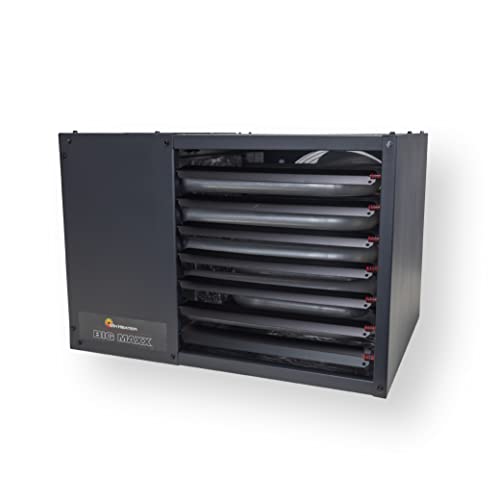
This 80,000 BTU natural gas unit heater is designed for larger basement spaces and utility areas. It includes mounting brackets and supports both vertical and horizontal venting categories depending on installation. The manufacturer rates coverage near 2,000 sq. ft.
Call 888-896-7031 for Free Local HVAC Quotes – Compare and Save Today!
Features include an industrial design intended for garage or shop settings, 120 V electrical requirement for controls, and clearance specifications (minimum 8 ft. to floor). This unit is a vented heater, which directs combustion products outdoors — a key factor for basements where indoor venting and air quality are concerns.
ProCom MN300HBA-B Natural Gas Ventless Blue Flame Heater

This ProCom model is a ventless blue flame heater with a maximum of 30,000 BTU and manual control across three heat settings. It operates without electricity and uses a push-button piezo ignition. An Oxygen Depletion Sensor (ODS) is included for automatic shut-off if oxygen levels drop, meeting a common safety expectation for vent-free appliances.
Ventless systems are efficient at converting fuel to room heat, but they release combustion byproducts into the living space. For basements, confirm local codes and ensure adequate ventilation and CO detection when selecting a ventless model.
Mr. Heater MHVFBF30NGT 30,000 BTU Vent Free Blue Flame Natural Gas Heater
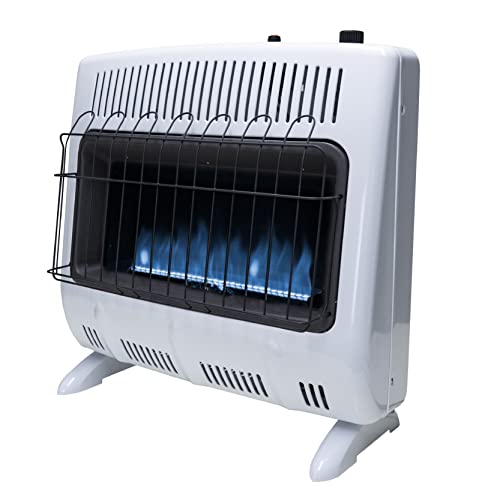
This vent-free wall-mounted blue flame heater delivers up to 30,000 BTUs and includes a built-in thermostat for precise temperature control. It’s intended for areas up to 1,000 sq. ft. and is designed to operate efficiently at elevations up to 4,500 ft.
Call 888-896-7031 for Free Local HVAC Quotes – Compare and Save Today!
Notable features: battery-assisted electric ignition, a blue flame burner for convective heating, and a focus on steady room-air warming. As a vent-free unit, it increases indoor humidity and requires appropriate CO and combustion-air considerations for basement use.
ProCom MN300TBA-B Ventless Natural Gas Blue Flame Space Heater With Thermostat
This ProCom ventless model pairs a 30,000 BTU blue flame burner with thermostat control and includes both wall-mount hardware and base feet for floor placement. The unit is marketed to heat spaces up to 1,400 sq. ft.
Thermostat control allows set-and-forget operation, while the ventless design provides high fuel-to-heat efficiency. Buyers should weigh the benefits of thermostat regulation against ventilation and indoor air quality requirements in basement environments.
Buying Guide: How To Choose A Basement Gas Heater
Selecting a basement gas heater requires balancing heating capacity, venting type, safety features, and installation constraints. Below are key considerations and comparison perspectives to guide selection.
Tips for Getting the Best HVAC Prices
- Prioritize Quality Over Cost
The most critical factor in any HVAC project is the quality of the installation. Don’t compromise on contractor expertise just to save money. - Check for Rebates
Always research current rebates and incentives — they can significantly reduce your overall cost. - Compare Multiple Quotes
Request at least three estimates before making your choice. You can click here to get three free quotes from local professionals. These quotes include available rebates and tax credits and automatically exclude unqualified contractors. - Negotiate Smartly
Once you've chosen a contractor, use the proven strategies from our guide — How Homeowners Can Negotiate with HVAC Dealers — to get the best possible final price.
Heating Capacity And Room Size
- BTU Rating: Match BTU output to basement square footage and ceiling height. Higher BTUs work for larger, open basements; smaller units suit finished or partitioned spaces.
- Coverage Estimates: Manufacturer coverage is a guideline; insulation, thermal loss, and basement layout change actual performance.
Vented vs Ventless vs Infrared
- Vented (Unit Heaters): Exhausts combustion products outdoors. Preferable for basements with adequate venting access or when indoor air quality is a priority.
- Ventless (Blue Flame): Highly efficient at converting fuel to heat, but releases combustion byproducts and moisture into the room. Verify local codes and provide CO detection and adequate combustion air.
- Infrared: Radiant heat warms objects and occupants directly. Useful in high-ceiling basements or areas where targeted heating is desired.
Safety Features
- Oxygen Depletion Sensor (ODS): Automatic shut-off for ventless units if oxygen falls below safe thresholds — essential for basement installations.
- Thermostat Control: Improves comfort and efficiency; helps prevent overheating and wasteful cycling.
- CO Alarms And Ventilation: Always install CO detectors and ensure combustion air supply, especially for ventless or tightly sealed basements.
Installation And Clearance
- Clearance Requirements: Check minimum clearances from walls, floors, and ceilings; some units require an 8 ft. minimum to floor or other specific spacing.
- Venting Options: Vented heaters require routing to the outdoors; assess feasibility and local code for horizontal vs. vertical venting.
- Electrical Needs: Some heaters require 120 V for controls or ignition; others operate without electricity. Plan for power availability if needed.
Efficiency, Comfort, And Indoor Air Effects
- Heat Delivery: Blue flame convective units warm room air, while infrared warms objects. Choose based on how occupants use the basement.
- Moisture Output: Ventless heaters add moisture to the space; consider dehumidification or moisture control in finished basements.
- Operating Costs: Efficiency and thermostat use affect fuel consumption. Larger BTU units run less efficiently if oversized for the space.
Code, Permits, And Professional Installation
- Local Codes: Confirm whether ventless heaters are permitted in your jurisdiction and whether specific venting is required for natural gas appliances.
- Permits: Major installations often require permits and inspections; check local requirements before purchase.
- Professional Installation: For venting, gas connections, and clearances, professional installation helps ensure safety and code compliance.
Comparison Perspectives
- Large Unfinished Basements: Consider high-BTU vented unit heaters for open areas where venting outdoors is feasible.
- Finished Basements With Bedrooms Or Living Areas: Venting and indoor air quality become more important; vented options or properly installed radiant systems are preferable.
- Targeted Heating Or High Ceilings: Infrared radiant heaters can deliver more immediate comfort to occupants without heating all the air volume.
- Limited Venting Access: Ventless blue flame heaters offer easy installation but require attention to combustion air, CO detection, and building codes.