
Choosing the right electric heater for a bedroom means balancing quiet operation, safety features, and efficient warmth. Below is a quick comparison of top bedroom-friendly heaters selected for compact rooms, safety certifications, and low noise.
| Product | Best For | Key Features |
|---|---|---|
| Dreo Space Heater 25″ (Gold) | Large Bedrooms, Quick Heat | Hyperamics thermal design, child lock, ETL safety |
| Dreo 1500W Fast Heating Portable | Even Coverage, Oscillation | 1500W PTC, 70° oscillation, 12H timer |
| Dreo 1500W PTC Ceramic Heater | Quiet Sleep-Friendly Option | ETL-certified, 12-hour timer, 34dB noise |
| GiveBest Portable Ceramic Heater | Compact Desktop Or Small Rooms | Two heat levels, thermostat, tip-over shutoff |
| Dr Infrared Heater 1500W | Large Rooms, Infrared + PTC Combo | Dual heating system, remote, low-noise blower |
Content Navigation
Dreo Space Heater 25″ For Indoor Use

This 25″ ceramic space heater emphasizes fast air delivery and extended range. Its Hyperamics thermal design and extended impeller produce reported airflow speeds up to 11.5 ft/s, aimed at warming larger bedrooms quickly. The unit includes a remote and thermostat for convenient control.
Safety is a focus: construction uses V0 flame-retardant material, reinforced plug, and certifications for overheat and tip-over protection. A child lock setting reduces accidental changes to settings. Noise is rated as low as 32dB for sleep-friendly operation.
Dreo 1500W Fast Heating Portable Heater

This portable heater uses 1500W PTC ceramic heating combined with Hyperamics Tech to deliver rapid warmth covering up to about 250 sq. ft., suitable for larger bedrooms or adjoining spaces. The 70° wide-angle oscillation helps distribute heat more evenly around a room.
Call 888-896-7031 for Free Local HVAC Quotes – Compare and Save Today!
Built-in safety systems include Shield360° protection, tip-over and overheat safeguards, a 24-hour auto-off, and V-0 flame-retardant materials. The digital controls and included remote support scheduled use with a 12-hour or 24-hour timer depending on the model variant.
Dreo 1500W PTC Ceramic Heater With Timer

This model is positioned for silent, steady bedroom heating. The ETL-certified construction includes tip-over protection, overheat protection, and a 12-hour timer. The manufacturer recommends plugging directly into a wall outlet rather than using extension cords.
PTC ceramic elements offer fast warm-up, and the stated noise level around 34dB makes it suitable for sleeping or focused work. The heater advertises heating coverage around 200 sq. ft., making it a common choice for master bedrooms, dens, or medium-size rooms.
GiveBest Portable Electric Space Heater With Thermostat

The GiveBest portable heater is a compact option with two heat levels (1500W and 750W) and a cool fan setting for year-round use. An adjustable thermostat cycles to maintain a preset temperature between 0°F and 158°F, useful for desks, small bedrooms, or supplemental zone heating.
Call 888-896-7031 for Free Local HVAC Quotes – Compare and Save Today!
Safety features include flame-retardant materials, automatic overheat shutoff, and tip-over protection that cuts power if the unit falls. Its compact footprint and carry handle make it suitable for moving between rooms or placing on a nightstand at moderate heights, keeping airflow unobstructed.
Dr Infrared Heater Portable Space Heater 1500W
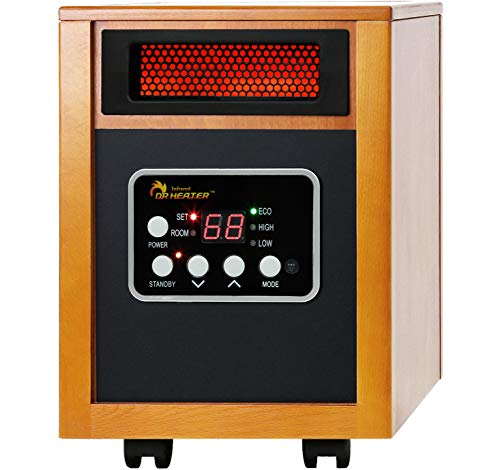
The Dr Infrared model uses a dual heating system combining infrared quartz tubes with PTC ceramic technology, aiming to deliver higher perceived heat and energy efficiency. The unit includes a remote, high-pressure low-noise blower, and an energy-saving mode.
Designed for larger rooms, it claims higher BTU-equivalent output and features tip-over and overheat protection plus a 12-hour automatic shut-off timer. Noise levels are cited near 39dB, which is moderate for continuous operation in living areas and some bedrooms.
Buying Guide: How To Choose A Bedroom Electric Heater
Choosing a bedroom heater requires evaluating room size, noise level, safety features, energy usage, and placement. Below are key considerations mapped to common bedroom needs.
Room Size And Heating Capacity
- Small Bedrooms (up to ~150 sq. ft.): Compact ceramic or tabletop units with 750–1500W are typically sufficient.
- Medium Bedrooms (150–250 sq. ft.): Look for 1500W PTC models with oscillation to increase effective coverage.
- Large Bedrooms (>250 sq. ft.): Consider units with powerful airflow or dual heating (infrared + PTC) and oscillation to distribute heat evenly.
Noise Level For Sleep
- Noise ratings under 35dB are ideal for bedrooms. Look for manufacturers that list decibel levels or mention “quiet” or “library-quiet” operation.
- Infrared heaters often run quieter for radiant warmth, while fan-forced ceramic units may be slightly louder but heat faster.
Safety Features
- Tip-Over Protection: Must-have for bedrooms where the device may be bumped.
- Overheat Protection: Automatic shutoff if internal temps exceed safe limits.
- Certifications: ETL, UL, or equivalent listings indicate third-party safety testing.
- Flame-Retardant Materials & Child Lock: Important for households with children or pets.
Control Options And Convenience
- Thermostat And Timers: Built-in thermostats maintain set temperatures and timers reduce energy use overnight.
- Remote Control / Wi‑Fi: Useful for adjusting heat without getting out of bed; wall-mounted Wi‑Fi units offer remote scheduling.
- Oscillation: Helps spread warm air for even comfort, especially in larger rooms.
Energy Use And Efficiency
- Most portable electric heaters max at 1500W. Efficiency differences come from heat delivery: PTC ceramic and infrared offer rapid warming with different comfort profiles.
- Use thermostats and timers to avoid running the heater continuously; consider “eco” modes if available.
Placement And Installation
- Maintain clear space around the heater per the user manual. Avoid placing on flammable surfaces or directly under bedding.
- Wall-mounted infrared panels save floor space but require installation and may be best for dedicated bedroom installations.
- Do not use extension cords unless the manual explicitly permits them; many manufacturers advise plugging directly into a grounded wall outlet.
Noise Versus Warmth Trade-Off
- Fan-forced ceramic heaters provide faster circulation of warm air but may be noisier.
- Infrared and oil-filled radiators deliver quieter, steady heat but can take longer to change room temperature.
- Select based on whether rapid warming (morning use) or quiet steady warmth (overnight) is the priority.
Maintenance And Longevity
- Clean air intakes periodically to maintain airflow. Follow manufacturer guidance for dust removal and storage.
- Check cords and plugs regularly for damage. Replace or discontinue use if any compromise is found.
Comparison Perspectives
- Speed vs. Quiet: Choose PTC ceramic for speed; oil-filled or infrared for whisper-quiet steady heat.
- Coverage vs. Portability: Larger units with stronger blowers cover more space but weigh more; compact units are easy to move but best for smaller areas.
- Features vs. Simplicity: Timers, remotes, oscillation, and Wi‑Fi add convenience but also complexity; simpler models reduce potential failure points.
When selecting a bedroom heater, prioritize certified safety features, appropriate sizing for your room, and a noise level compatible with sleep. Use timers and thermostats to manage energy consumption while maintaining comfort.
Tips for Getting the Best HVAC Prices
- Prioritize Quality Over Cost
The most critical factor in any HVAC project is the quality of the installation. Don’t compromise on contractor expertise just to save money. - Check for Rebates
Always research current rebates and incentives — they can significantly reduce your overall cost. - Compare Multiple Quotes
Request at least three estimates before making your choice. You can click here to get three free quotes from local professionals. These quotes include available rebates and tax credits and automatically exclude unqualified contractors. - Negotiate Smartly
Once you've chosen a contractor, use the proven strategies from our guide — How Homeowners Can Negotiate with HVAC Dealers — to get the best possible final price.