
Choosing the right big gas heater depends on fuel type, installation, coverage, and safety features. The table below summarizes five high-capacity gas heaters and large-area solutions to help you compare coverage, BTU output, and ventilation requirements at a glance.
| Product | Type | Max BTU | Coverage | Vent/Installation |
|---|---|---|---|---|
| Mr. Heater Big Maxx MHU80NG | Unit Heater | 80,000 | Up To 2,000 Sq. Ft. | Category 1 Vertical / Cat 3 Horizontal |
| Dyna-Glo IR30NMDG-1 | Infrared Wall Heater | 30,000 | Up To 1,000 Sq. Ft. | Wall Mounted, Natural Gas Ready |
| ProCom MN300HBA-B | Ventless Blue Flame | 30,000 | Up To 1,400 Sq. Ft. | Ventless, Natural Gas Only |
| Mr. Heater Vent Free Wall 30K | Vent Free Wall Heater | 30,000 | Up To 1,000 Sq. Ft. | Vent Free, Wall Mounted |
| Mr. Heater 3-Setting Portable | Portable LP/Propane Heater | Up To 18,000 | Up To 450 Sq. Ft. | Dual Tank Connection, Indoor/Outdoor |
Content Navigation
- Mr. Heater Big Maxx MHU80NG Natural Gas Unit Heater
- Dyna-Glo IR30NMDG-1 30,000 BTU Infrared Wall Heater
- ProCom MN300HBA-B 30,000 BTU Ventless Blue Flame Heater
- Mr. Heater MHVFBF30NGT 30,000 BTU Vent Free Blue Flame Heater
- Mr. Heater 3-Setting Portable LP/Propane Heater Unit
- Buying Guide: How To Choose A Big Gas Heater
- 1. Assess Heating Capacity And Coverage
- 2. Fuel Type: Natural Gas Versus Propane
- 3. Venting Requirements And Indoor Air Quality
- 4. Safety Features To Compare
- 5. Installation And Electrical Needs
- 6. Heating Style: Infrared vs. Convection vs. Radiant
- 7. Maintenance, Longevity, And Warranty
- 8. Code Compliance And Local Regulations
- 9. Cost Perspectives (Operational And Installation)
- 10. Matching Heater Type To Use Case
Mr. Heater Big Maxx MHU80NG Natural Gas Unit Heater
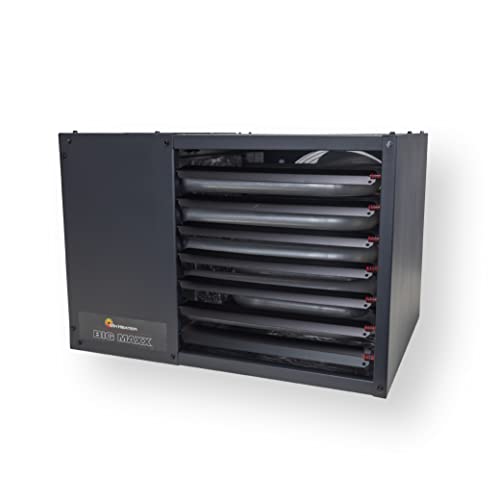
This 80,000 BTU unit is designed for workshops, garages, barns, and other large spaces. It includes two angle brackets and a propane conversion kit (thermostat, hose, and regulator not included). The physical footprint is roughly 29.33” L x 15.50” W x 26.37” H and requires a minimum 8-foot clearance from floor to base.
- Coverage: Rated up to 2,000 sq. ft., suitable for large open areas.
- Vent Options: Category 1 vertical or category 3 horizontal venting—offers installation flexibility.
- Power: 120 V electrical input, low amp draw (2.3 amps) for blower operation.
- Notes: For use with natural gas by default; conversion options provided. Professional installation recommended for venting and gas connections.
Dyna-Glo IR30NMDG-1 30,000 BTU Infrared Wall Heater

The Dyna-Glo IR30NMDG-1 is a wall-mounted 30,000 BTU infrared heater that delivers radiant warmth to objects and people, similar to solar heat. It is natural gas ready and not eligible for fuel conversion.
- Heating Style: Infrared radiation warms surfaces first, improving perceived warmth in drafty or high-ceiling spaces.
- Coverage: Up to 1,000 sq. ft., suitable for shops, garages, or covered outdoor areas.
- Installation: Wall-mounted configuration requires proper clearances and gas line hookup.
- Use Case: Good for targeted, occupant-focused heating where instant comfort is desired.
ProCom MN300HBA-B 30,000 BTU Ventless Blue Flame Heater

Call 888-896-7031 for Free Local HVAC Quotes – Compare and Save Today!
This ventless blue flame heater offers a high BTU output of 30,000 and is designed to heat larger enclosed spaces without a vent. It runs on natural gas and includes a push-button piezo ignition and an oxygen depletion sensor (ODS) for safety.
- Coverage: Manufacturer rates up to 1,400 sq. ft., making it one of the higher-coverage ventless units.
- Fuel: Natural gas only; no electricity required for operation.
- Controls: Manual control with three heat settings for modulation of output.
- Safety: ODS shuts the unit off if oxygen levels drop; ventless operation requires careful consideration of indoor air quality and local codes.
Mr. Heater MHVFBF30NGT 30,000 BTU Vent Free Blue Flame Heater
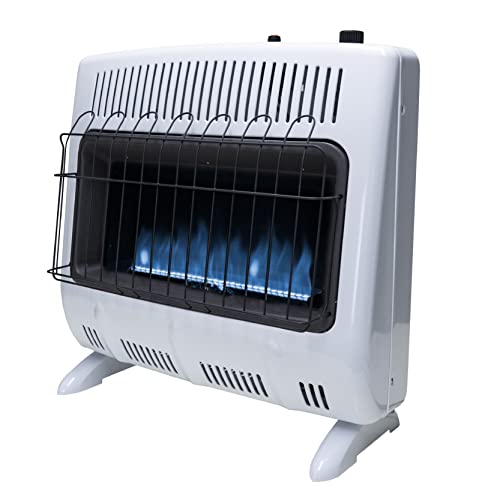
The Mr. Heater vent-free wall unit delivers up to 30,000 BTU and includes an integrated thermostat and battery-powered electric ignition. It’s optimized for conversion of cold rooms, additions, or sunrooms up to about 1,000 sq. ft.
- Thermostat Control: Built-in thermostat allows for maintained comfort without external controls.
- Fuel Efficiency: Blue flame technology provides efficient convection heating.
- Installation: Wall-mount design with included bracket options; follow local ventless heater codes and ventilation guidance.
- Altitude: Effective up to specified altitude limits (manufacturer notes up to approx. 4,500 ft for similar models).
Mr. Heater 3-Setting Portable LP/Propane Heater Unit
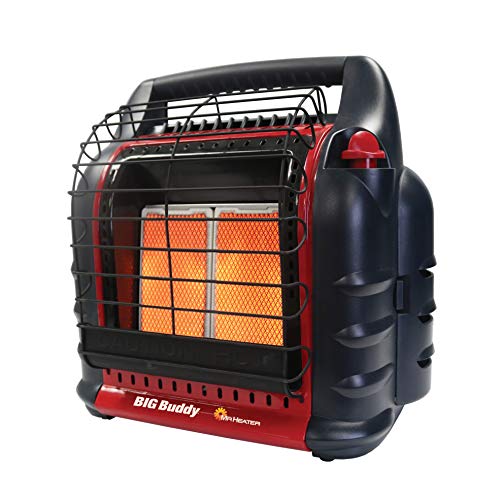
This portable unit provides up to 18,000 BTU with three heat settings (4,000 / 9,000 / 18,000 BTU). It supports dual-tank connection for longer run time and can be used indoors or outdoors where permitted.
- Portability: Compact design with a single control knob and piezo ignition for quick startup.
- Range: Rated to heat up to approximately 450 sq. ft. at max output, suitable for smaller garages, patios, and job sites.
- Safety: Includes automatic shutoff if tipped and relies on proper ventilation when used indoors.
- Fuel Flexibility: Designed for propane; dual tank hookups increase run-time without swapping cylinders.
Buying Guide: How To Choose A Big Gas Heater
Selecting the right large gas heater requires comparing BTU output, fuel type, ventilation needs, safety features, and installation practicality. Below are key considerations across multiple perspectives to guide a suitable match for your space.
Call 888-896-7031 for Free Local HVAC Quotes – Compare and Save Today!
1. Assess Heating Capacity And Coverage
BTU rating is the primary metric for sizing. As a rough guideline:
- Up To 30,000 BTU — Good For 800–1,400 Sq. Ft. (depending on insulation)
- 30,000–80,000 BTU — Suitable For Larger Garages, Barns, Workshops, And Small Commercial Spaces
- 80,000+ BTU — Typically For Large Open Buildings Or Industrial Applications
Consider ceiling height and insulation: higher ceilings or poorly insulated spaces require more BTUs to maintain comfort.
2. Fuel Type: Natural Gas Versus Propane
Natural Gas offers convenience for properties with gas service and often lower ongoing fuel cost. Many high-BTU unit heaters are natural gas models with conversion kits available.
Propane (LP) is portable and commonly used where natural gas is unavailable. Portable units often run on propane, while some larger units include conversion kits or dedicated LP models.
3. Venting Requirements And Indoor Air Quality
Heaters fall into three venting categories:
- Direct-Vent/Category Venting: Sealed combustion that vents outdoors — preferred for indoor air quality.
- Unit Heaters With Venting: Require proper chimneys or flue systems; professional installation recommended.
- Ventless/Blue Flame: More heat delivered to the room but consumes indoor oxygen and releases combustion byproducts. Check local building codes and ensure adequate ventilation.
4. Safety Features To Compare
- Oxygen Depletion Sensor (ODS): Shuts down ventless units when oxygen is low.
- Tip-Over Switch: Important for portable units used in transient settings.
- Automatic Shutoff: For pilot failure, flame outage, or overheat conditions.
- Clearance Requirements: Verify minimum clearances from floor, ceiling, and combustibles before installation.
5. Installation And Electrical Needs
Some large unit heaters need a 120 V power source for blowers and electronic controls, while others (especially ventless units) can operate without electricity. Factor in installation complexity, professional labor, and required venting hardware for commercial-style unit heaters.
6. Heating Style: Infrared vs. Convection vs. Radiant
- Infrared/Radiant: Heats objects and people directly; effective in drafty spaces and outdoor/covered areas.
- Convection/Blue Flame: Warms air and circulates it; good for enclosed spaces where even ambient temperature is desired.
- Forced Air Unit Heaters: Combine combustion with a blower for rapid distribution of warm air across large volumes.
7. Maintenance, Longevity, And Warranty
Choose models with accessible service parts and clear maintenance requirements. Periodic cleaning, inspection of burners and venting, and annual checks by qualified technicians help maintain efficiency and safety. Review manufacturer warranty and support availability.
8. Code Compliance And Local Regulations
Local building codes may restrict ventless heaters or require permits for high-BTU installations. Always verify with local authorities and consider contacting a licensed HVAC or gas professional for installation and code compliance verification.
9. Cost Perspectives (Operational And Installation)
While specific sticker prices are not provided here, weigh operational costs (fuel consumption, efficiency) and installation expenses (venting, electrical work, permits). Higher-efficiency condensing or sealed combustion systems can reduce fuel use but may have higher upfront installation costs.
Tips for Getting the Best HVAC Prices
- Prioritize Quality Over Cost
The most critical factor in any HVAC project is the quality of the installation. Don’t compromise on contractor expertise just to save money. - Check for Rebates
Always research current rebates and incentives — they can significantly reduce your overall cost. - Compare Multiple Quotes
Request at least three estimates before making your choice. You can click here to get three free quotes from local professionals. These quotes include available rebates and tax credits and automatically exclude unqualified contractors. - Negotiate Smartly
Once you've chosen a contractor, use the proven strategies from our guide — How Homeowners Can Negotiate with HVAC Dealers — to get the best possible final price.
10. Matching Heater Type To Use Case
- Large Open Workshop Or Barn: Consider high-BTU unit heaters with vented exhaust (e.g., the Mr. Heater Big Maxx) for rapid space heating.
- Insulated Garage Or Addition: Vent-free or wall-mounted 30,000 BTU units are often sufficient, but check ventilation and safety rules.
- Targeted Comfort (People-Centered): Infrared models are effective at providing immediate warmth to occupants without heating all the air.
- Portability Needed: Portable propane units with tip-over protection are versatile for job sites and outdoor spaces.