
Ceiling-mounted electric heaters with thermostats are ideal for heating garages, workshops, and warehouses while preserving floor space. Below is a quick comparison of five ceiling-mount hardwired heaters that include thermostatic control or remote temperature management features to help maintain consistent comfort.
| Model | Type | Key Feature |
|---|---|---|
| Comfort Zone CZ220BK | Ceiling Hard-Wired, Fan-Forced | Adjustable louvers, durable steel |
| DR. INFRARED DR-975 | Hardwired Ceiling/Wall Electric Heater | Remote controlled thermostat, 4700W/7500W |
| Comfort Zone CZ225ER | Digital Ceiling Mount, Fan-Forced | Digital thermostat, remote, 12-hour timer |
| Comfort Zone CZ230ERG | Heavy-Duty Ceiling Mount Fan-Forced | High output, adjustable louvers, thermostat |
| TEMPWARE 7500W | Ceiling Mount Shop Heater | Built-in thermostat, ECO mode, timer |
Comfort Zone CZ220BK Ceiling Mount Garage Electric Heater

This fan-forced ceiling mount heater is designed for overhead installation in garages, warehouses, and workshops. It uses a hard-wired 240V connection and metal louvers for directed airflow.
Key listed features include efficient ceiling mount design to save floor space, robust heavy-gauge steel construction for durability, and adjustable louvers and mounting angle for targeted heat distribution. The unit also includes overheat protection and a thermal cut-out switch to enhance safety.
Practical for installations where permanent, high-output heating is required, this model emphasizes durability and air distribution. It is suited to larger, poorly insulated areas where overhead mounting reduces obstruction and optimizes coverage.
DR. INFRARED DR-975 Hardwired Shop Garage Electric Heater

Call 888-896-7031 for Free Local HVAC Quotes – Compare and Save Today!
The DR-975 is a heavy-duty 240V single-phase electric heater offering selectable power levels (4700W or 7500W). It supports hardwired installation and requires appropriate gauge copper wiring as specified by the manufacturer.
Notable features include a remote controlled thermostat with an operating range from 50°F to 85°F, enabling temperature adjustments from a distance. The design allows ceiling or wall mounting depending on layout and clearance.
This unit is targeted at users who need higher wattage capacity with remote thermostat control for zone temperature regulation. It is suitable for shops and larger garages where robust heat output and remote setpoint adjustments are priorities.
Comfort Zone CZ225ER Digital Ceiling Mount Space Heater

The CZ225ER is a digital fan-forced ceiling heater with a built-in digital thermostat and remote control. It requires a 240V hardwired connection and includes a 12-hour timer for scheduled operation.
Its feature set highlights wide air distribution through adjustable directed vents, durable heavy-gauge steel construction, and a user-friendly digital thermostat for maintaining set temperatures. Overheat protection is included for safety.
Call 888-896-7031 for Free Local HVAC Quotes – Compare and Save Today!
This model suits users who want precise temperature control with programmable runtime and remote convenience, particularly in garages and workshops that benefit from even heat spread across open floor plans.
Comfort Zone CZ230ERG High-Capacity Ceiling Heater

The CZ230ERG is a high-output fan-forced ceiling mount heater designed for large spaces, providing extended coverage through variable airflow control. It uses a hardwired 240V connection.
Key product features include optimal space utilization via ceiling mounting, heavy gauge steel build for durability, and adjustable louvers with variable mounting angle to direct heat where needed. The product description cites thermostat functionality, timer, and multiple fan settings.
This unit is engineered for scenarios requiring wide-area heating and robust construction. The combination of adjustable airflow and thermostatic control supports consistent zone temperatures in garages and storage areas.
TEMPWARE 7500-Watt Digital Fan-Forced Ceiling Mount Heater
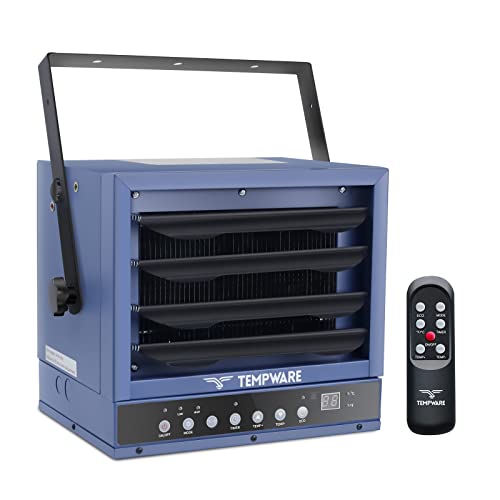
TEMPWARE’s ceiling heater offers adjustable louvers, two heat settings, and a built-in thermostat with a reported 45°F–95°F control range. The unit supports ECO mode and an auto-off timer for energy management.
Features list includes adjustable mounting angle, maximum BTU output sufficient for large spaces, a smart ECO mode that reacts to ambient temperature, and overheat protection. The heater is intended for hardwired 240V installations with full remote control functionality.
This model emphasizes energy-saving modes and a precise internal thermostat for automated operation. It is applicable where automated temperature regulation and multi-mode operation are desired for garages or large workshops.
Buying Guide: How To Choose A Ceiling Mounted Electric Heater With Thermostat
Selecting the right ceiling-mounted electric heater with an integrated or remote thermostat requires reviewing several technical and practical factors. The following sections cover the key considerations for a balanced selection.
1. Power Rating And Coverage
Heat output (listed in watts or BTUs) determines how effectively a unit can raise and maintain temperature. For garages and workshops, higher wattage models (4,700W to 7,500W) are commonly used to heat larger spaces. Match the heater’s rated coverage to the cubic volume of your space, not just square footage. Ceiling height matters: taller ceilings require more capacity to maintain floor-level comfort.
2. Thermostat Type And Control Options
Thermostats come in several forms: built-in digital thermostats, remote-controlled units, or smart Wi‑Fi-enabled controllers. Built-in thermostats provide direct setpoint control at the unit, while remote thermostats or Wi‑Fi models offer convenience for adjusting temperature from a distance. Consider whether you need scheduling, ECO modes, or app control for integration with other systems.
3. Installation Requirements
Most ceiling-mounted units are hardwired and require appropriate circuit sizing and conduit. Check manufacturer wiring specifications and recommended wire gauge (for example, 8 AWG for high wattage units). Confirm whether professional electrician installation is necessary and ensure the mounting bracket and ceiling structure can safely support the heater’s weight.
4. Air Distribution And Mounting Angle
Fan-forced heaters disperse heat across a broader area; louvers and adjustable mounting angles enable targeted heating. If you need to direct heat to a specific zone or workbench, look for adjustable louvers and mounting flexibility. For even distribution in open spaces, choose models with wider air distribution profiles.
5. Safety Features
Essential safety features include overheat protection, thermal cut-out switches, and tip-over or shutoff sensors where applicable. For hardwired overhead units, ensure the unit meets ETL or similar safety listings and follows local electrical codes. Proper clearance from combustibles and adherence to manufacturer installation guidelines are crucial.
6. Durability And Build Quality
Commercial environments favor heavy-gauge steel construction to withstand temperature fluctuations and potential impacts. Check the product materials and support hardware. Corrosion-resistant finishes and sturdy louvers improve longevity in workshop settings.
7. Energy Efficiency And Modes
Look for ECO modes, timers, and multi-stage heat settings that reduce power draw when full output isn’t necessary. Timers and programmable thermostats can reduce runtime and energy costs by maintaining only required setpoints. Evaluate whether the thermostat controls cycling behavior effectively to avoid constant on/off switching.
8. Noise Level And Fan Settings
Fan-forced heaters produce some operational noise. If noise is a concern for a home workshop or a space used for multiple functions, compare fan speed options and user reports about acoustic performance. Models with variable fan settings allow trade-offs between airflow and quiet operation.
9. Compatibility With Space And Use Case
Match the heater to the intended use: intermittent spot heating near a work area versus whole-space heating. For spot heating, adjustable louvers and directed airflow provide efficiency. For whole-space heating, higher-wattage units with broad distribution and reliable thermostatic control are better choices.
10. Maintenance And Serviceability
Consider accessibility for filter cleaning (if applicable), fan motor service, and replacement parts. Hardwired ceiling units may require more effort to access for maintenance, so confirm service procedures and warranty coverage before purchase.
Comparison Perspectives
- High Output vs. Economy: Higher wattage units heat faster and handle larger volumes; economy models with timers and ECO modes reduce energy use for smaller or intermittent needs.
- Integrated Thermostat vs. Remote Control: Integrated thermostats offer direct control at the heater; remote or Wi‑Fi controls add convenience and scheduling flexibility for occupied/unoccupied cycles.
- Durability vs. Cost: Heavy-gauge steel construction and ETL compliance support long-term reliability in commercial spaces, which may be prioritized over initial cost.
- Installation Complexity vs. Placement Flexibility: Hardwired installations require professional wiring but free up outlets and provide permanent, high-capacity heating. Evaluate whether ceiling or wall mounting best suits the room layout.
Use these factors to compare models by matching wattage, thermostat capability, installation constraints, and safety features to your specific space and usage patterns. Choosing a heater that balances output, control options, and built quality will provide stable, efficient heat while leveraging the space-saving benefits of ceiling installation.
Tips for Getting the Best HVAC Prices
- Prioritize Quality Over Cost
The most critical factor in any HVAC project is the quality of the installation. Don’t compromise on contractor expertise just to save money. - Check for Rebates
Always research current rebates and incentives — they can significantly reduce your overall cost. - Compare Multiple Quotes
Request at least three estimates before making your choice. You can click here to get three free quotes from local professionals. These quotes include available rebates and tax credits and automatically exclude unqualified contractors. - Negotiate Smartly
Once you've chosen a contractor, use the proven strategies from our guide — How Homeowners Can Negotiate with HVAC Dealers — to get the best possible final price.