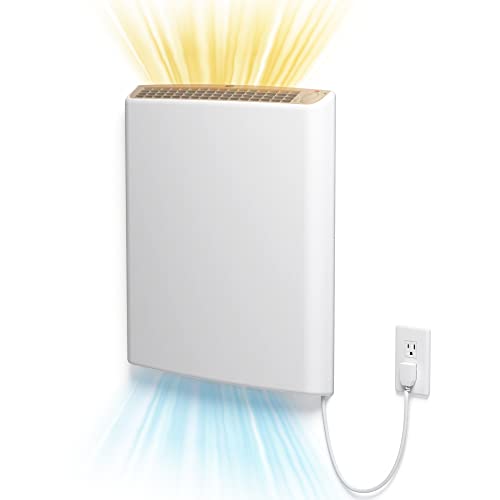
Best Electric Fan Heater Wall Mounted for Home Comfort
Quick Overview: This guide reviews top wall-mounted electric fan heaters suited for bedrooms, offices, and small living spaces. Below is a summary table of the five selected models with key specs to help you compare at a glance.
Model
Type
Power / Voltage
Key Feature
Stiebel Eltron 236304
Fan Heater
1500W / 120V
Quiet downdraft design with thermostat
Cadet Com-Pak CSC151TW
Fan Heater
1500W / 120V
Fast heating coil, built-in thermostat
Dreo Smart Wall Heater (PTC)
PTC Fan Heater
1500W / 120V
Smart controls, oscillation, low noise
ENVI Plug-in Electric Panel
Panel Heater (Fan-less)
Low-wattage / Plug-in
Fan-less silent convection, safety sensor
Cadet Energy Plus CEC163TW
Fan Heater
1600/1500/1000W / Multi-voltage
Digital thermostat, retrofit friendly
This introduction contains a concise comparison; detailed reviews follow for each model.
The Stiebel Eltron 236304 CK Trend is a surface-mount electric fan heater offering 1500W of output at 120V. It uses a downdraft design intended to distribute heat evenly toward the floor, which can improve perceived warmth in smaller rooms. The unit includes a built-in thermostat for maintaining set temperatures and operates at an advertised 49 dB(A) for quiet performance.
Its European styling is compact and designed for visible wall installation without a recessed can. The combination of a thermostat and controlled downdraft airflow focuses on stability and comfort rather than rapid, short bursts of heat. This model is commonly chosen for areas where low-profile aesthetics and quieter operation are priorities.
Call 888-896-7031 for Free Local HVAC Quotes – Compare and Save Today!
The Cadet Com-Pak CSC151TW is a complete electric wall heater with an integrated thermostat and a 1500W heating element for 120V circuits. Cadet states the Com-Pak series is built for fast heating and reliable performance in rooms up to a moderate size.
Key features include a robust coil element for quick heat delivery and a quiet fan that spreads warmth efficiently. Safety features are integrated to shut the unit off if operating temperatures are exceeded. The Com-Pak design has long use in residential and light-commercial installations where dependable operation and easy wall-mount replacement are needed.
The Dreo Smart Wall Heater uses a PTC ceramic heating element combined with optimized airflow and 30° manual oscillation to direct warmth across a room. Performance highlights include strong airflow at 11.5 ft/s and a reported low noise level around 28 dB, making it suitable for bedrooms and offices where quiet operation matters.
This model focuses on convenience with remote control, app connectivity, and voice assistant compatibility (Alexa). It also offers an ECO mode and temperature calibration through the app for more precise control. The combination of PTC technology and oscillation supports steady, efficient heating while offering smart home integration for remote scheduling and temperature adjustment.
Call 888-896-7031 for Free Local HVAC Quotes – Compare and Save Today!
ENVI’s plug-in electric panel is a fan-less, low-wattage wall heater designed for continuous use and silent operation. Instead of forced-air, it relies on convection (stack convection) to circulate warm air without blowing dust or allergens, which can be beneficial for allergy sufferers and quiet sleeping areas.
Safety-focused features include a wall-sense sensor that cuts power if the unit is removed and operation at a relatively low surface temperature (around 90°F). The ENVI is intended as a supplemental heating solution, providing targeted comfort while minimizing energy usage and visual distraction through auto-dimming lights.
The Cadet Energy Plus CEC163TW includes a built-in digital thermostat with push-button controls and a clear display. It supports multiple wattage and voltage options (including 1600/1500/1000W across different voltages) and is designed for easy replacement of older Com-Pak style units using the same wall can without additional wall patching.
Safety features include thermal safeguard protection that shuts the heater off if temperatures exceed normal operating limits. The digital thermostat enables straightforward temperature setting and consistent comfort, making this unit a practical choice for retrofit projects and rooms needing precise setpoint control.
Buying Guide: How To Choose The Right Wall-Mounted Electric Fan Heater
This buying guide covers the most important considerations when selecting a wall-mounted electric fan heater. Compare units across these categories to match the heater to your space and needs.
Heating Type And Technology
Fan-Forced Heaters Use a fan to push warm air out quickly. They heat a space faster but may produce audible noise and can circulate dust.
PTC Ceramic Heaters Provide steady heat with self-regulating elements that protect against overheating and often deliver efficient operation.
Panel / Convection (Fan-less) Offer silent, gentle warmth without moving air. They’re suited for allergy sufferers and continuous low-level heating.
Power, Voltage, And Coverage
Match the unit’s wattage to the room size. Typical wall-mounted units range from low-wattage supplemental panels to 1500W fan heaters for small-to-medium rooms.
Confirm the unit’s voltage compatibility with your home circuit (120V vs. 240V). Multi-voltage options aid flexibility for retrofit installations.
Consider insulation, ceiling height, and room layout—open or connected spaces need more output than a closed bedroom of the same square footage.
Controls, Thermostats, And Smart Features
Built-In Thermostat preserves consistent temperature and improves energy efficiency by cycling on/off.
Digital Thermostats And Timers offer finer control and scheduling for comfort and savings.
Smart Connectivity (Wi‑Fi, app, voice control) provides remote access, scheduling, and integration with home automation systems.
Noise, Comfort, And Air Quality
If noise is a concern, compare dB ratings; fan-less panels are essentially silent, while low-dB fan models work well in bedrooms.
Fan-forced units can stir dust; select fan-less models for allergy-prone areas.
Consider downdraft or oscillation features to improve distribution and avoid cold spots.
Safety And Certifications
Look for thermal cutoffs, tip-over protection (if applicable), and wall-sense or removal safety features for plug-in models.
Confirm UL/cETL or other recognized safety listings appropriate for your region.
Ensure the installation method matches the product’s rating—some models are for indoor use only and require secure wall mounting.
Installation And Retrofit Considerations
Surface-mount vs. recessed units: surface-mount units are easier to install where wall cavities are not accessible.
Retrofit compatibility: some Cadet models share mounting cans and cutouts, reducing wall repair needs.
Plug-in models simplify installation but consider cord routing and required outlet placement.
Energy Use And Operating Cost
Higher wattage produces faster heat but increases energy use. Use thermostats and timers to reduce runtime.
PTC and digital-control models often run more efficiently due to precise temperature regulation.
Use the heater to supplement central heating in targeted zones to manage overall energy consumption.
Comparison Perspectives
Quietest Option: Fan-less panel heaters like the ENVI provide the least noise and minimal air movement.
Fastest Warm-Up: Fan-forced coil or PTC models (Cadet and Dreo) deliver quick perceived heat.
Smart Control: Dreo and some Wi‑Fi models include app and voice control for remote scheduling.
Retrofit-Friendly: Cadet Energy Plus and Com-Pak series are designed for replacing existing wall heaters with minimal wall repair.
Use these criteria to match the heater to your priorities: noise level, speed, control, safety, and installation requirements. For rooms where silent background heat is desired, prioritize convection panels. For rapid spot heating or integration with smart home setups, PTC or fan-forced smart models are appropriate.
Tips for Getting the Best HVAC Prices
Prioritize Quality Over Cost The most critical factor in any HVAC project is the quality of the installation. Don’t compromise on contractor expertise just to save money.
Check for Rebates Always research current rebates and incentives — they can significantly reduce your overall cost.
Compare Multiple Quotes Request at least three estimates before making your choice. You can click here to get three free quotes from local professionals. These quotes include available rebates and tax credits and automatically exclude unqualified contractors.