
Finding the right heater for a 500 sq ft room requires balancing output capacity, distribution method, energy use, and controls. Below is a concise comparison of recommended products matched to the query, followed by detailed product sections and a comprehensive buying guide.
| Product | Type | Key Strength |
|---|---|---|
| Dreo Smart Wall Heater WH719S | Wall-Mount/Wall Oscillating | Wide oscillation, smart controls |
| Whynter ARC-14SH | Portable AC + Heater (Dual Hose) | Designed to condition up to 500 sq ft, dehumidifier |
| Wiytamo 14,000 BTU Portable AC | Portable AC + Heater (4-in-1) | Heating rated for up to 500 sq ft, auto-swing |
| Dr Infrared Heater Original (1500W) | Portable Infrared/PTC | Dual heating system, quiet blower |
| Heat Storm Phoenix HS-1500-PHX | Infrared Wall/Floor | Infrared output, wall or floor mount |
Dreo Smart Wall Heater, Electric Space Heater

Features referenced: 120° wide oscillation, smart app and voice controls (Alexa/Google), adjustable thermostat (41–95°F with 1°F accuracy), 1500W PTC ceramic element, 24H timer, remote control, easy mount.
This wall-mounted unit emphasizes even heat distribution via 120° vertical oscillation to reach top-to-bottom areas. Smart scheduling and remote access allow temperature control from anywhere, which is useful when pre-heating a larger room. The PTC ceramic element offers fast responsive heating and fine thermostat increments for setpoint accuracy. Wall mounting can save floor space and position the heater for better air circulation in an open 500 sq ft layout. Consider wiring and mounting surface requirements for installation.
Whynter Portable Air Conditioner 14,000 BTU & Heater

Features referenced: 14,000 BTU cooling / heating mode, rated to cover up to 500 sq ft, dual-hose design, built-in dehumidifier with auto-drain, quiet operation (~51 dBA low speed), window kit included.
Call 888-896-7031 for Free Local HVAC Quotes – Compare and Save Today!
Designed for dual-season operation, this portable unit provides both heating and cooling for spaces up to 500 sq ft when configured correctly. The dual-hose design helps efficiency and can maintain conditioned air more steadily in larger rooms. Built-in dehumidification is beneficial in colder months to reduce humidity-related comfort issues. For heating performance, portable AC-based heat modes typically use heat pump principles or resistive elements; check the unit’s effective heating capacity in your climate. Installation requires a suitable window and exhaust placement; ventilation and hose routing affect overall performance.
Wiytamo 14,000 BTU Portable Air Conditioner With Heat

Features referenced: 14,000 BTU cooling / 11,000 BTU heating capacity, claims heating up to 500 sq ft, 80° auto-swing for airflow distribution, LED display, remote control, 24H timer, self-evaporating design.
This 4-in-1 portable AC unit combines cooling, heating, dehumidifying, and fan functions, with an advertised heating capacity that targets 500 sq ft. The auto-swing louver and strong airflow pattern help distribute conditioned air across wider floor plans. As a portable heat source, performance depends on insulation, ceiling height, and outside temperature. Units with both cooling and heating functions are flexible for year-round use, but they require exhaust clearance and periodic maintenance like filter cleaning to maintain efficiency.
Dr Infrared Heater Portable Space Heater, Original
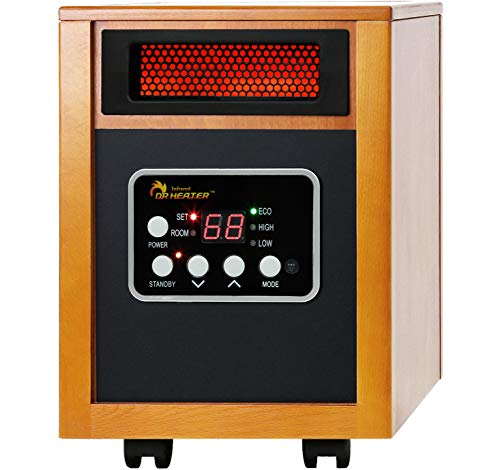
Features referenced: Dual heating system (infrared quartz tube + PTC), auto energy-saving mode, tip-over and overheat protection, 12-hour timer, remote control, high-pressure low-noise blower (~39 dB).
Call 888-896-7031 for Free Local HVAC Quotes – Compare and Save Today!
Dr Infrared’s combination of infrared tubes plus PTC conduction aims to increase effective heat output and distribution. The low-noise blower assists warm-air circulation across an open floor plan, which helps cover larger rooms more uniformly than radiant-only devices. Safety features like tip-over and overheat protection are important for continuous operation in occupied spaces. While rated for “large rooms,” actual reach in a 500 sq ft area depends on layout, insulation, and whether doors remain open. This model’s higher airflow and dual heat sources make it a viable portable option for larger rooms where targeted circulation is needed.
Heat Storm Phoenix HS-1500-PHX Infrared Heater

Features referenced: Infrared heating with two power modes (750W / 1500W), patented heat exchanger (HMS) that combines with humidity, safe-to-touch grill, removable feet and wall mounting options, 5200 BTU output.
The Phoenix unit is compact and can be mounted on a wall or placed on the floor, allowing positioning to suit room airflow patterns. Infrared heating warms objects and surfaces directly, which can feel efficient in occupied zones; the patented exchanger claims soft heat delivery without reducing room humidity. Dual power modes offer flexibility for steady background heating or boost mode as needed. For a 500 sq ft room, multiple placement strategies or supplemental circulation (fans) may be necessary to achieve even temperature across the space.
Buying Guide: Choosing The Right Heater For A 500 Sq Ft Room
Selecting an appropriate heater for a 500 sq ft room requires evaluating capacity, distribution, installation, and operating constraints. Below are practical factors and comparison perspectives to help match device features to room needs.
1. Heating Capacity And Coverage
Match the heater’s rated coverage or BTU-equivalent output to your room’s square footage. Portable heaters often use wattage (1500W common) which effectively covers smaller zones; whole-room conditioning for 500 sq ft typically requires higher BTU ratings or heat-pump-style portable AC/heaters. Consider insulation, ceiling height, and window area—poor insulation increases required capacity.
2. Heat Distribution Method
- Forced-Air/PTC With Blower: Good for moving warm air across open plans; faster temp equalization.
- Infrared: Heats objects and people directly, efficient for occupied zones but may leave cooler pockets.
- Heat Pump (Portable AC With Heat): Provides year-round heating and cooling; effective for entire room when sized properly.
3. Installation And Space Considerations
Wall-mounted units save floor space and can improve distribution from an elevated position. Portable units require window access for exhausted models and need unobstructed airflow. Evaluate mounting surfaces, window compatibility, and the path for hoses or vents.
4. Energy Efficiency And Operating Cost
Compare energy modes (multi-watt options, eco modes, heat-pump vs. resistive heating). Heat pumps generally provide more heat per watt than resistive elements in moderate climates. Look for programmable thermostats and timers to avoid unnecessary runtime.
5. Controls, Automation, And Convenience
Smart app control, programmable schedules, and precise thermostats improve comfort and efficiency. Remote controls and timers allow easy adjustments without walking across large rooms. Voice assistant compatibility can be useful in modern smart homes.
6. Safety Features And Certification
- Tip-over and overheat protection for portable units
- Cool-to-touch surfaces for units placed near traffic
- Certifications (ETL, UL) indicate tested electrical safety
7. Noise And Comfort
Blowers and compressors add noise. For bedrooms or media rooms in a 500 sq ft area, check decibel ratings and user-configurable fan speeds. Infrared units often operate quieter but may rely on convection for wider distribution.
8. Supplemental Measures To Improve Performance
- Use ceiling fans on low to circulate warm air from wall-mounted or floor heaters.
- Seal drafts and add weatherstripping to windows/doors to reduce load.
- Place portable units near returned airflow paths to encourage whole-room mixing.
9. Comparison Perspectives
Single-Room vs Whole-Room: A 1500W heater may sufficiently heat an occupied portion of a 500 sq ft room but not the whole space if insulation is poor. For whole-room comfort, consider higher BTU-rated portable heat pump units or multiple distributed heaters.
Fixed vs Portable: Wall-mounted and fixed heaters free floor space and provide consistent distribution when positioned correctly. Portable units offer flexibility and year-round cooling/heating but require exhaust management and take up floor/window space.
Operational Cost: Heat pumps (portable AC/heat) usually use less electricity per heat delivered in mild outdoor temps. Resistive heaters (PTC, infrared) convert electricity to heat at near 100% efficiency but may cost more to run for whole-room heating.
Tips for Getting the Best HVAC Prices
- Prioritize Quality Over Cost
The most critical factor in any HVAC project is the quality of the installation. Don’t compromise on contractor expertise just to save money. - Check for Rebates
Always research current rebates and incentives — they can significantly reduce your overall cost. - Compare Multiple Quotes
Request at least three estimates before making your choice. You can click here to get three free quotes from local professionals. These quotes include available rebates and tax credits and automatically exclude unqualified contractors. - Negotiate Smartly
Once you've chosen a contractor, use the proven strategies from our guide — How Homeowners Can Negotiate with HVAC Dealers — to get the best possible final price.
10. Final Selection Checklist
- Confirm room dimensions, insulation quality, and ceiling height.
- Decide whether you need year-round cooling/heat (combo units) or targeted heating.
- Choose a distribution method that matches occupancy patterns (infrared for localized zones; forced-air for whole-room).
- Check safety features, noise ratings, and installation requirements.
- Prefer units with programmable thermostats and timers for efficiency.