
Wall-mounted electric panel heaters offer targeted warmth, space-saving installation, and energy-efficient operation for bedrooms, offices, bathrooms, and small living spaces. Below is a quick comparison of five relevant Amazon models selected for performance, safety features, and mounting options.
| Product | Type | Key Feature |
|---|---|---|
| EconoHome Wall Heater Panel | Hardwire/Convector | Low-watt convection panel, thermostat |
| ENVI Plug-In Electric Panel Heater | Plug-in Fan-less | 24/7 safe wall-sense sensor, cool touch |
| Dreo Smart Wall Heater WH719S | Smart Oscillating | 120° oscillation, app and voice control |
| Heat Storm HS-1500-PHX-WIFI | Infrared Wi‑Fi | Wi‑Fi control, touchscreen, remote |
| Cadet Com-Pak Electric Wall Heater | Complete Hardwired Unit | Built-in thermostat, proven commercial design |
Content Navigation
EconoHome Wall Heater Panel

This EconoHome model is a 400-watt convection panel intended for rooms up to about 120 sq ft. The listed features highlight energy-efficient operation (0.6 kW/hr), a flat low-profile design (23.5 x 23.5 x 0.25″), and a built-in thermostat with a temperature range from 41–86 °F. The unit is cETL approved and compliant with UL-2021 and RoHS standards.
Installation options include the ability to hard-wire the unit, and safety features include overheat protection. The product statement mentions a heat reflector to improve convection and a three-year manufacturer warranty. This panel tends to run warm to the touch and emphasizes steady ambient warmth via convection currents rather than forced air.
ENVI Plug-In Electric Panel Heater
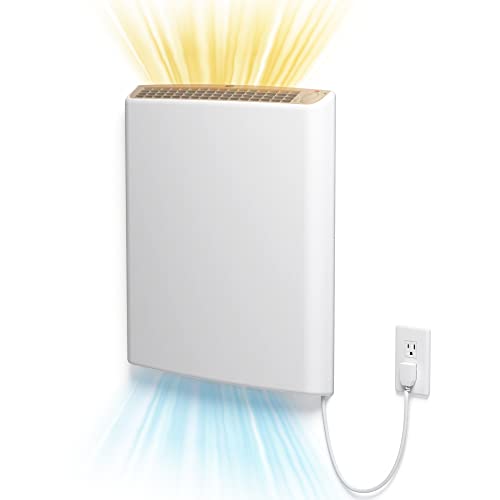
The ENVI plug-in heater is described as an energy-efficient, low-wattage wall heater designed for continuous operation. Its patented fan-less “Stack Convection” design provides silent warmth without circulating dust, making it suitable where airborne allergens are a concern.
Call 888-896-7031 for Free Local HVAC Quotes – Compare and Save Today!
Safety-focused features include a wall-sense sensor that cuts power if the unit is removed from the wall, a cool exterior temperature (~90 °F), and suitability for 24/7 use in homes with children, pets, or the elderly. The product emphasizes simple two-minute install and continuous, quiet operation with an auto-dimming power light for minimal distraction.
Dreo Smart Wall Heater WH719S

The Dreo WH719S is a smart wall-mounted electric heater with 120° vertical oscillation to distribute warm air across a room. Its PTC ceramic element and oscillation aim to bring faster, more even heat to corners compared with stationary panels.
Controls include an adjustable thermostat with 1°F accuracy, remote control, 24-hour timer, and app integration for scheduling and remote access. Voice assistant compatibility (Alexa, Google Home) is listed. The product emphasizes fast, accurate temperature control and smart scheduling to match daily routines.
Heat Storm HS-1500-PHX-WIFI Infrared Heater

The Heat Storm HS-1500-PHX-WIFI is an infrared wall-mounted heater that lists Wi‑Fi control for smartphone operation plus a touchscreen and included remote. It’s promoted as space-saving with a wall mount design suitable for bedrooms, kitchens, and offices.
Call 888-896-7031 for Free Local HVAC Quotes – Compare and Save Today!
Feature highlights include a digital thermostat, tip-over safety shutoff, and remote control. As an infrared model, it targets objects and people directly, differing from convection panels that heat the air. The product can integrate into remote control routines via Wi‑Fi for on-demand operation.
Cadet Com-Pak Electric Wall Heater

The Cadet Com-Pak is a complete hardwired wall heater unit with an integrated thermostat. Listed specifications identify a 1500W, 120V configuration producing around 5120 BTU and a durable, widely used design.
This model is known for built-in thermostat control and a complete packaged assembly intended for direct installation into living spaces. As a conventional wall heater, it provides forced convection through louvers and is positioned as a reliable option for whole-room heating where higher wattage is required.
Buying Guide: How To Choose A Wall-Mounted Electric Panel Heater
Choosing the right wall-mounted electric panel heater depends on several factors including room size, installation type, control preferences, and safety requirements. Below are key considerations to compare models objectively.
Heating Method And Performance
- Convection vs Infrared: Convection panels heat air that circulates through the room, offering steady ambient warmth. Infrared units heat objects and people directly, giving faster perceived warmth in targeted spots.
- Wattage And Coverage: Match wattage to room size. Lower-wattage plug-in panels suit small rooms or supplemental heating. Higher-watt units or 1500W hardwired models cover larger spaces or primary heating needs.
- Airflow And Distribution: Oscillating or louvered models can distribute heat more evenly. Fan-less convection offers silent operation but may be slower to circulate warmth.
Installation Options
- Plug-In vs Hardwired: Plug-in units provide simple installation without electrical work and are often limited in wattage. Hardwired or 220V models require electrician installation but permit higher power and a cleaner look.
- Mounting Height And Clearance: Follow manufacturer clearance specifications. Mounting height affects how convection currents circulate and where infrared heat is directed.
- Wall-Sense And Safety Cutoffs: Models with wall-sense or removal detection provide added safety, especially in homes with kids or pets.
Controls And Smart Features
- Thermostat Accuracy: Precise thermostats (1°F increments) maintain consistent comfort and can reduce energy use.
- Timers And Scheduling: 24-hour timers and programmable schedules help reduce operation during unoccupied periods.
- App And Voice Integration: Wi‑Fi models allow remote control, while non-networked units rely on physical controls or remotes. Choose based on privacy and convenience preferences.
Safety And Maintenance
- Overheat Protection: Automatic shutoff prevents damage from prolonged high temperatures.
- Cool-To-Touch Surfaces: Products stating a safe exterior temperature (for example, ~90°F) reduce burn risk for children and pets.
- Dust And Allergen Considerations: Fan-less designs minimize airborne dust circulation; filters are uncommon on wall panels so consider location relative to dust sources.
Energy Efficiency And Running Costs
- Low-Wattage Continuous Operation: Some panels are designed to run continuously at low wattage as a zone-heating strategy to reduce central heating use.
- Thermostat And ECO Modes: Features like ECO modes and precise thermostats can lower energy consumption by avoiding overheating the room.
- Insulation And Room Sealing: Heating efficiency is strongly affected by insulation and drafts; address those to maximize heater effectiveness.
Noise And Comfort
- Fan-Less For Quiet: Fan-less convection panels are silent, ideal for bedrooms. Fans provide faster distribution but can increase noise and circulate dust.
- Oscillation For Spread: Oscillating units provide wider heat distribution with minimal noise impact when engineered with low-dB fans.
Comparison Perspectives
- Best For Silent Background Heat: Fan-less, low-watt panels with wall-sense safety are optimal for uninterrupted restful environments.
- Best For Rapid Local Warmth: Infrared or high-watt PTC oscillating units deliver quicker warmth to occupants and are useful where immediate comfort is desired.
- Best For Whole-Room Primary Heating: Higher-wattage hardwired units with built-in thermostats provide consistent whole-room warmth and integrate with fixed electrical circuits.
When comparing models, cross-reference manufacturer-listed features for safety certifications, wattage and voltage compatibility, and whether the unit meets your installation constraints and control preferences.
Tips for Getting the Best HVAC Prices
- Prioritize Quality Over Cost
The most critical factor in any HVAC project is the quality of the installation. Don’t compromise on contractor expertise just to save money. - Check for Rebates
Always research current rebates and incentives — they can significantly reduce your overall cost. - Compare Multiple Quotes
Request at least three estimates before making your choice. You can click here to get three free quotes from local professionals. These quotes include available rebates and tax credits and automatically exclude unqualified contractors. - Negotiate Smartly
Once you've chosen a contractor, use the proven strategies from our guide — How Homeowners Can Negotiate with HVAC Dealers — to get the best possible final price.