
Quick Overview: Below are compact, plug-in or easily wall-mounted electric heaters suitable for targeted heating in bedrooms, bathrooms, offices, and small living spaces. The table summarizes key details to help you compare features at a glance.
| Product | Type | Key Feature | Ideal For |
|---|---|---|---|
| ENVI Plug-in Electric Panel Wall Heater | Low-wattage Panel | Fan-less, quiet convection | Bedrooms, allergies, 24/7 use |
| Heat Storm HS-1500-PHX-WIFI Infrared Heater | Infrared Wall Unit | Wi-Fi & remote control | Smart home rooms, offices |
| EconoHome Wall Heater Panel | Convection Panel | 400W, thermostat, cETL | Small rooms up to 120 sq ft |
| Brightown Wall Space Heater 450W | Ceramic Wall-Mount | Programmable thermostat, remote | Dorms, offices, small spaces |
| Dreo Wall Heater For Bathroom | PTC Fan Heater | ALCI plug, oscillation, smart | Bathrooms, larger rooms, smart control |
ENVI Plug-in Electric Panel Wall Heaters For Indoor Use
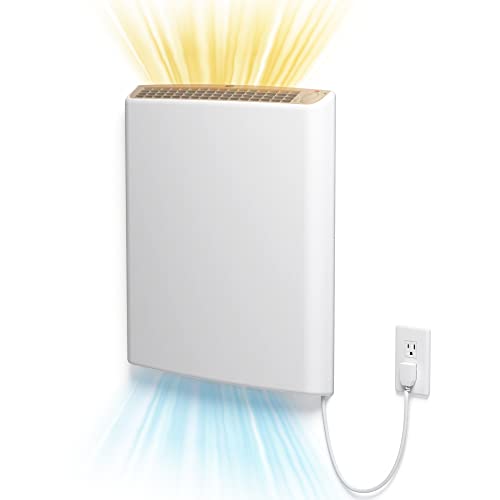
The ENVI wall panel is designed as a low-wattage, energy-efficient option for constant or supplemental heating. Its fan-less “Stack Convection” design provides silent, gentle warmth without circulating dust or allergens. The unit operates around 90°F at the surface and includes a wall-sense safety sensor that cuts power if removed from the wall, allowing safe 24/7 operation in homes with children, seniors, or pets. Installation is marketed as quick, about two minutes for plug-in mounting, and the panel is made in the USA. This model is suited for spaces where quiet, continuous background heat and low allergen circulation are priorities.
Heat Storm HS-1500-PHX-WIFI Infrared Heater, Wifi Wall Mounted

The Heat Storm HS-1500-PHX-WIFI is an infrared wall-mounted heater with Wi-Fi connectivity for smartphone control. It includes a touch screen digital thermostat, remote control, and tip-over safety shutoff. Infrared heating warms objects and people directly rather than relying solely on air convection, which can feel faster and more immediate in use. The unit conserves floor space with a wall-mounted design and is positioned for bedrooms, kitchens, and offices. The Wi-Fi feature supports scheduling and remote adjustments as part of a smart-home setup.
EconoHome Wall Heater Panel With Thermostat

Call 888-896-7031 for Free Local HVAC Quotes – Compare and Save Today!
The EconoHome panel is a 400W convection wall heater
Wall Space Heater 450W Remote Portable Electric Heater

The Brightown wall heater uses a ceramic PTC heating element for rapid warm-up and consistent output. It offers a precise digital thermostat with 1°F adjustments and a timer function allowing 1–12 hour runtime. The LED display and included remote provide ease of control from across the room. The heater integrates overheat protection and ETL certification for safety. As a compact 450W unit configured for wall mounting, it is aimed at offices, dorm rooms, and small living spaces where programmable operation and accurate temperature control are desired.
Dreo Wall Heater For Bathroom, Smart Space Heaters

The Dreo wall heater pairs PTC ceramic heating with a forceful impeller to deliver quick warmth, plus adjustable vertical oscillation for wider coverage. It uses an ALCI anti-leakage plug for bathroom-safe operation and includes multiple overheat protections. The model supports voice and app control via Alexa and Google Home, enabling smart schedules and remote access. Its features target larger bathrooms and multifunction rooms that benefit from fast heat distribution and integrated smart-home control.
Buying Guide: How To Choose A Plug-In Wall Mounted Heater
Selecting a plug-in wall-mounted heater requires balancing safety, performance, and room needs. The sections below explain key factors to compare and questions to ask before purchase.
Call 888-896-7031 for Free Local HVAC Quotes – Compare and Save Today!
Heating Method: Convection, Infrared, Or PTC Ceramic?
- Convection Panels (ENVI, EconoHome) warm air slowly and provide steady ambient heat. Best for continuous background warmth and quiet operation.
- Infrared Heaters (Heat Storm) heat objects and people directly, often feeling warmer faster. Useful when immediate radiant warmth is preferred.
- PTC Ceramic/Fan-Assisted Units (Dreo, Brightown) combine rapid heat-up with forced distribution; they are effective for faster room warm-up and oscillation features.
Power And Coverage
Check the wattage and the manufacturer’s recommended room size. Smaller plug-in wall heaters commonly range from 300W to 1500W; match the output to the space. For targeted heating of a small room or spot zone, lower wattage units can be sufficient. For larger rooms or bathrooms needing quick heat, choose higher wattage or models with oscillation or fan support.
Controls And Smart Features
- Thermostat Precision: Digital thermostats and 1°F increments (Brightown) allow more precise comfort control than basic low/medium/high settings.
- Timers & Schedules: Built-in timers reduce energy use by limiting run-time. Smart connectivity (Heat Storm, Dreo) enables remote control and scheduling.
- Remote & Touch Controls: Remote controls and touch screens add convenience for wall-mounted units.
Safety And Certifications
- Overheat Protection: Essential for any space heater to prevent overheating and potential fire hazards.
- Tip-Over And ALCI/ALR Plugs: Tip-over shutoff is common for freestanding units; ALCI or GFCI-style plugs are recommended for bathroom installations to reduce electric shock risk.
- Certifications: Look for ETL, cETL, or UL listings which indicate third-party safety testing.
Installation And Mounting
Confirm whether the unit is plug-in or hard-wired. Plug-in wall panels simplify installation and allow relocation; hard-wired models may require electrician labor but can offer cleaner integration. Verify clearance requirements, mounting hardware included, and whether a heat reflector or similar accessories are supplied.
Noise And Indoor Air Quality
- Fan-less Designs: Provide silent operation and minimize dust circulation—suitable for bedrooms and allergy sufferers (ENVI, convection panels).
- Fan-Forced Units: Deliver faster distribution but can produce audible noise and circulate particulates; consider if noise or dust is a concern.
Bathroom Use Considerations
For bathrooms, choose units with ALCI/GFCI protection and an IP rating appropriate for damp locations. Prefer models with explicit bathroom-safe plugs and overheat safeguards. Avoid non-rated units in wet environments.
Energy Efficiency And Operating Costs
Compare wattage against the expected runtime and thermostat accuracy. Lower-wattage panels used for zonal heating can reduce central heating runtime and save energy when heating only occupied rooms. Smart schedules and precision thermostats further reduce wasted runtime.
Durability And Warranty
Look for corrosion-resistant materials in bathroom-rated heaters and check manufacturer warranty periods. Units with solid-state PTC elements often provide longer life and consistent output over time.
Comparison Perspectives
- Quiet All-Day Comfort: Choose fan-less convection panels for silent 24/7 use and minimal air movement.
- Fast, Targeted Warmth: Infrared or PTC-fan units are better when you want immediate heat in a specific area.
- Smart Home Integration: Select Wi‑Fi or voice-enabled models for remote scheduling and automation.
- Bathroom Safety: Prioritize ALCI/GFCI plugs, IP ratings, and overheat protection for damp locations.
Use the feature comparisons above to match a heater’s method, wattage, control options, and safety features to the specific room and use case. This helps ensure the chosen plug-in wall-mounted heater aligns with heating needs, safety requirements, and energy goals.
Tips for Getting the Best HVAC Prices
- Prioritize Quality Over Cost
The most critical factor in any HVAC project is the quality of the installation. Don’t compromise on contractor expertise just to save money. - Check for Rebates
Always research current rebates and incentives — they can significantly reduce your overall cost. - Compare Multiple Quotes
Request at least three estimates before making your choice. You can click here to get three free quotes from local professionals. These quotes include available rebates and tax credits and automatically exclude unqualified contractors. - Negotiate Smartly
Once you've chosen a contractor, use the proven strategies from our guide — How Homeowners Can Negotiate with HVAC Dealers — to get the best possible final price.