
Choosing the right gas ceiling heater means balancing heating power, fuel type, mounting options, and safety features. The following selection highlights ceiling-appropriate unit heaters and high-ceiling infrared models suited for garages, shops, warehouses, and similar indoor spaces. A quick comparison table appears below for easy scanning.
| Product | Fuel Type | Rated BTU | Mounting |
|---|---|---|---|
| Reznor UDXC-45 | Natural Gas | 45,000 | Ceiling Mount (suspension points) |
| Reznor UDXC-60 | Propane (LP) | 60,000 | Ceiling Mount (suspension points) |
| Mr. Heater Big Maxx MHU80NG | Natural Gas | 80,000 | Ceiling Or Wall Brackets |
| Mr. Heater MH40NG | Natural Gas | 40,000 | For Buildings With 12–15 Ft Ceilings |
| Dyna-Glo IR30NMDG-1 | Natural Gas | 30,000 | Infrared (Wall/Ceiling Placement Considerations) |
Content Navigation
- Reznor UDXC-45 Natural Gas Ceiling Heater
- Reznor UDXC-60 Propane Ceiling Unit
- Mr. Heater Big Maxx MHU80NG Unit Heater
- Mr. Heater MH40NG 40,000 BTU Garage Heater
- Dyna-Glo IR30NMDG-1 30,000 BTU Infrared Heater
- Buying Guide: Choosing A Gas Ceiling Heater
- 1. Fuel Type And Supply
- 2. Sizing: BTU And Space Coverage
- 3. Heat Delivery Type
- 4. Mounting, Clearances, And Installation
- 5. Venting And Combustion Air
- 6. Safety Features And Compliance
- 7. Efficiency And Operating Costs
- 8. Controls And Accessories
- 9. Maintenance And Serviceability
- 10. Installation Compliance And Permits
Reznor UDXC-45 Natural Gas Ceiling Heater

The Reznor UDXC-45 is a dedicated indoor natural gas unit designed for garages, workshops, warehouses, and other enclosed spaces. It is rated at 45,000 BTU and offers two heating output levels: a lower firing rate for milder days and a higher rate for colder conditions. The unit achieves an 83% thermal efficiency rating, which is relevant for energy-conscious facility owners.
Mounting is intended for overhead installation: the heater includes threaded-nut retainers at four suspension points, making it suitable as a ceiling-mounted furnace when paired with appropriate brackets or hangers (sold separately). The unit features a quiet forced-air design with a low-static propeller fan to circulate warm air.
Consider this model if you need a ceiling-suspended natural gas heater with multiple firing levels and a focus on efficient forced-air distribution in medium to large enclosed spaces.
Reznor UDXC-60 Propane Ceiling Unit
Call 888-896-7031 for Free Local HVAC Quotes – Compare and Save Today!
The Reznor UDXC-60 is the LP-fueled counterpart engineered for indoor environments that prefer propane. Rated at 60,000 BTU, it also offers two firing levels (low and high) and the same 83% thermal efficiency rating as the smaller UDXC model.
Like the UDXC-45, this unit is intended for ceiling mounting using the four suspension retainers; brackets are optional and sold separately. The design prioritizes quiet forced-air distribution using a low-static propeller, suitable for workshops, warehouses, and other commercial or residential indoor spaces where propane is the preferred fuel.
This model is relevant when higher BTU output and propane fuel are required, or when coordinating fuel type across a property that relies on LP service.
Mr. Heater Big Maxx MHU80NG Unit Heater
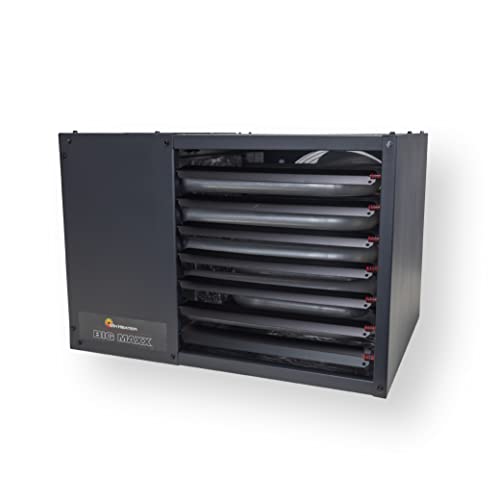
The Mr. Heater Big Maxx MHU80NG is an 80,000 BTU natural gas unit designed to heat larger spaces up to approximately 2,000 sq ft depending on insulation and ambient conditions. The package includes two angle brackets for mounting versatility and a liquid propane conversion kit for fuel flexibility.
Mounting options include ceiling suspension or bracket-mounted installation, allowing installation above work areas. The unit operates on standard 120 V power and requires certain clearance distances; a minimum 8-foot clearance from the floor to the unit base is specified. Venting options cover both vertical category 1 and horizontal category 3 configurations.
Call 888-896-7031 for Free Local HVAC Quotes – Compare and Save Today!
Choose this model for higher-capacity heating in larger garages or light industrial spaces where robust output and flexible venting are priorities.
Mr. Heater MH40NG 40,000 BTU Garage Heater

The Mr. Heater MH40NG offers 40,000 BTU of infrared heating and is promoted as efficient and cost-effective for buildings with 12 to 15 foot ceilings. Infrared units heat objects and surfaces first rather than exclusively warming the air, which can translate to perceived warmth at lower ambient temperatures.
Clearance specifications are important: top 36 inches, sides and back 30 inches, and below 68 inches. These clearances affect placement options and safety. The model is often used in garages and shops with higher ceilings where targeted radiant heat is preferred over forced-air circulation.
This infrared option is suitable if the goal is direct radiant heat for occupants and equipment rather than general forced-air mixing in the room.
Dyna-Glo IR30NMDG-1 30,000 BTU Infrared Heater

The Dyna-Glo IR30NMDG-1 is a 30,000 BTU infrared natural gas heater that warms objects and people directly through radiant heat. Infrared technology can be effective in large, drafty spaces because radiation heats surfaces rather than relying on air temperature alone.
This model is specified as natural gas ready with no fuel conversion permitted. It advertises heating coverage up to around 1,000 sq ft in appropriate settings. As a radiant device, placement should consider line-of-sight to work areas and equipment to maximize perceived warmth.
Consider this heater for targeted heating where infrared radiation better suits the space than a forced-air ceiling unit, such as for specific workstations or open-bay garages.
Buying Guide: Choosing A Gas Ceiling Heater
Selecting the right gas ceiling heater requires comparing fuel, BTU capacity, mounting and venting, heat delivery method, safety features, and operating requirements. The sections below break down these considerations from multiple perspectives.
Tips for Getting the Best HVAC Prices
- Prioritize Quality Over Cost
The most critical factor in any HVAC project is the quality of the installation. Don’t compromise on contractor expertise just to save money. - Check for Rebates
Always research current rebates and incentives — they can significantly reduce your overall cost. - Compare Multiple Quotes
Request at least three estimates before making your choice. You can click here to get three free quotes from local professionals. These quotes include available rebates and tax credits and automatically exclude unqualified contractors. - Negotiate Smartly
Once you've chosen a contractor, use the proven strategies from our guide — How Homeowners Can Negotiate with HVAC Dealers — to get the best possible final price.
1. Fuel Type And Supply
- Natural Gas vs Propane: Natural gas is common for properties with utility service; propane is used where LP tanks are available. Confirm local service and line pressure before selecting a unit.
- Conversion Kits: Some heaters include or permit LP conversion kits—verify manufacturer instructions and certification for conversions.
2. Sizing: BTU And Space Coverage
- Calculate Required BTU: Consider cubic volume, insulation, door openings, and desired temperature rise. Larger, poorly insulated spaces need higher BTU ratings.
- Multiple Units vs Single Unit: For irregular floor plans or very large bays, multiple smaller ceiling heaters can provide more even coverage than a single high-BTU unit.
3. Heat Delivery Type
- Forced-Air Units: Provide circulated warm air for general heating; useful for evenly warming a space.
- Infrared (Radiant) Units: Heat objects and people directly; effective for high ceilings, drafty areas, or targeted work areas.
- Choose Based On Use: Workshops with many open doors may prefer radiant; enclosed, multi-zone spaces often benefit from forced-air units.
4. Mounting, Clearances, And Installation
- Ceiling Suspension Points: Verify that the unit provides proper suspension hardware or specify compatible brackets. Some brackets are included, others sold separately.
- Clearance Requirements: Respect top, side, and bottom clearances indicated by the manufacturer to maintain safe operation and warranty compliance.
- Structural Support: Confirm ceiling joists or suspension grid can support the heater’s weight and vibration.
5. Venting And Combustion Air
- Direct Vent Vs Category Venting: Some units require sealed combustion/venting; others permit various venting configurations. Verify venting class and route for safe exhaust.
- Indoor Combustion Air: Ensure adequate combustion air per local codes, especially in tightly sealed buildings.
6. Safety Features And Compliance
- Oxygen Depletion Sensors (ODS): Required or recommended on some ventless or specific heater types.
- Sealed Burn Systems: Reduce indoor pollutant risks by isolating combustion from occupied space.
- Clearance And Mounting Labels: Units provide required clearances and installation guidelines; follow these for safety and code compliance.
7. Efficiency And Operating Costs
- Thermal Efficiency Ratings: Higher efficiency reduces fuel consumption for comparable output; compare ratings like the Reznor 83% figure when available.
- Runtime And Duty Cycle: Consider how continuous or intermittent operation affects fuel use and maintenance intervals.
8. Controls And Accessories
- Thermostats And Zones: Many forced-air units accept thermostats for automatic control. Plan wiring and thermostat placement for efficient zoning.
- Conversion Kits, Mounting Brackets, And Vent Kits: Factor needed accessories into installation planning; some items are not included with the heater.
9. Maintenance And Serviceability
- Access For Servicing: Ceiling-mounted units should be sited to allow filter, burner, and fan access for routine maintenance.
- Filter And Component Availability: Verify parts availability and service options for the brand and model chosen.
10. Installation Compliance And Permits
- Local Codes: Confirm local building, gas, and mechanical codes for gas appliance installation and ventilation.
- Professional Installation: Gas-fired ceiling heaters typically require licensed installers to ensure safe venting, gas connections, and compliance.