
Quick Overview: This guide compares reliable gas heating and hot-water solutions suitable for houses, including whole-house tankless water heaters and indoor infrared or vent-free gas space heaters. Below is a compact summary table of the five selected products to help you compare at a glance.
| Product | Type | Key Capacity | Notable Feature |
|---|---|---|---|
| Rinnai V75IN Tankless Hot Water Heater | Indoor Tankless Water Heater | 7.5 GPM | Compact, continuous hot water |
| Rheem RTG-95DVLN | Indoor Tankless Water Heater | 9.5 GPM | High flow for multi-application use |
| CAMPLUX 5.28 GPM Tankless Heater | Indoor Tankless Water Heater | 5.28 GPM | High-efficiency copper heat exchanger |
| Mr. Heater Vent Free Radiant 20,000 BTU | Indoor Vent-Free Gas Wall Heater | 20,000 BTU | Radiant infrared warmth, ODS safety |
| Dyna-Glo IR30NMDG-1 | Natural Gas Infrared Wall Heater | 30,000 BTU | Infrared heating for larger spaces |
Content Navigation
- Rinnai V75IN Tankless Heater
- Rheem RTG-95DVLN Tankless Unit
- CAMPLUX 5.28 GPM Tankless Heater
- Mr. Heater Vent Free Radiant 20,000 BTU
- Dyna-Glo IR30NMDG-1 Infrared Heater
- Buying Guide: How To Choose A Gas Heater For Your House
- Define Intended Use
- Capacity And Coverage
- Efficiency And Fuel Use
- Venting And Installation Requirements
- Safety Features
- Controls And Temperature Stability
- Durability And Materials
- Maintenance And Serviceability
- Local Codes And Indoor Air Quality
- Installation Costs And Professional Help
- Comparison Perspectives
Rinnai V75IN Tankless Heater
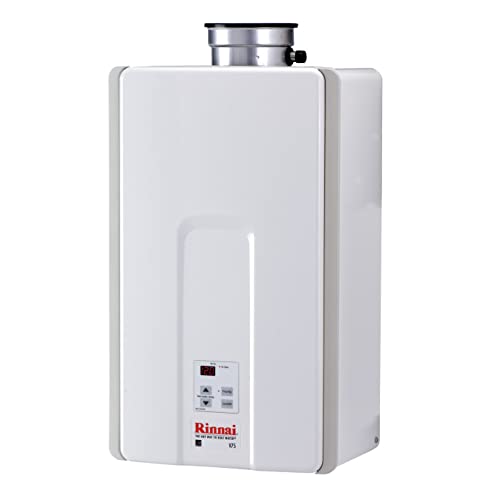
Type: Indoor Natural Gas Tankless Water Heater. Flow Rate: Up To 7.5 GPM. The Rinnai V75IN is designed to deliver continuous hot water for multiple fixtures. Its compact design saves space versus traditional tanks and it operates on demand, which helps reduce standby energy use. The unit includes features meant to reduce scale buildup, supporting longer-term reliability. Rinnai rates this model to handle simultaneous demand from several appliances with steady water pressure.
Best For: Homes seeking a compact whole-house tankless solution with moderate to high simultaneous demand. Consider venting and gas-line requirements prior to installation.
Rheem RTG-95DVLN Tankless Unit

Type: Non-Condensing Indoor Tankless Water Heater. Flow Rate: 9.5 GPM. Rheem highlights this model for delivering continuous hot water even when multiple applications run at once. The unit’s higher GPM rating supports larger households or higher simultaneous demand. It also includes water-saving settings designed to reduce water usage over time.
Call 888-896-7031 for Free Local HVAC Quotes – Compare and Save Today!
Best For: Larger households or properties with higher hot-water demands that require a higher GPM rating and consistent delivery for showers, laundry, and dishwashing simultaneously. Check venting and installation clearance details for indoor models.
CAMPLUX 5.28 GPM Tankless Heater
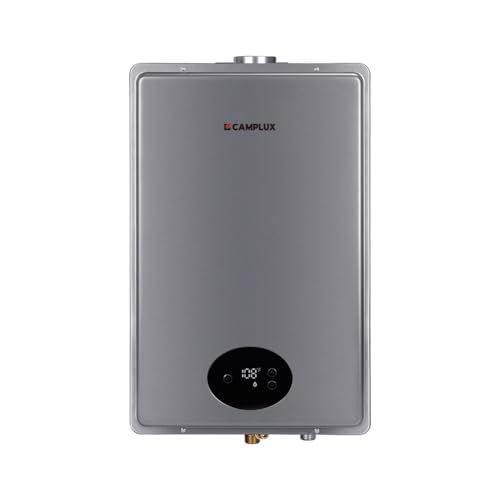
Type: Indoor Tankless Water Heater. Flow Rate: 5.28 GPM; Heat Exchanger: Oxygen-free Copper. CAMPLUX emphasizes quick heat-up and high thermal efficiency. The copper heat exchanger supports efficient heat transfer and corrosion resistance, and the unit is sized to save space. Advanced sensors help maintain consistent water temperature with fast response.
Best For: Medium-sized households or installations where space savings and quick temperature response are priorities. Consider local code and fuel type compatibility before selecting an indoor model.
Mr. Heater Vent Free Radiant 20,000 BTU

Type: Vent-Free Radiant Gas Wall Heater. Output: 20,000 BTU. This unit uses infrared-style radiant technology to warm objects and people directly, which can feel like “sun-like” warmth. The heater is suited for supplemental heat in defined spaces such as garages, sunrooms, or small living areas. It includes an oxygen depletion sensor (ODS) that shuts the unit off if oxygen levels fall, and other safety protections typical of vent-free appliances.
Call 888-896-7031 for Free Local HVAC Quotes – Compare and Save Today!
Best For: Supplemental heating of targeted indoor spaces up to several hundred square feet where vent-free operation is permitted. Verify local building codes and indoor air-quality considerations before selecting a vent-free heater.
Dyna-Glo IR30NMDG-1 Infrared Heater

Type: Natural Gas Infrared Wall Heater. Output: Up To 30,000 BTU. Designed to radiate heat to objects and occupants rather than heating air alone, this heater is appropriate for larger rooms or spaces up to the manufacturer’s stated coverage. Infrared heating can provide rapid localized comfort, and the higher BTU rating suits bigger areas where a centralized HVAC supplement is desirable.
Best For: Larger indoor spaces or workshops where targeted radiant heat is needed. Confirm fuel compatibility and ensure installation follows local codes and clearances for wall-mounted infrared units.
Buying Guide: How To Choose A Gas Heater For Your House
Define Intended Use
Decide whether the goal is whole-house hot water (tankless water heaters) or space heating (infrared, vent-free gas wall heaters). Tankless water heaters supply domestic hot water; gas wall heaters produce space heat. Choosing the correct category avoids mismatched expectations.
Capacity And Coverage
For tankless water heaters, compare GPM (gallons per minute) ratings relative to simultaneous fixtures. Higher GPM suits larger households. For space heaters, use BTU output and manufacturer coverage to estimate area served. Factor in insulation, ceiling height, and open floor plans when sizing.
Efficiency And Fuel Use
Look at heat-exchanger materials and efficiency claims. Copper exchangers and high-efficiency designs reduce energy loss. For space heaters, radiant models often provide perceived warmth at lower thermostat settings, impacting gas consumption.
Venting And Installation Requirements
Indoor tankless units and some infrared heaters require dedicated venting or combustion air. Vent-free appliances avoid exhaust lines but may be restricted by local codes due to indoor air-quality concerns. Verify clearances, gas-line sizing, and professional installation needs.
Safety Features
Check for oxygen depletion sensors (ODS), flame-failure shutdown, overheat protection, freeze protection (for units in cold locations), and diagnostic systems. Tankless units often include scale detection and anti-freeze functions. These features affect long-term reliability and safe operation.
Controls And Temperature Stability
Evaluate how the unit maintains temperature. Advanced models use sensors and microprocessors to keep fluctuations low. Digital displays and precise temperature controls improve user experience, especially for showering and multi-point demand.
Durability And Materials
Materials like oxygen-free copper and corrosion-resistant components typically last longer. Non-condensing vs condensing designs have different material and maintenance implications. Review manufacturer warranty terms and recommended maintenance.
Maintenance And Serviceability
Consider descaling requirements, access to service centers, and ease of filter or component replacement. Tankless systems in hard-water areas may need regular maintenance to prevent scale buildup. Check if the manufacturer provides clear maintenance guidance and parts availability.
Local Codes And Indoor Air Quality
Confirm that vent-free units are permitted in your jurisdiction, as some regions limit or ban vent-free combustion indoors due to combustion byproducts. For indoor gas appliances, ensure adequate ventilation and follow local code requirements for combustion air.
Installation Costs And Professional Help
Factor in costs for venting, gas-line upgrades, permits, and professional installation. Proper installation ensures safe operation and code compliance. For complex setups (high BTU or multi-unit systems), hire licensed HVAC or plumbing professionals.
Tips for Getting the Best HVAC Prices
- Prioritize Quality Over Cost
The most critical factor in any HVAC project is the quality of the installation. Don’t compromise on contractor expertise just to save money. - Check for Rebates
Always research current rebates and incentives — they can significantly reduce your overall cost. - Compare Multiple Quotes
Request at least three estimates before making your choice. You can click here to get three free quotes from local professionals. These quotes include available rebates and tax credits and automatically exclude unqualified contractors. - Negotiate Smartly
Once you've chosen a contractor, use the proven strategies from our guide — How Homeowners Can Negotiate with HVAC Dealers — to get the best possible final price.
Comparison Perspectives
- Whole-House Hot Water Vs. Space Heating: Tankless units address hot water needs while gas wall heaters address space comfort. They are not interchangeable.
- Performance Vs. Efficiency: Higher GPM/BTU increases capacity but may raise fuel demands; balance required capacity with efficiency features to optimize operating costs.
- Vent-Free Convenience Vs. Vented Safety: Vent-free heaters simplify installation but may affect indoor air quality; vented or direct-vent systems add installation complexity but isolate combustion products.
- Upfront Cost Vs. Long-Term Savings: High-efficiency units can reduce operating costs over time; include maintenance and potential energy savings in long-term comparisons.