
Finding The Right Gas Heater With A Fan can make winter comfort in garages, workshops, and unfinished spaces much more efficient. Below is a quick comparison of five relevant heaters, followed by individual product details and a buying guide to help match features to your space and needs.
| Product | Heat Source | BTU / Power | Notable Feature |
|---|---|---|---|
| Mr. Heater F260550 Big Maxx MHU50NG | Natural Gas | 50,000 BTU | Powered exhaust for flexible venting |
| Mr. Heater F260560 Big Maxx MHU80NG | Natural Gas | 80,000 BTU | High-capacity unit with venting options |
| Mr. Heater MHVFBF30NGT 30,000 BTU | Natural Gas (Blue Flame) | 30,000 BTU | Thermostat control and blue flame efficiency |
| Dyna-Glo IR30NMDG-1 30,000 BTU | Natural Gas (Infrared) | 30,000 BTU | Radiant infrared heating to warm objects |
| Dreo Tower Fan And Heater Combo | Electric (PTC) — Fan+Heater | 1500W electric heat / multiple fan levels | All-season fan-and-heater combination |
Content Navigation
- Mr. Heater F260550 Big Maxx MHU50NG Natural Gas Unit Heater
- Mr. Heater F260560 Big Maxx MHU80NG Natural Gas Unit Heater
- Mr. Heater MHVFBF30NGT 30,000 BTU Vent Free Blue Flame Natural Gas Heater
- Dyna-Glo IR30NMDG-1 30,000 BTU Natural Gas Infrared Wall Heater
- Dreo Tower Fan And Heater Combo — Fan With Electric Heater
- Buying Guide: How To Choose A Gas Heater With Fan
- 1. Heat Output And Room Size
- 2. Fan Or Blower Presence
- 3. Fuel Type And Availability
- 4. Venting And Safety Considerations
- 5. Installation And Clearance
- 6. Operational Noise And Air Quality
- 7. Control Options And Thermostat Integration
- 8. Application-Specific Considerations
- 9. Maintenance And Longevity
- 10. Comparative Perspectives
Mr. Heater F260550 Big Maxx MHU50NG Natural Gas Unit Heater
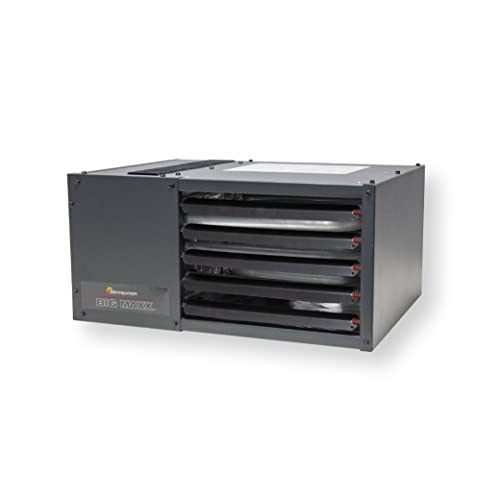
Overview: The Big Maxx MHU50NG is a 50,000 BTU natural gas unit heater intended for garages, workshops, and medium to large spaces.
- BTU Output: 50,000 BTU per hour suitable for up to about 1,250 sq. ft.
- Fan / Venting: Powered exhaust allows for vertical or horizontal venting which helps direct warm air and manage combustion exhaust.
- Controls & Access: External access to thermostat and A/C terminals simplifies wiring and control adjustments.
- Installation Notes: Requires gas connection and installation per local codes; designed for permanent mounting with clearances specified by the manufacturer.
Best Use Cases: Larger attached garages, small commercial bays, or workshops where forced-air distribution and venting flexibility are important.
Mr. Heater F260560 Big Maxx MHU80NG Natural Gas Unit Heater
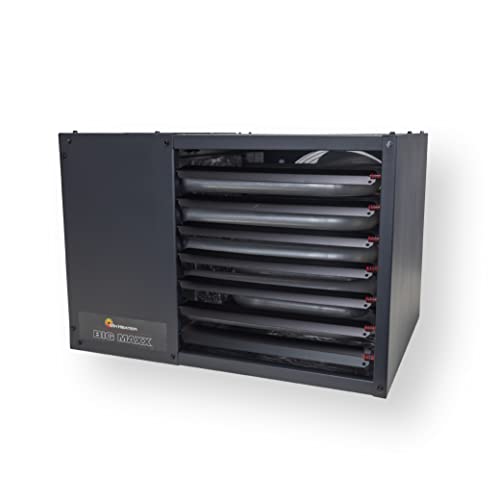
Overview: The Big Maxx MHU80NG is an 80,000 BTU natural gas unit heater for larger spaces that require high output and durable performance.
Call 888-896-7031 for Free Local HVAC Quotes – Compare and Save Today!
- BTU Output: 80,000 BTU with coverage up to roughly 2,000 sq. ft., depending on insulation and ceiling height.
- Fan / Venting: Compatible with category 1 vertical or category 3 horizontal venting; includes angle brackets for mounting.
- Components: Unit ships with heater body and mounting hardware; thermostat, hose, and regulator are not included.
- Installation Notes: Higher clearance requirements (minimum 8 ft from floor to base) and professional installation recommended for safe operation.
Best Use Cases: Larger garages, warehouses, and commercial bays needing high heat output and durable unit design with venting options.
Mr. Heater MHVFBF30NGT 30,000 BTU Vent Free Blue Flame Natural Gas Heater
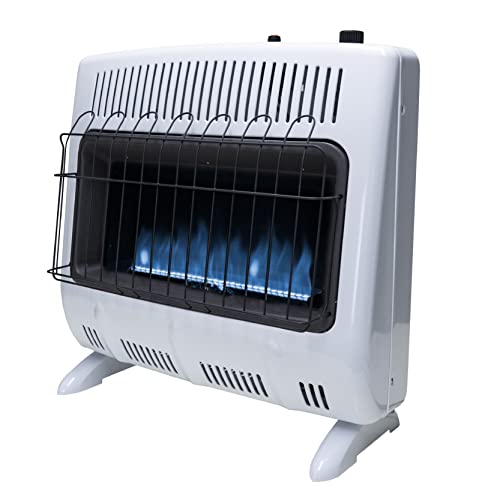
Overview: This 30,000 BTU vent-free blue flame wall heater provides convection heat and includes a thermostat for temperature control.
- BTU Output: Up to 30,000 BTU, commonly effective for spaces up to about 1,000 sq. ft., depending on layout and insulation.
- Fan / Air Movement: Blue flame convection heaters move warm air naturally; while not equipped with a powered fan, their design yields even, efficient heating.
- Controls & Ignition: Built-in thermostat and battery-powered electric ignition (battery included) for simple startup and temperature regulation.
- Efficiency: Blue flame burners convert fuel efficiently to warm air, and the unit is rated to function at elevations up to 4,500 ft.
Best Use Cases: Finished additions, sunrooms, or spaces where vent-free operation and thermostat control are desired and local codes permit vent-free appliances.
Dyna-Glo IR30NMDG-1 30,000 BTU Natural Gas Infrared Wall Heater

Overview: The Dyna-Glo IR30NMDG-1 is a 30,000 BTU infrared natural gas wall heater that radiates heat directly to objects and people.
Call 888-896-7031 for Free Local HVAC Quotes – Compare and Save Today!
- Heating Method: Infrared technology warms surfaces and occupants first, which can feel faster in open or drafty spaces.
- Fan / Air Movement: Infrared units primarily radiate heat without relying on a forced-air fan; this is ideal when dust circulation must be minimized.
- Installation: Natural gas ready and designed to heat areas up to approximately 1,000 sq. ft.; follow manufacturer installation instructions and local codes.
- Application Notes: Radiant heaters are effective for spot heating, work areas, and spaces where direct warmth is preferred over warming the entire room air volume.
Best Use Cases: Workbenches, garages, or open bays where directed radiant heat helps occupants stay warm without fully heating ambient air.
Dreo Tower Fan And Heater Combo — Fan With Electric Heater

Overview: While not a gas appliance, this electric tower unit combines a PTC heater and multi-speed fan to provide instant warmth and air circulation indoors.
- Combined Function: Switches between a 1500W electric heater and up to 12 fan speeds with wide oscillation to move heated or cooled air across a room.
- Fan Benefits: Powerful DC motor and 120° oscillation push air farther and distribute heat from the PTC element more evenly than convection alone.
- Controls: Multiple modes, 12-hour timer, remote control, and precise temperature control with ECO mode for energy management.
- Use Considerations: Ideal for finished indoor spaces where electric heating is acceptable and gas venting or installation is impractical.
Best Use Cases: Bedrooms, offices, and finished living areas where an electric heater/fan offers quick portability and simple installation-free operation.
Buying Guide: How To Choose A Gas Heater With Fan
Choosing a gas heater with a fan (or a heater-plus-fan combination) depends on space size, installation constraints, ventilation requirements, and intended usage. Below are key considerations and comparison perspectives to evaluate options objectively.
1. Heat Output And Room Size
- BTU Rating: Match heater BTU output to the room volume and insulation. As a rule of thumb, 30,000 BTU is typically effective for ~800–1,000 sq. ft. in average conditions; larger or poorly insulated spaces need more BTUs.
- Ceiling Height: Taller rooms require more heat; compute based on cubic feet rather than floor area for accuracy.
2. Fan Or Blower Presence
- Forced-Air Unit Heaters: Unit heaters with fans (blowers) actively distribute warm air, improving comfort in large or open spaces and reducing stratification.
- Convection Or Blue Flame: Vent-free blue flame models use natural convection to move warmed air without a powered fan; they are quieter but may heat slower.
- Radiant Infrared: Infrared heaters warm objects and people directly; they may not require a fan and are efficient for spot heating but less effective at raising entire room air temperature quickly.
3. Fuel Type And Availability
- Natural Gas vs Propane (LP): Choose based on available fuel and conversion options. Some models are natural gas-only, some are portable propane, and others offer conversion kits.
- Efficiency And Consumption: Compare fuel consumption rates and BTU outputs to estimate operating costs in your region.
4. Venting And Safety Considerations
- Vent-Free vs Vent-Required: Vent-free appliances simplify installation but are restricted or regulated in some areas; check local building codes and ventilation requirements.
- Powered Exhaust and Venting Options: Unit heaters with powered exhaust or venting flexibility allow safer combustion management in semi-enclosed or vented installations.
- Safety Features: Look for Oxygen Depletion Sensors (ODS), tip-over switches, and automatic shutoff features, especially in indoor applications.
5. Installation And Clearance
- Mounting Requirements: Some unit heaters require professional mounting and specific clearances (e.g., minimum distance from the floor or combustible materials).
- Electrical Needs: Certain gas heaters have ignition systems, thermostats, or blowers that require electrical power; ensure proper wiring availability.
6. Operational Noise And Air Quality
- Noise Level: Blower-equipped units generate sound; assess noise tolerance for workspaces versus living areas.
- Air Movement And Dust: Forced-air fans circulate dust and fumes. Infrared radiant heaters minimize air movement when dust control is a priority.
7. Control Options And Thermostat Integration
- Thermostat Control: Integrated thermostats and external thermostat compatibility enable precise temperature management and energy savings.
- Remote Or Digital Controls: For convenience, digital displays, remote control, timers, and ECO modes can improve usability in occupied spaces.
8. Application-Specific Considerations
- Garages And Workshops: Durable unit heaters with blowers and venting options are often preferred to distribute heat across work areas.
- Unfinished vs Finished Spaces: Venting rules differ: vent-free units may be acceptable in finished, conditioned spaces but can be restricted in certain garage or commercial settings.
- Spot Heating Needs: For localized heating at workbenches or doorways, infrared radiant units can be more efficient than whole-space forced-air heaters.
9. Maintenance And Longevity
- Service Access: Models with easy outside access to controls and terminals simplify maintenance and reduce service time.
- Parts Availability: Consider brand reputation and spare parts availability for long-term reliability.
10. Comparative Perspectives
- Performance vs Installation Complexity: High-BTU vented unit heaters deliver powerful output but often require more complex installations than vent-free models.
- Fan-Driven Distribution vs Radiant Comfort: Use fan-driven gas unit heaters to move heat across large volumes; use radiant gas heaters where directed warmth and reduced air movement are preferred.
- Electric Fan-Heater Hybrids: Electric fan-heater combos offer portability and no gas installation, but they are limited by electrical supply and operating cost compared to gas in many regions.
Final Selection Tips: Start by measuring the room volume and checking local codes for vent-free appliances. Prioritize units with proper venting or ODS safety features for indoor gas use, and choose a blower-equipped model if air distribution across a large or high-ceilinged space is required.
Tips for Getting the Best HVAC Prices
- Prioritize Quality Over Cost
The most critical factor in any HVAC project is the quality of the installation. Don’t compromise on contractor expertise just to save money. - Check for Rebates
Always research current rebates and incentives — they can significantly reduce your overall cost. - Compare Multiple Quotes
Request at least three estimates before making your choice. You can click here to get three free quotes from local professionals. These quotes include available rebates and tax credits and automatically exclude unqualified contractors. - Negotiate Smartly
Once you've chosen a contractor, use the proven strategies from our guide — How Homeowners Can Negotiate with HVAC Dealers — to get the best possible final price.