
Introduction: This guide covers reliable gas heaters and gas/CO monitors to help you heat spaces safely and monitor air quality. Included is a comparison table of the selected products to quickly identify purpose, fuel type, and coverage.
| Product | Type | Fuel | Coverage |
|---|---|---|---|
| Mr. Heater Big Maxx MHU50NG | Unit Heater | Natural Gas | Up To 1250 Sq. Ft. |
| Mr. Heater Big Maxx MHU80NG | Unit Heater | Natural Gas | Up To 2000 Sq. Ft. |
| ProCom MN100TBA-B Blue Flame | Ventless Space Heater | Natural Gas | Up To 500 Sq. Ft. |
| gutong 4 in 1 CO & Gas Detector | Plug-In Monitor | Electric (Detection) | Room Monitoring |
| Mr. Heater MHVFBF30NGT Vent Free Heater | Wall-Mount Heater | Natural Gas | Up To 1000 Sq. Ft. |
Content Navigation
- Mr. Heater F260550 Big Maxx MHU50NG
- Mr. Heater F260560 Big Maxx MHU80NG
- ProCom MN100TBA-B Blue Flame Heater
- 4 in 1 Carbon Monoxide Detector (gutong)
- Mr. Heater MHVFBF30NGT Vent Free Wall Heater
- Buying Guide: How To Choose The Right Gas Heater And Monitor
- Heating Capacity And Space Size
- Vented vs Vent-Free Heaters
- Installation And Venting Requirements
- Controls, Thermostats, And Usability
- Fuel Type And Conversion
- Maintenance And Service Access
- Alarm Thresholds And Detection Features
- Energy Efficiency And Operating Costs
- Redundancy And Layered Protection
- Comparison Perspectives
Mr. Heater F260550 Big Maxx MHU50NG
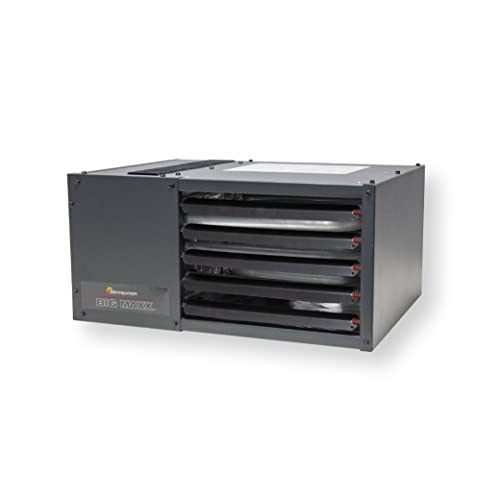
Overview: A commercial-style unit heater designed for larger indoor spaces such as garages, workshops, and small commercial areas.
- Heat Output: 50,000 BTU per hour, suitable for up to 1250 sq. ft.
- Venting: Powered exhaust allowing both vertical and horizontal venting configurations.
- Service Access: External access to thermostat, A/C terminals, and gas connection for easier maintenance.
Use Cases: Best where a durable, vented natural gas unit is required and where flexible venting orientation is needed.
Mr. Heater F260560 Big Maxx MHU80NG
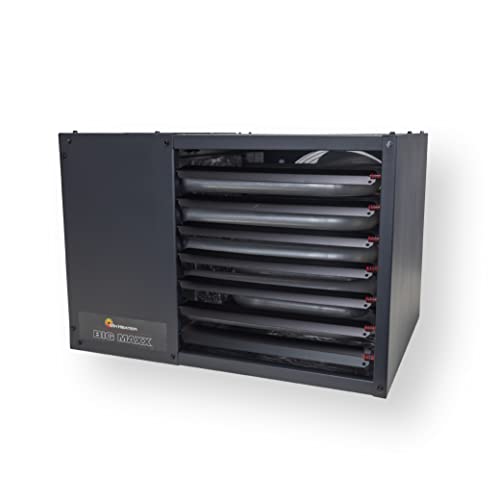
Overview: Higher-capacity version of the Big Maxx series for larger spaces, with conversion kit and mounting hardware included.
Call 888-896-7031 for Free Local HVAC Quotes – Compare and Save Today!
- Heat Output: 80,000 BTU performance, rated to cover up to 2000 sq. ft.
- Includes: Two angle brackets and liquid propane conversion kit (thermostat, hose, regulator not included).
- Venting & Clearance: Category 1 vertical or category 3 horizontal venting; minimum 8 ft. clearance from floor to base.
Use Cases: Suitable for larger shops or multi-zone spaces needing a high-output, vented natural gas heater with conversion flexibility.
ProCom MN100TBA-B Blue Flame Heater

Overview: A ventless blue flame space heater with thermostat control for residential rooms, mountable or freestanding.
- Heat Output: Up to 10,000 BTU; heats up to approximately 500 sq. ft.
- Controls: High/Medium/Low thermostat control for adjustable heat delivery.
- Installation: Slim profile with included wall mount hardware and base feet for floor placement.
Use Cases: Intended for bedrooms, offices, or small living areas where ventless blue flame heating provides consistent convection heat.
4 in 1 Carbon Monoxide Detector (gutong)

Overview: A plug-in monitor that detects carbon monoxide, combustible gases, temperature, and humidity with an HD display and battery backup.
Call 888-896-7031 for Free Local HVAC Quotes – Compare and Save Today!
- Sensor Coverage: Monitors CO and combustible gases in real time and displays dynamic data.
- Alarms: 100 dB sound alarm and flashing light when thresholds (e.g., CO levels) are exceeded.
- Power & Backup: Plug-and-play for 100–240V outlets with a 1000mAh backup battery providing temporary power during outages.
Use Cases: Designed for room-level monitoring near heaters, furnaces, and appliances to provide early warning for CO and gas leaks.
Mr. Heater MHVFBF30NGT Vent Free Wall Heater
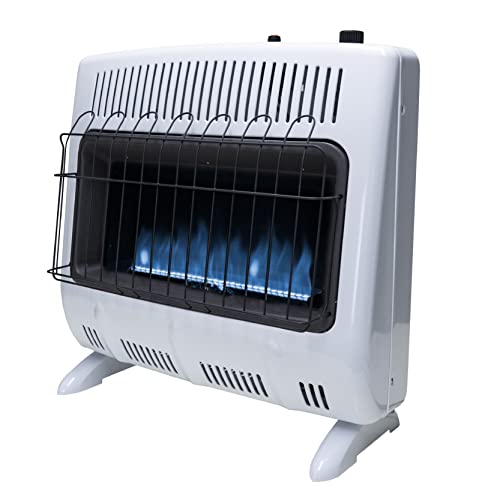
Overview: A vent-free blue flame wall-mount heater designed for consistent, fuel-efficient convection heat in enclosed spaces.
- Heat Output: Up to 30,000 BTU; appropriate for spaces up to 1,000 sq. ft. and effective up to 4,500 ft. altitude.
- Controls & Efficiency: Built-in thermostat with electric ignition; blue flame burner for even, fuel-efficient heat.
- Installation: Wall-mount design intended for supplemental heat in rooms, additions, and sunrooms.
Use Cases: Suited for homeowners seeking a wall-mounted, vent-free natural gas heater with thermostat control for moderate-sized rooms.
Buying Guide: How To Choose The Right Gas Heater And Monitor
Safety First — CO And Gas Monitoring: Any gas heater installation should be paired with a certified carbon monoxide (CO) detector and, where applicable, a combustible gas monitor. Choose detectors with audible and visual alarms, backup power, and clear digital readouts for quick interpretation.
Heating Capacity And Space Size
BTU Rating: Match the heater’s BTU output to your room size. Higher BTUs heat larger spaces but require proper venting or ventilation planning.
Coverage Estimates: Use manufacturer coverage guidelines (sq. ft.) as a starting point and adjust for ceiling height, insulation, and climate.
Vented vs Vent-Free Heaters
- Vented (Direct/Power Venting): Recommended for larger commercial or enclosed spaces where combustion byproducts must be exhausted outdoors. Offers more control over indoor air quality.
- Vent-Free (Blue Flame): Provides high efficiency and even convection heat but requires strict adherence to room size limits, clearance, and local codes due to indoor combustion.
Installation And Venting Requirements
Clearances & Codes: Check required clearances from floors, walls, and ceilings. Local building codes can restrict the use of vent-free appliances in some jurisdictions.
Venting Options: For unit heaters, confirm whether the unit supports vertical or horizontal vent runs and ensure you have space for terminal locations.
Controls, Thermostats, And Usability
Thermostat Compatibility: Determine if the heater includes a built-in thermostat or requires an external wall thermostat. External thermostats can provide better zone control in larger spaces.
Ignition & Operation: Consider electronic ignition for convenience and reliability. Manual or piezo igniters may be acceptable for portable units.
Fuel Type And Conversion
Natural Gas vs Propane: Verify the available fuel at your site. Some units include conversion kits, but conversion should follow manufacturer instructions and local code requirements.
Propane Tank Management: For portable propane use, consider a tank gauge to monitor fuel levels and prevent unexpected depletion.
Maintenance And Service Access
Serviceability: Look for external access to thermostat, gas connections, and service panels for easier maintenance and lower service costs.
Filter And Burner Access: Ensure burners and pilot components are accessible for inspection and cleaning as part of seasonal maintenance.
Alarm Thresholds And Detection Features
Detector Sensitivity: Confirm detection thresholds and if the monitor measures multiple hazards (CO, combustible gas, temp, humidity). Choose detectors with clear alarm behavior and self-test functions.
Placement: Install CO detectors according to manufacturer guidance — typically outside sleeping areas and near at-risk appliances, but not directly above combustion appliances.
Energy Efficiency And Operating Costs
Fuel Consumption: Compare BTU-to-coverage efficiency and rated fuel consumption figures. Vent-free units tend to use less fuel to maintain indoor temperature but must be used within safe parameters.
Redundancy And Layered Protection
Combine Devices: Pair your heater with both a room-level CO detector and a room/whole-home gas monitor for layered safety. Regularly test alarms and replace batteries per manufacturer guidance.
Tips for Getting the Best HVAC Prices
- Prioritize Quality Over Cost
The most critical factor in any HVAC project is the quality of the installation. Don’t compromise on contractor expertise just to save money. - Check for Rebates
Always research current rebates and incentives — they can significantly reduce your overall cost. - Compare Multiple Quotes
Request at least three estimates before making your choice. You can click here to get three free quotes from local professionals. These quotes include available rebates and tax credits and automatically exclude unqualified contractors. - Negotiate Smartly
Once you've chosen a contractor, use the proven strategies from our guide — How Homeowners Can Negotiate with HVAC Dealers — to get the best possible final price.
Comparison Perspectives
- Large Workshop/Commercial: Prefer higher BTU unit heaters with powered venting and external service access.
- Home Rooms & Additions: Consider wall-mounted vent-free heaters with built-in thermostats if local codes permit.
- Small Rooms & Offices: Ventless blue flame or compact heaters with thermostat control offer balanced heat for smaller spaces.
- Safety Monitoring: Use plug-in or portable CO/gas detectors positioned per guidelines; portable detectors add flexibility for travel or multi-use spaces.