
Choosing the best gas room heater depends on room size, fuel type, installation, and safety features. Below is a quick summary of five ventless and infrared natural gas room heaters selected for performance and versatility.
| Product | Type | Max BTU | Coverage |
|---|---|---|---|
| Mr. Heater MHVFBF30NGT | Vent Free Blue Flame | 30,000 | Up To 1,000 Sq. Ft. |
| ProCom MN300HBA-B | Ventless Blue Flame | 30,000 | Up To 1,400 Sq. Ft. |
| ProCom MN300TPA-B | Ventless Infrared | 30,000 | Up To 1,400 Sq. Ft. |
| Dyna-Glo IR30NMDG-1 | Infrared Wall Heater | 30,000 | Up To 1,000 Sq. Ft. |
| Bluegrass Living B20TNIR-BB | Ventless Infrared | 20,000 | Up To 950 Sq. Ft. |
Content Navigation
- Mr. Heater MHVFBF30NGT 30,000 BTU Natural Gas Wall Heater
- ProCom MN300HBA-B 30,000 BTU Ventless Blue Flame Heater
- ProCom MN300TPA-B 30,000 BTU Ventless Infrared Heater With Thermostat
- Dyna-Glo IR30NMDG-1 30,000 BTU Natural Gas Infrared Wall Heater
- Bluegrass Living B20TNIR-BB 20,000 BTU Ventless Infrared Heater
- Buying Guide: How To Choose A Gas Room Heater
- 1. Fuel Type And Availability
- 2. Heater Technology: Blue Flame vs Infrared
- 3. BTU Rating And Room Size
- 4. Ventless Considerations And Indoor Air Quality
- 5. Thermostat And Control Options
- 6. Installation And Clearance Requirements
- 7. Safety Features
- 8. Efficiency And Operating Patterns
- 9. Noise, Aesthetics, And Blower Options
- 10. Maintenance And Longevity
- Comparison Perspectives
Mr. Heater MHVFBF30NGT 30,000 BTU Natural Gas Wall Heater
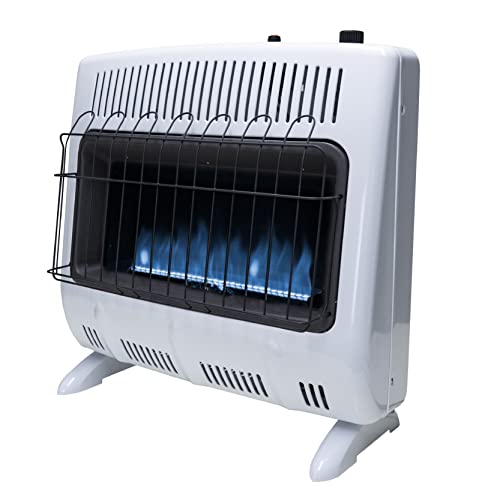
This vent-free blue flame wall heater produces up to 30,000 BTU and is intended for supplemental heat in cold rooms, sunrooms, or additions. The unit uses convection heating to distribute warmth and is rated for altitudes up to 4,500 feet.
Key features include an integrated thermostat for precise temperature control and a battery-powered electric ignition for reliable start-up. The blue flame burner emphasizes fuel efficiency, consuming approximately .030 MCF per hour, and aims to provide even, consistent heat without external venting.
Performance considerations: this heater is designed for spaces up to about 1,000 square feet. Installation requires a gas line and wall-mounting clearances per manufacturer instructions. Because it is vent-free, indoor combustion byproducts need consideration per local codes and room ventilation practices.
ProCom MN300HBA-B 30,000 BTU Ventless Blue Flame Heater

Call 888-896-7031 for Free Local HVAC Quotes – Compare and Save Today!
This ProCom model is a ventless blue flame heater with a 30,000 BTU output and manual control settings (Low/Medium/High). The design allows operation without electrical power, using a push-button piezo ignition.
Rated to heat up to 1,400 square feet, it includes an Oxygen Depletion Sensor (ODS) that automatically shuts off the unit if oxygen levels drop below safe thresholds. The manual control and robust BTU output make it suitable for larger rooms or spaces where electricity may not be available.
Installation and operation: intended for use with natural gas only. As with other ventless appliances, review local codes and room ventilation requirements. The manual control approach provides simplicity but lacks automatic thermostat cycling for fine-grain temperature maintenance.
ProCom MN300TPA-B 30,000 BTU Ventless Infrared Heater With Thermostat

Combining infrared technology with thermostat control, this ProCom unit delivers 30,000 BTU for spaces up to 1,400 square feet. Infrared heaters warm objects and occupants directly, which can feel efficient in rooms where targeted heat is preferred.
The unit includes wall-mount hardware and base feet for floor placement, plus a three-stage thermostat (High/Medium/Low) for temperature control. The slim profile is designed to integrate into residential areas without dominating wall space.
Call 888-896-7031 for Free Local HVAC Quotes – Compare and Save Today!
Operational notes: infrared heating behavior differs from convection units—objects retain heat and surfaces warm first. Ventless infrared models require the same attention to indoor combustion and ventilation standards as other unvented gas heaters.
Dyna-Glo IR30NMDG-1 30,000 BTU Natural Gas Infrared Wall Heater

The Dyna-Glo IR30NMDG-1 uses infrared radiation to warm objects and people directly rather than relying solely on air temperature. With up to 30,000 BTU, it is rated for rooms up to around 1,000 square feet.
Designed to operate on natural gas without conversion, the heater radiates heat in a manner similar to sunlight—objects and surfaces absorb warmth and then re-radiate it into the space. This can improve perceived comfort quickly in occupied areas.
Installation requires wall mounting and adherence to required clearances. As an infrared model, it is often chosen for workshops, basements, or rooms where rapid surface warming is preferred over whole-room convection.
Bluegrass Living B20TNIR-BB 20,000 BTU Ventless Infrared Heater

This Bluegrass Living infrared heater provides 20,000 BTU, suitable for rooms up to about 950 square feet. It features thermostat control with Low/Med/High settings and includes a blower, wall mount, and base feet.
The compact profile and included blower help deliver and circulate radiant heat more evenly. The unit’s thermostat cycles the heater on and off to sustain the desired temperature, offering a balance between energy use and comfort maintenance.
Because it is ventless and intended for indoor natural gas use, ensure compatibility with room size and local indoor-air regulations. The lower BTU output compared to 30k models may suit mid-sized rooms or where a quieter, less intense heat source is preferred.
Buying Guide: How To Choose A Gas Room Heater
Selecting the right gas room heater requires matching heater characteristics to your room, fuel availability, and safety needs. The following factors provide a structured comparison perspective.
1. Fuel Type And Availability
Natural Gas vs Propane: Some models are natural gas only while others can use propane or include conversion kits. Confirm the available fuel type at the installation location and choose a heater designed for that fuel to ensure safe operation and compliance.
2. Heater Technology: Blue Flame vs Infrared
Blue Flame / Convection: Heats air, offering more even room temperature over time. Good for whole-room heating.
Infrared / Radiant: Warms objects and occupants directly, providing quicker perceived warmth and often better for targeted heating or spaces with high ceilings.
3. BTU Rating And Room Size
Match BTU To Square Footage: Use manufacturer coverage estimates as a starting point. Higher BTU units (e.g., 30,000) are appropriate for larger rooms or poorly insulated spaces, while 18,000–20,000 BTU units suit smaller rooms.
4. Ventless Considerations And Indoor Air Quality
Ventless Heaters: Offer higher efficiency and easier installation but produce combustion byproducts inside the room. Check local codes, ensure proper room size and ventilation, and look for Oxygen Depletion Sensors (ODS) for automatic safety shutoff.
5. Thermostat And Control Options
Thermostat Control: Models with integrated thermostats provide automatic cycling and maintain set temperatures more consistently.
Manual Controls: Simpler and sometimes more reliable in no-electricity scenarios, but they require manual adjustment and do not automatically maintain precise temperature.
6. Installation And Clearance Requirements
Wall-mount vs floor placement affects clearance needs and room layout. Always follow manufacturer-specified clearances from combustible materials, and verify gas line access and any local permit requirements.
7. Safety Features
Look for ODS, tip-over protection if floor-mounted, certified components, and manufacturer installation instructions. For ventless units, ensure sensors and shutoff mechanisms meet local safety standards.
8. Efficiency And Operating Patterns
Efficiency: Ventless models advertise near 99% combustion efficiency for delivered heat but consider the energy cost of the fuel and how often the heater will cycle.
Operating Pattern: Infrared units can be more comfortable for intermittent use or for occupants seated near the heater. Convection models suit continuous whole-room warmth.
9. Noise, Aesthetics, And Blower Options
Blowers can improve heat distribution but may add noise. Consider placement and the heater’s visual profile if aesthetics matter in living spaces.
10. Maintenance And Longevity
Regular maintenance includes cleaning airways and checking the burner and sensors. Simpler units with fewer electronic parts can be easier to maintain; however, models with thermostats and blowers may require periodic service for best performance.
Comparison Perspectives
- Large Rooms / High Output: 30,000 BTU ventless or infrared units provide robust performance for open areas.
- Targeted Quick Warmth: Infrared models radiate heat quickly to occupants or workspaces.
- Whole-Room Comfort: Blue flame convection heaters are effective at gradually raising ambient air temperature.
- No Electricity Available: Manual piezo ignition ventless units operate without power, useful in certain installations.
- Indoor Air Concerns: If indoor air quality or local code restricts ventless use, consider vented solutions or alternative electric heaters.
Use room dimensions, insulation level, ceiling height, and fuel availability to weigh the above factors. Consult local building codes and a qualified installer to confirm suitability and ensure safe installation.
Tips for Getting the Best HVAC Prices
- Prioritize Quality Over Cost
The most critical factor in any HVAC project is the quality of the installation. Don’t compromise on contractor expertise just to save money. - Check for Rebates
Always research current rebates and incentives — they can significantly reduce your overall cost. - Compare Multiple Quotes
Request at least three estimates before making your choice. You can click here to get three free quotes from local professionals. These quotes include available rebates and tax credits and automatically exclude unqualified contractors. - Negotiate Smartly
Once you've chosen a contractor, use the proven strategies from our guide — How Homeowners Can Negotiate with HVAC Dealers — to get the best possible final price.