
Indoor gas heaters and gas stoves offer targeted warmth and cooking capability for homes, garages, and recreational spaces. Below is a quick comparison table of five relevant Amazon-listed units chosen for indoor use, variety of fuel types, and safety features.
| Product | Type | BTU / Coverage | Key Feature |
|---|---|---|---|
| Pleasant Hearth VFS2-PH30DT | Vent-Free Gas Stove | 30,000 BTU / Up To 1,000 sq. ft. | Built-in thermostat, dual-fuel |
| Mr. Heater MHVFBF30NGT | Vent-Free Blue Flame Wall Heater | 30,000 BTU / Up To 1,000 sq. ft. | Blue flame combustion, thermostat control |
| Mr. Heater F260550 Big Maxx MHU50NG | Natural Gas Unit Heater | 50,000 BTU / Up To 1,250 sq. ft. | Powered exhaust venting options |
| MOZODAWN 15000 BTU Propane Heater | Portable Propane Radiant Heater | Up To 15,000 BTU / Up To 400 sq. ft. | Multiple heat modes, ODS & tip-over |
| MOZODAWN 2 In 1 Propane Heater & Stove | Portable Propane Heater + Stove | 13,000 BTU | Dual-function cooking and heating |
Pleasant Hearth 32″ Vent Free Gas Stove

This vent-free gas stove is designed for indoor living spaces and offers up to 30,000 BTU, covering about 1,000 sq. ft. The unit supports dual fuel (natural gas or LP) and includes a built-in thermostat and overheat sensor for regulated operation.
Key physical dimensions include a 32-inch width and specific clearance requirements: 5″ minimum from wall and 36″ minimum above the stove. The firebox and overall cabinet dimensions are listed by the manufacturer for planning placement.
Vent-free design means no chimney or venting pipe is required, improving installation flexibility but requiring attention to indoor ventilation and local codes. The stove is constructed of cold rolled steel and is intended for residential room heating where vent-free operation is permitted.
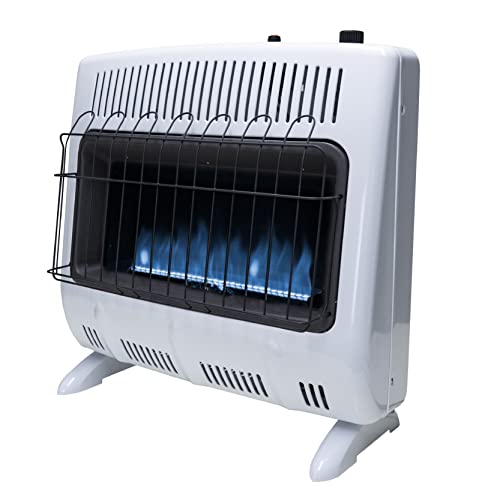
Mr. Heater 30,000 BTU Vent Free Blue Flame Heater
Call 888-896-7031 for Free Local HVAC Quotes – Compare and Save Today!
The Mr. Heater blue flame wall heater provides up to 30,000 BTU with natural gas and is specified for rooms up to 1,000 sq. ft. It uses a blue flame burner for efficient convection heating and consistent temperature distribution.
Included features include a precise thermostat for temperature control and a battery-powered electric ignition for reliable startup. The unit is rated for use at altitudes up to 4,500 feet and cites a fuel consumption figure indicating efficiency.
Blue flame units typically deliver even room heat with fewer cold spots and are sized for indoor installations that meet manufacturer clearances and local regulations. Consider ceiling height and wall mounting location when planning installation.
Mr. Heater Big Maxx 50,000 BTU Natural Gas Unit Heater
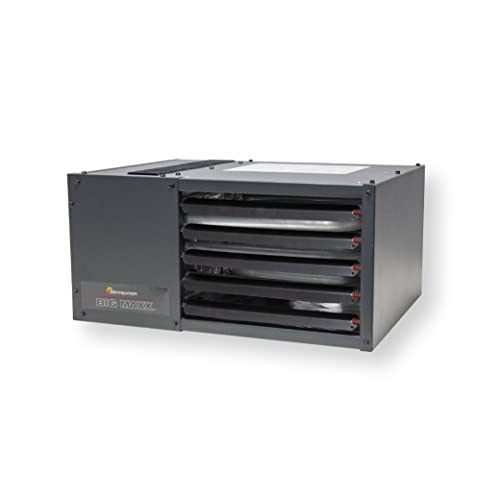
This big output natural gas unit generates 50,000 BTU per hour and is sized for spaces up to 1,250 sq. ft. It is designed as a utility-style heater for larger garages, workshops, and open-plan areas where higher heat output is needed.
The unit supports powered exhaust allowing either vertical or horizontal venting options, and features external access to the thermostat, A/C terminals, and gas connection for convenient servicing.
Call 888-896-7031 for Free Local HVAC Quotes – Compare and Save Today!
Installation requires proper clearances, and the heater is intended for natural gas supply lines. It is a category-vented device, and professional installation is typically recommended to meet venting and gas code requirements.
MOZODAWN 15000 BTU Propane Heater Portable

This portable propane radiant heater offers three heat modes (5,000 / 10,000 / 15,000 BTU), yielding flexible output up to 15,000 BTU. It is positioned for both outdoor and indoor use where adequate ventilation is available.
Included safety features are low-oxygen shutoff (ODS) and tip-over protection. The manufacturer states suitability for garages, patios, and camping, and highlights a maximum coverage around 400 sq. ft.
As a propane radiant unit, it provides directional heat and rapid warm-up. For indoor deployment, follow ventilation guidance and local codes; ODS helps reduce risk in low-oxygen scenarios but does not replace the need for responsible use.
MOZODAWN 2-In-1 Propane Heater And Stove

This combination unit functions as a portable propane heater and single-burner stove, rated at 13,000 BTU. It is marketed for camping, tents, patios, and workshop use where dual-purpose heating and cooking are desirable.
Construction highlights include a stainless steel threaded interface for the fuel connection, an adjustable power control, and a carry handle for portability. The product emphasizes fast heating and 360-degree radiant warmth.
Dual-function devices can be practical in emergency kits or multipurpose outdoor rooms. When used indoors, follow ventilation requirements and ensure the space and fuel hookups comply with safety recommendations and local regulations.
Buying Guide: Choosing The Right Indoor Gas Stove Or Heater
Selecting an indoor gas heater or gas stove requires assessing space, fuel type, safety features, and installation constraints. Use the following comparison perspectives to find a suitable unit.
Tips for Getting the Best HVAC Prices
- Prioritize Quality Over Cost
The most critical factor in any HVAC project is the quality of the installation. Don’t compromise on contractor expertise just to save money. - Check for Rebates
Always research current rebates and incentives — they can significantly reduce your overall cost. - Compare Multiple Quotes
Request at least three estimates before making your choice. You can click here to get three free quotes from local professionals. These quotes include available rebates and tax credits and automatically exclude unqualified contractors. - Negotiate Smartly
Once you've chosen a contractor, use the proven strategies from our guide — How Homeowners Can Negotiate with HVAC Dealers — to get the best possible final price.
1. Heat Output And Coverage
- BTU Rating: Match the heater’s BTU capacity to the room size. Small rooms often need under 10,000 BTU; larger garages and open areas may require 30,000–80,000 BTU.
- Coverage Estimates: Manufacturers provide approximate sq. ft. coverage; consider insulation, ceiling height, and heat loss when sizing up.
2. Fuel Type And Availability
- Natural Gas: Best for permanent installations with existing gas lines; typically higher continuous output and lower fuel cost per unit energy.
- Propane: Portable and common for outdoor or temporary indoor use where ventilation and safety systems are in place.
- Butane/Disposable Canisters: Common for portable cooktops; useful for cooking and small emergency heat but limited runtime.
3. Venting: Vent-Free Vs. Vented Units
- Vent-Free (Blue Flame Or Standing Pilot): Easier installation and high efficiency; requires adherence to local codes and good room air exchange.
- Vented/Unit Heaters With Exhaust: Suitable for garages and workshops that can accommodate horizontal or vertical venting; reduces indoor combustion products.
4. Safety Features And Indoor Use
- ODS (Oxygen Depletion Sensor): Shuts off unit if oxygen drops below safe levels — essential for portable gas units used indoors.
- Tip-Over Protection: Important for portable radiant and propane heaters.
- Thermostats And Overheat Sensors: Improve comfort control and reduce overheating risk.
5. Installation And Clearances
- Clearance Requirements: Check manufacturer-specified minimum distances from walls, ceilings, and combustible materials before installing.
- Professional Installation: For hard-piped natural gas and vented appliances, a qualified technician ensures code compliance and safe operation.
6. Portability And Dual-Purpose Design
- Portables: Offer flexibility, useful for temporary heating, camping, and emergency kits but require careful indoor use and ventilation.
- 2-In-1 Units: Combine cooking and heating; review fuel connections and ensure safe separation between cooking surfaces and sleeping or seating areas.
7. Efficiency And Operating Cost Considerations
- Fuel Efficiency: Blue flame and convection designs often distribute heat more evenly for less wasted energy.
- Runtime And Fuel Consumption: Compare manufacturer consumption metrics (e.g., MCF or canister use) to estimate operating costs given your fuel prices.
8. Local Codes And Indoor Air Quality
- Regulatory Restrictions: Some jurisdictions restrict vent-free appliances in certain dwelling types; confirm local code allowances before purchase.
- Indoor Air Quality: Combustion byproducts can affect indoor air; ensure carbon monoxide detection and adequate ventilation for safe use.
9. Maintenance And Serviceability
- Access To Controls: Models with easy outside access to thermostat and gas connections simplify maintenance.
- Service Parts: Check availability of conversion kits, replacement valves, and filters for long-term support.
10. Use Case Scenarios And Recommendations
- Permanent Home Heating: Consider vented unit heaters or hard-mounted blue flame units tied into home systems with professional setup.
- Workshops And Garages: High-output natural gas unit heaters with venting options provide robust heat for open spaces.
- Portable Or Emergency Use: Propane radiant heaters or butane cooktops offer temporary warmth and cooking, but prioritize ODS and ventilation.