
Hardwired wall heaters offer a compact, permanent heating solution for rooms that need supplemental warmth. Below is a quick comparison table of five relevant hardwired models, followed by detailed product sections and a buying guide to help you choose the right unit for your space.
| Product | Type / Voltage | Key Feature |
|---|---|---|
| Cadet Com-Pak CSC202TW | 240/208V | Fast heating coil element, built-in thermostat |
| Cadet Com-Pak CSC151TW | 120V | Compact 1500W unit with thermostat |
| ENVI 220V Panel Wall Heater | 220V | Fan-less, cool-to-touch, energy-efficient |
| DR. INFRARED DR-975 | 240V | High output 4700W/7500W hardwired shop/garage heater |
| Heat Storm HS-1500-PHX-WIFI | 120V Infrared | Wi‑Fi enabled infrared wall heater with digital thermostat |
Content Navigation
- Cadet Com-Pak Electric Wall Heater CSC202TW
- Cadet Com-Pak Electric Wall Heater CSC151TW
- ENVI 220V Hardwired Panel Wall Heater
- DR. INFRARED HEATER DR-975 7500-Watt Hardwired Shop Heater
- Heat Storm HS-1500-PHX-WIFI Infrared Wall Heater
- Buying Guide: How To Choose A Hardwired Wall Heater
- Heat Output and Room Size
- Voltage And Wiring Requirements
- Heating Method: Convection Vs Infrared
- Noise And Air Movement
- Safety Features
- Thermostat And Controls
- Installation And Mounting Options
- Energy Efficiency And Operating Cost
- Durability And Intended Location
- Comparison Perspectives
- Practical Checklist Before Purchase
Cadet Com-Pak Electric Wall Heater CSC202TW
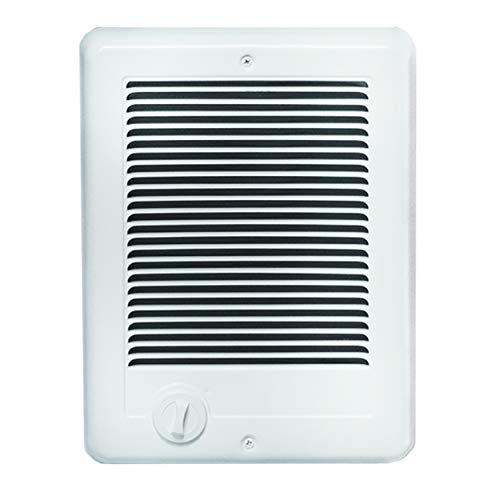
Overview: The Cadet Com-Pak CSC202TW is a 240/208-volt hardwired wall heater offering 2000/1500 watts (6825/5120 BTU) intended for areas up to about 200 sq. ft. It includes a built-in mechanical thermostat and a fan to circulate warm air.
Features Highlight: The product features a fast heating coil element that warms spaces quickly, a quiet fan for even distribution, and safety cutoffs that turn the unit off if temperatures exceed safe limits. Models at or below 1500W can be ceiling-mounted according to manufacturer notes.
Installation And Use: Designed for flush wall mounting, the unit requires hardwiring to the specified voltage. The integrated thermostat provides localized temperature control without the need for external thermostats. This model is commonly used as supplemental heat for rooms that need quick, on-demand warmth.
Cadet Com-Pak Electric Wall Heater CSC151TW

Call 888-896-7031 for Free Local HVAC Quotes – Compare and Save Today!
Overview: The Cadet CSC151TW is a 120-volt, 1500-watt hardwired wall heater delivering approximately 5120 BTU. It is a compact Com-Pak unit with an integrated thermostat meant for medium-sized rooms.
Features Highlight: This model is noted for its compact profile and built-in thermostat. It’s intended for direct wall or ceiling installation in spaces where a 120V electrical branch circuit is available. The unit balances quick heat output with a discreet design.
Installation And Use: As a 120V unit, the CSC151TW is suitable where 240V is not available. Installation typically involves mounting the heater and connecting to the circuit by a qualified electrician. The built-in thermostat enables room-level temperature adjustment without a separate control panel.
ENVI 220V Hardwired Panel Wall Heater

Overview: The ENVI panel heater is a hardwired 220V electric wall heater that emphasizes energy efficiency, silent operation, and safety. It uses a fan-less stack convection design to deliver gentle, even heat.
Features Highlight: Key features include fan-less quiet operation, a wall-sense safety sensor that shuts power off if the unit is removed, and surface temperatures designed to stay cool (approx. 90°F). The manufacturer claims significant energy savings when used to supplement central heating.
Call 888-896-7031 for Free Local HVAC Quotes – Compare and Save Today!
Installation And Use: The unit is designed for permanent wall mounting and continuous operation if desired. Its quiet convection design makes it suitable for bedrooms and other low-noise spaces. The safety sensor and cool exterior improve suitability around children and pets, and the unit does not circulate dust like fan-based heaters.
DR. INFRARED HEATER DR-975 7500-Watt Hardwired Shop Heater

Overview: The DR-975 is a heavy-duty 240V hardwired electric heater tailored for garages, workshops, or large utility spaces. It offers selectable high-output configurations up to 7500 watts for rapid heating of expansive areas.
Features Highlight: The DR. Infrared unit lists 4700W/7500W output options, hardwired installation requirements, and compatibility with remote-controlled thermostats. It is intended for high-demand environments and includes installation guidance regarding wire gauge and dedicated circuits.
Installation And Use: This heater requires proper 240V wiring and a dedicated circuit. The product is geared to spaces where strong, immediate heat is needed and is often mounted on walls or ceilings. Because of its high wattage, it is better suited for garages, shops, or commercial-like areas rather than small bedrooms.
Heat Storm HS-1500-PHX-WIFI Infrared Wall Heater

Overview: The Heat Storm HS-1500 is an infrared wall-mounted heater designed for living spaces where targeted radiant heat and modern controls matter. The unit is Wi‑Fi enabled and includes a digital touchscreen thermostat and remote control.
Features Highlight: Main features include Wi‑Fi connectivity for phone control, tip-over safety shutoff, and a compact wall-mounted design that preserves floor space. Infrared heating provides radiant warmth that directly heats objects and people rather than relying solely on air circulation.
Installation And Use: The heater mounts on the wall and is intended for indoor spaces like bedrooms or offices. The Wi‑Fi capability enables remote scheduling and temperature adjustments, integrating with smart-home workflows. Infrared heat is beneficial in situations where direct radiant warmth is preferred.
Buying Guide: How To Choose A Hardwired Wall Heater
Selecting the right hardwired wall heater requires balancing room size, electrical capacity, safety, noise level, and intended use. Below are the core considerations to evaluate before purchase.
Heat Output and Room Size
Estimate the square footage of the room and its insulation quality. As a rough guide, a 1500W (about 5120 BTU) unit suits small to medium rooms (up to ~150–200 sq. ft.), while 2000W and higher units are better for larger or poorly insulated spaces. High-output units such as the DR. Infrared model are designed for open garages and workshops.
Voltage And Wiring Requirements
Confirm whether the space has a 120V or 240V circuit available. Many compact residential units run on 120V, while higher-capacity heaters often require 240V. Hardwired installation should be performed by a licensed electrician to ensure proper circuit sizing and code compliance.
Heating Method: Convection Vs Infrared
Convection Heaters (models with fans or natural convection) heat the air and are useful for general room warming and even temperature distribution. Infrared/Radiant Heaters warm objects and occupants directly and can feel warmer at lower air temperatures—good for targeted comfort and energy efficiency in certain scenarios.
Noise And Air Movement
Fan-based units can circulate air and dust and produce audible noise. Fan-less convection or infrared units operate silently and are suitable for bedrooms or quiet spaces. Consider allergy or air quality concerns when deciding between fan and fan-less models.
Safety Features
Look for overheat protection, tip-over sensors (if applicable), cool-to-touch surfaces, and built-in safety shutoffs. Units with wall-sense or removal sensors and those rated for continuous operation add peace of mind for homes with children or pets.
Thermostat And Controls
Integrated mechanical thermostats provide simple, localized control. Digital thermostats, programmable timers, and Wi‑Fi connectivity offer more precise control and scheduling, which can improve comfort and reduce operating costs. Decide whether you need smart features for remote control or integration with home automation.
Installation And Mounting Options
Check whether the unit supports flush wall mounting, recessed installation, or ceiling mounting. Verify the required clearances and mounting hardware. Ceiling-mount options exist for some lower-wattage models, while heavy-duty shop heaters may require reinforced wall or ceiling mounts.
Energy Efficiency And Operating Cost
Electric wall heaters convert nearly all supplied electricity to heat, so efficiency differences focus on where the heat is delivered and how it’s controlled. Using a localized heater instead of whole-home heating can reduce overall energy consumption by heating only occupied rooms. Consider programmable or smart thermostats to minimize runtime.
Durability And Intended Location
Choose a model rated for the intended environment. Indoor living spaces, bathrooms, and garages have different moisture and clearance considerations. For garages and workshops, select units designed for prolonged high-output operation and that include appropriate mounting and wiring guidance.
Tips for Getting the Best HVAC Prices
- Prioritize Quality Over Cost
The most critical factor in any HVAC project is the quality of the installation. Don’t compromise on contractor expertise just to save money. - Check for Rebates
Always research current rebates and incentives — they can significantly reduce your overall cost. - Compare Multiple Quotes
Request at least three estimates before making your choice. You can click here to get three free quotes from local professionals. These quotes include available rebates and tax credits and automatically exclude unqualified contractors. - Negotiate Smartly
Once you've chosen a contractor, use the proven strategies from our guide — How Homeowners Can Negotiate with HVAC Dealers — to get the best possible final price.
Comparison Perspectives
- Small Bedrooms/Offices: 120V 1500W units with quiet operation and integrated thermostat work well.
- Large Rooms/Garages: High-wattage 240V hardwired units deliver faster, broader heating; ensure dedicated circuits and proper mounting.
- Noise-Sensitive Spaces: Fan-less panel or infrared models are preferable for silent, even heat.
- Smart Control Needs: Choose Wi‑Fi enabled models or those compatible with remote thermostats for scheduling and remote adjustments.
- Child/Pet Safety: Models with cool-to-touch exteriors and auto shutoff features are beneficial.
Practical Checklist Before Purchase
- Measure room square footage and insulation quality.
- Confirm available circuit voltage and capacity (120V vs 240V).
- Decide between convection or infrared heating method.
- Verify safety features relevant to your household.
- Plan for professional hardwired installation when required.
- Consider any smart or programmable control needs.