
Looking For a window air conditioner that also provides reliable heating? This guide compares top heat pump window units and supplemental-heat window ACs to help you choose the right model for your space and needs.
| Model | Cooling Capacity | Heating Type | Best For |
|---|---|---|---|
| Midea 12,000 BTU Smart Inverter | 12,000 BTU | Heat Pump (supplemental; limited below 41°F) | Rooms Up To 550 Sq. Ft. |
| LG 23,000 BTU Window AC With Heat | 23,000 BTU | Supplemental Heat | Large Spaces Up To 1,400 Sq. Ft. |
| TCL 12,000 BTU Q-Series Smart Inverter | 12,000 BTU | Heat Pump | Rooms Up To 550 Sq. Ft. |
| GE 8,000 BTU Smart Heat/Cool | 8,000 BTU | Heat Pump (advanced) | Rooms Up To 350 Sq. Ft. |
| Whirlpool 18,000 BTU Window AC With Supplemental Heat | 18,000 BTU | Supplemental Electric Heat | Large Rooms Up To 1,000 Sq. Ft. |
Content Navigation
- Midea 12,000 BTU Smart Inverter Air Conditioner Window Unit With Heat
- LG 23,000 BTU Window Air Conditioner With Heat
- TCL 12,000 BTU Q-Series Smart Inverter Window AC With Heat Pump
- GE AWGP08WWA 8,000 BTU Smart Heat/Cool Electronic Window Air Conditioner
- Whirlpool 18,000 BTU 230V Window Air Conditioner With Supplemental Heat
- Buying Guide: Choose The Right Heat Pump Or Heater Window Unit
- 1. Heating Type: Heat Pump Vs. Supplemental Electric Heat
- 2. Capacity And Room Size
- 3. Power And Voltage Requirements
- 4. Efficiency And Running Costs
- 5. Operating Range And Cold-Weather Performance
- 6. Noise Levels And Comfort Features
- 7. Smart Controls And Connectivity
- 8. Installation And Window Fit
- 9. Maintenance And Longevity
- 10. Safety And Warranty
- Comparison Perspectives
Midea 12,000 BTU Smart Inverter Air Conditioner Window Unit With Heat

This Midea window unit combines inverter-driven cooling with a heat pump function for multi-season comfort. It’s rated for rooms up to 550 sq. ft. and includes modes for Heat, Auto, Cool, Dry, and Fan. The unit supports wireless control via app and voice assistants and features an LED display with multiple fan speeds. The inverter design claims improved efficiency and up to 35% energy savings versus standard units. Note the appliance’s heat pump will not operate if outdoor temperature is 41°F or below; defrost control is automatic. The washable front filter eases routine maintenance.
LG 23,000 BTU Window Air Conditioner With Heat

The LG 23,000 BTU window unit provides high-capacity cooling and a supplemental heating option for larger rooms up to 1,400 sq. ft. It offers multiple fan speeds and operates as low as 50 dB in quiet mode, supporting living areas and open spaces where noise matters. The unit’s heat mode is intended as supplemental heat; it helps maintain a steady indoor temperature on milder cold days. Controls include remote operation and programmable settings to match user preferences.
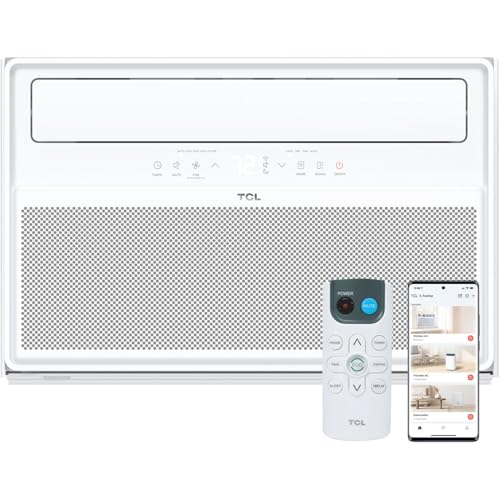
TCL 12,000 BTU Q-Series Smart Inverter Window AC With Heat Pump
Call 888-896-7031 for Free Local HVAC Quotes – Compare and Save Today!
TCL’s Q-Series combines an inverter compressor with an integrated heat pump to deliver ultra-quiet operation and claimed energy savings. Rated for spaces up to 550 sq. ft., the model supports smart home systems including Alexa, Google Assistant, Apple HomeKit, and Matter. The product emphasizes efficiency gains through AI inverter control and asserts significant energy savings for both cooling and heating modes. Its quiet profile and smart integrations make it suitable for bedrooms and home offices.
GE AWGP08WWA 8,000 BTU Smart Heat/Cool Electronic Window Air Conditioner

The GE 8,000 BTU window unit is designed for medium rooms up to 350 sq. ft. and uses advanced heat pump technology that the manufacturer states can be up to 2x more effective than traditional electric resistance heating in comparable units. It includes Wi‑Fi connectivity for remote control via a mobile app, multiple operating modes, and a compact footprint for installations where larger window units won’t fit. The combination of modest cooling capacity and efficient heat pump heating suits bedrooms and smaller living areas.
Whirlpool 18,000 BTU 230V Window Air Conditioner With Supplemental Heat

Whirlpool’s 18,000 BTU window AC offers strong cooling capacity and built-in supplemental heat intended for milder heating needs. It’s rated for rooms up to 1,000 sq. ft. and includes electronic controls with eco and sleep modes, programmable timers, and directional louvers. The unit ships with an installation kit and targets users needing higher cooling capacity plus the convenience of supplemental heating during transitional seasons.
Buying Guide: Choose The Right Heat Pump Or Heater Window Unit
Selecting a window unit with heating involves assessing room size, climate, power requirements, and performance expectations. Below are critical considerations and comparison perspectives to guide a value-based purchase.
Call 888-896-7031 for Free Local HVAC Quotes – Compare and Save Today!
1. Heating Type: Heat Pump Vs. Supplemental Electric Heat
- Heat Pump (Reversible): Extracts heat from outdoor air and moves it indoors. More energy efficient when outdoor temps are above the unit’s minimum operating threshold (often around 41°F). Provides both heating and cooling using the same refrigeration cycle.
- Supplemental Electric Heat: Uses resistive heating elements. Simpler design and usually works at any outdoor temperature but is less efficient than a heat pump and costs more to run for prolonged heating.
- Consider climate: in mild winter climates, a heat pump window unit can serve as primary heat for some homes; in very cold climates, supplemental electric heat or dedicated heating will be required.
2. Capacity And Room Size
- Match BTU rating to room square footage. Typical guidance: 8,000 BTU for ~250–350 sq. ft., 12,000 BTU for ~400–550 sq. ft., 18,000 BTU+ for larger open areas.
- Factors like ceiling height, insulation quality, sunlight exposure, and occupant load affect needed capacity. Choose a unit with slightly higher capacity if the room is poorly insulated or sun-exposed.
3. Power And Voltage Requirements
- Check electrical specifications: many larger units (e.g., 18,000+ BTU) require 230V/20A circuits, while smaller units run on standard 115V circuits.
- Confirm the outlet and circuit can handle the unit’s startup and running current. Upgrading circuits or outlets can add labor and cost.
4. Efficiency And Running Costs
- Look for Energy Star ratings and inverter technology: inverter compressors modulate speed to meet demand, reducing power use and improving comfort with fewer temperature swings.
- Heat pumps usually offer lower running costs than resistive heat. Manufacturer claims about percentage energy savings should be validated against estimated runtime and local electricity rates.
5. Operating Range And Cold-Weather Performance
- Heat pump performance declines as outdoor temperature drops. Many window heat pumps include defrost controls but stop providing efficient heating below a cutoff (often around 35–41°F).
- If you need heat in consistently low temperatures, plan for a secondary heat source or choose a system rated for low ambient operation.
6. Noise Levels And Comfort Features
- Noise is measured in dB; bedrooms and home offices typically benefit from units operating at 50 dB or lower.
- Features such as multiple fan speeds, sleep modes, eco modes, and directional louvers help tailor comfort and reduce disturbances.
7. Smart Controls And Connectivity
- Wi‑Fi and smart home compatibility enable remote control, scheduling, and voice commands. Consider whether app control or integration with Alexa/Google Home is important to you.
- Remote controls and on-unit panels are helpful when connectivity is not needed.
8. Installation And Window Fit
- Measure window opening height and width; many high-capacity units require larger windows or special installation kits.
- Check included mounting hardware and whether professional installation is recommended. For heavy outdoor condensers or mini-splits, wall brackets or professional support may be required.
9. Maintenance And Longevity
- Look for washable, accessible filters and serviceable panels to simplify cleaning. Regular coil and filter maintenance improves efficiency and lifespan.
- Consider coil cleaners and maintenance supplies safe for aluminum and copper to avoid damage.
10. Safety And Warranty
- Confirm UL/ETL listings, built-in safety features (overload protection, auto defrost), and the manufacturer warranty.
- Warranty terms differ for parts, compressor, and labor—review coverage before purchase.
Comparison Perspectives
- Efficiency-Focused Buyers: Prioritize inverter-driven heat pump models and Energy Star certification for lower operating costs.
- Large-Space Cooling With Occasional Heat Needs: Consider higher-BTU window ACs with supplemental heat elements if primary heating is provided elsewhere.
- Quiet Operation And Smart Features: Look for units specifying low dB levels and smart home integration if control and noise are priorities.
- Cold-Climate Users: Evaluate heat pump operating temperature limits and plan for backup heating for consistently low outside temperatures.
Use these factors to compare models like the Midea and TCL heat pump units, higher-capacity LG and Whirlpool options, and compact choices such as the GE unit. Prioritize the heating type, capacity, electrical compatibility, and maintenance needs to select the best fit for your home.
Tips for Getting the Best HVAC Prices
- Prioritize Quality Over Cost
The most critical factor in any HVAC project is the quality of the installation. Don’t compromise on contractor expertise just to save money. - Check for Rebates
Always research current rebates and incentives — they can significantly reduce your overall cost. - Compare Multiple Quotes
Request at least three estimates before making your choice. You can click here to get three free quotes from local professionals. These quotes include available rebates and tax credits and automatically exclude unqualified contractors. - Negotiate Smartly
Once you've chosen a contractor, use the proven strategies from our guide — How Homeowners Can Negotiate with HVAC Dealers — to get the best possible final price.