
Choosing the best heater for whole house often means balancing capacity, efficiency, fuel type, and installation needs. Below is a concise comparison table of the five selected whole-house heating solutions followed by focused product overviews and a practical buying guide to help match a home’s hot water demand and infrastructure.
| Product | Type | Key Capacity / Feature | Brand |
|---|---|---|---|
| ECOTOUCH ECO180B | Electric Tankless | 18 kW, Self-Modulation, Digital Display | ECOTOUCH |
| WINTEMP 27kW | Electric Tankless | 27 kW, Up To 6.3 GPM, Wi‑Fi | WINTEMP |
| GASLAND CE686NG | Natural Gas Tankless | 199,000 BTU, Up To 7.6 GPM | GASLAND |
| ORBEK 18kW | Electric Tankless | 18 kW, Up To 4.17 GPM, ETL | Orbek |
| SIVUATEK 14kW | Electric Tankless | 14 kW, Compact, Self-Modulating | SIVUATEK |
Content Navigation
- ECOTOUCH Electric Tankless Hot Water Heater ECO180B
- WINTEMP Electric Tankless Water Heater 27kW
- GASLAND Gasmart Natural Gas Tankless Water Heater CE686NG
- Orbek 18kW Tankless Water Heater Electric
- SIVUATEK 14kW Electric Tankless Water Heater V7B-140B
- Buying Guide: How To Choose The Best Whole-House Heater
- 1. Fuel Type And Energy Availability
- 2. Hot Water Demand And Flow Rate (GPM)
- 3. Temperature Rise Requirements
- 4. Electrical Or Gas Service Constraints
- 5. Installation And Venting
- 6. Efficiency And Operating Costs
- 7. Reliability, Maintenance, And Water Quality
- 8. Controls, Monitoring, And Features
- 9. Sizing Strategy
- 10. Safety And Certifications
ECOTOUCH Electric Tankless Hot Water Heater ECO180B

The ECOTOUCH ECO180B Is An 18kW Electric Tankless Heater Designed For Whole-House Use In Homes With Moderate Hot-Water Demand. It Offers Instant Hot Water With A Smart Heating System That Claims To Deliver Hot Water Up To 120°F Quickly.
- Features self-modulation to adjust power based on flow rate and set temperature, aiming to reduce temperature swings.
- Includes a digital display and touch controls for temperature monitoring and status readouts.
- Promoted energy efficiency of up to ~98% due to on-demand operation and modulation.
- Suited For multiple simultaneous fixtures in smaller whole-house setups depending on inlet water temperatures and flow rates.
Installation Considerations: Requires appropriate 240V electrical supply and correctly sized breakers and wiring. Performance depends on incoming water temperature and household hot water demand patterns.
WINTEMP Electric Tankless Water Heater 27kW

The WINTEMP 27kW Unit Is A High-Capacity Electric Tankless Option Intended For Larger Homes Or Greater Simultaneous Use. With A Higher Power Rating, It Targets Homes Needing Multiple Active hot-water points.
Call 888-896-7031 for Free Local HVAC Quotes – Compare and Save Today!
- Rated At 27kW (240V) With Up To 6.3 GPM Depending On Temperature Rise And Incoming Water Temperature.
- Incorporates self-regulating technology that adjusts power with flow and inlet temperature to maintain stable output.
- Includes LED temperature display and Wi‑Fi control for remote monitoring and settings.
- Electrical Requirements: High amperage demand shown (three 40A double-pole breakers recommended in some installs), so electrical service capacity and wiring must be verified prior to purchase.
Fit Notes: Best For Homes With High Hot-Water Load Or Where Electric Service Can Support Higher Continuous Draw. Professional electrical inspection and installation recommended to ensure safe operation and code compliance.
GASLAND Gasmart Natural Gas Tankless Water Heater CE686NG
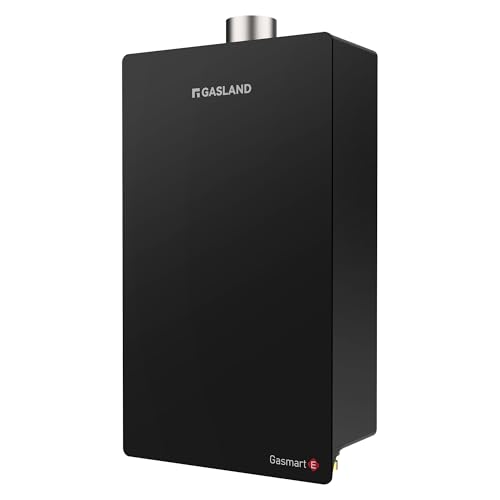
The GASLAND CE686NG Is A Natural Gas Tankless Heater With Higher Thermal Output (199,000 BTU) And A Reported Flow Capacity Up To 7.6 GPM. It Is Designed For Homes Where Gas Supply Is Preferred Or Where Very High Continuous Flow Is Required.
- Provides unlimited hot water on demand and is intended to replace bulky tank systems in whole-house installs.
- Claims A High UEF (0.8), Offering Improved Energy Efficiency Over Typical Tank Units.
- Compact, wall-mounted design suits basements, closets, or utility rooms where venting can be arranged for combustion products.
- Gas models require proper venting, gas line sizing, and combustion air; local codes and professional installation are essential.
Performance Notes: Gas tankless units often deliver higher GPM at larger temperature rises versus electric models in many scenarios, but require appropriate gas infrastructure and exhaust venting provisions.
Orbek 18kW Tankless Water Heater Electric

The Orbek 18kW Electric Tankless Unit Is Marketed As A Reliable On-Demand Source For 2–3 Points Of Use, Offering Up To 4.17 GPM Depending On Conditions. This Unit Is ETL-Certified And Emphasizes Energy Efficiency Through Rapid Heating.
Call 888-896-7031 for Free Local HVAC Quotes – Compare and Save Today!
- Requires 2 x 240V/40A breakers and 8 AWG wiring in typical installations—verify compatibility with service panel capacity.
- Designed For Fast Heat-Up, With Advertised ~3-second response time to provide hot water at the tap.
- Claims Electricity Savings Versus Traditional Tanks By Avoiding Standby Heat Loss.
- Suitable For Smaller Whole-House Configurations Or Where Hot Water Demand Is Staggered.
Installation Tip: Evaluate the number of simultaneous fixtures expected and incoming cold-water temperature to ensure the unit’s flow capability satisfies household needs.
SIVUATEK 14kW Electric Tankless Water Heater V7B-140B

The SIVUATEK 14kW Unit Is A Compact, Point-Of-Use Or Small Whole-House Tankless Heater Intended For Homes With Lower Overall Hot-Water Demand Or For Supplemental Use Near Showers Or Appliances.
- Features self-modulating control to maintain temperature with varying flow rates.
- Compact footprint simplifies placement close to demand points, reducing hot-water wait time and piping losses.
- Claims Up To 98% efficiency and includes a digital touch display for temperature control.
- Best Suited For 1–2 simultaneous fixtures in most environments, depending on inlet temperature.
Use Case: Consider this unit where electrical capacity is limited or for targeted point-of-use installations. For full whole-house coverage in cold climates, multiple units or higher-kW electric models may be needed.
Buying Guide: How To Choose The Best Whole-House Heater
Choosing a whole-house heater requires matching system capacity to household hot water demand while considering energy source, installation complexity, and local code requirements. The following factors will help in the evaluation and comparison process.
1. Fuel Type And Energy Availability
Electric Tankless models are simpler to install where sufficient electrical service exists, offer compact footprints, and avoid combustion venting. Gas Tankless models typically deliver higher BTU output and greater flow rates at higher temperature rises but require gas line capacity, proper venting, and combustion safety compliance.
2. Hot Water Demand And Flow Rate (GPM)
Estimate simultaneous fixture usage: a shower ~1.5–2.5 GPM, dishwasher ~1–2 GPM, washing machine ~1–2 GPM. Add expected concurrent flows to determine required GPM. Select a heater whose rated GPM at the needed temperature rise meets or exceeds those totals.
3. Temperature Rise Requirements
Temperature rise = desired output temp minus incoming cold-water temp. In cold climates, incoming water may be much colder, reducing available GPM for a given heater rating. Choose higher kW or BTU units for larger temperature rises.
4. Electrical Or Gas Service Constraints
Electric units can require substantial breaker capacity, multi‑pole breakers, and heavy-gauge wiring. Verify the home’s main service amperage before selecting a high-kW electric model. For gas units, confirm gas-line capacity and plan for venting, combustion air, and pressure regulation.
5. Installation And Venting
Professional installation ensures code compliance, safe combustion venting for gas heaters, and correct electrical panel upgrades when needed. Consider location relative to demand points to reduce lag time and heat loss in distribution piping.
6. Efficiency And Operating Costs
Look for self-modulating features that adjust power with flow to improve efficiency and reduce cycling. Compare expected operating efficiencies (UEF for gas, stated efficiencies for electric) and consider local energy rates for cost estimates.
7. Reliability, Maintenance, And Water Quality
Tankless systems can be sensitive to scale buildup in hard-water areas. Consider scale inhibitor or water-softening options to protect heat exchangers and maintain performance. Regular maintenance schedules can extend unit life.
8. Controls, Monitoring, And Features
Digital displays, temperature setpoints, remote/Wi‑Fi control, and diagnostic readouts improve usability and troubleshooting. Prioritize features that align with household convenience and maintenance preferences.
9. Sizing Strategy
For whole-house installs, select a unit with margin above calculated demand to cover peak use and future needs. In some homes, using multiple smaller units in parallel can offer redundancy and better distribution for large homes.
10. Safety And Certifications
Verify ETL, CE, or other recognized safety certifications and ensure units meet local code requirements. For gas units, ensure proper safety devices and flame/combustion protections are included and installed.
Comparison Perspectives: Evaluate electric versus gas not only by upfront installation complexity but by long-term energy costs in your region, available incentives, and environmental goals. Also weigh centralized single-unit simplicity against distributed multi-unit resiliency and lower piping heat loss.
Tips for Getting the Best HVAC Prices
- Prioritize Quality Over Cost
The most critical factor in any HVAC project is the quality of the installation. Don’t compromise on contractor expertise just to save money. - Check for Rebates
Always research current rebates and incentives — they can significantly reduce your overall cost. - Compare Multiple Quotes
Request at least three estimates before making your choice. You can click here to get three free quotes from local professionals. These quotes include available rebates and tax credits and automatically exclude unqualified contractors. - Negotiate Smartly
Once you've chosen a contractor, use the proven strategies from our guide — How Homeowners Can Negotiate with HVAC Dealers — to get the best possible final price.