
Choosing the right hot water heater depends on application, flow rate, installation type, and power source. Below is a quick comparison of five point-of-use and whole-house options selected for common residential needs.
| Product | Type | Power / Voltage | Capacity / Flow | Primary Use |
|---|---|---|---|---|
| BOSCH Tronic 3000 T ES2.5 | Mini-Tank | 120V / 12A | 2.5 Gallon | Under-sink point-of-use |
| FOGATTI 18kW Tankless | Electric Tankless | 240V / 18kW | Up To 4.4 GPM | Whole-house / Multiple fixtures |
| Feelrogast 8 Gallon | Mini-Tank | 120V / 1500W | 8 Gallon | RV / Kitchen / Light shower |
| KENUOS 2.5 Gallon LED | Mini-Tank | 120V / 1500W | 2.5 Gallon | Under-sink, RV, Kitchen |
| xwdzswgs 110V Tankless 3000W | Electric Tankless | 110V / 3000W | 0.3–0.5 GPM (delta dependent) | Point-of-use hot water for sink |
Content Navigation
- BOSCH Electric Mini-Tank Water Heater Tronic 3000 T 2.5-Gallon
- FOGATTI Electric Tankless Water Heater 18kW 240V
- Feelrogast Electric Mini Tank Water Heater 8 Gallon
- KENUOS Under Sink 2.5 Gallon Mini Tank With LED Display
- Tankless Water Heater Electric 110V 3000W Under Sink
- Buying Guide: How To Choose The Right Hot Water Heater
- 1. Type And Intended Use
- 2. Flow Rate And Capacity
- 3. Power And Electrical Requirements
- 4. Installation And Space Constraints
- 5. Temperature Rise And Incoming Water Temperature
- 6. Safety Features And Certifications
- 7. Materials And Durability
- 8. Recovery Time And Efficiency
- 9. Installation Accessories And Included Parts
- 10. Cost Of Ownership And Practical Trade-Offs
- 11. Specific Use Case Recommendations
BOSCH Electric Mini-Tank Water Heater Tronic 3000 T 2.5-Gallon
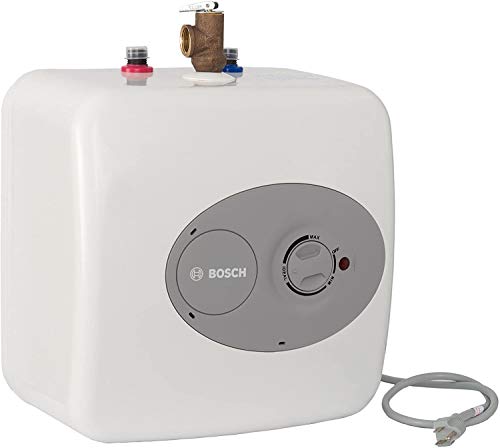
Type: 2.5 gallon point-of-use mini-tank. Installation: shelf, wall or floor mounted under sink. This model plugs into a 120V outlet and provides immediate hot water at the fixture, eliminating long waits for hot water to travel from a central tank.
- Thermal Efficiency: 98% for reduced standby losses compared to larger tanks.
- Construction: Glass-lined storage to resist corrosion and extend service life.
- Electrical: 12 amp draw on 120V, enabling independent installation without major rewiring.
This unit is designed specifically as a point-of-use booster to deliver hot water at a single fixture or to shorten wait times when used in-line with a larger system. The compact footprint makes it suitable where space is limited.
FOGATTI Electric Tankless Water Heater 18kW 240V
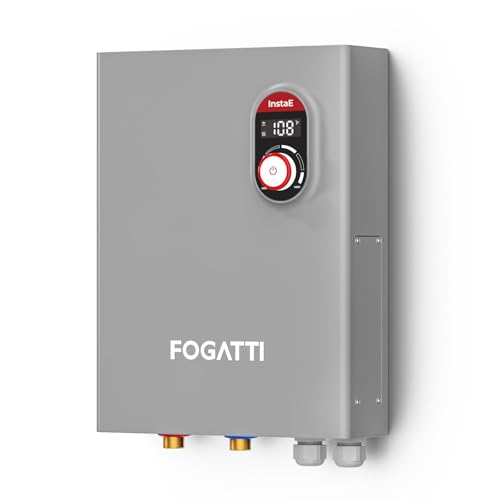
Type: High-capacity electric tankless water heater intended for whole-house or multiple simultaneous fixtures. It delivers instant endless hot water with a rated flow up to 4.4 GPM, depending on incoming water temperature and site wiring.
Call 888-896-7031 for Free Local HVAC Quotes – Compare and Save Today!
- Power Requirements: 18kW at 240V; recommended circuit protection includes 2 × 40A breakers and appropriately sized wiring (per product guidelines).
- Controls: LED display and knob controls allow temperature adjustments in 1°F increments from 86°F to 140°F.
- Certifications: ETL certified with up to 98% heating efficiency.
As a hardwired tankless option, this model suits homes seeking on-demand whole-house heating without a storage tank. Proper electrical capacity and professional installation are critical for safe, reliable operation.
Feelrogast Electric Mini Tank Water Heater 8 Gallon

Type: 8-gallon electric mini-tank designed for under-sink, RVs, campers, food trucks and other point-of-use needs. The 8-gallon capacity provides more stored hot water than smaller mini tanks while remaining compact.
- Heating Element: 316 stainless steel element with claimed up to 99% heat utilization.
- Temperature Range: Adjustable from 86°F to 167°F for operational flexibility.
- Durability: Thick stainless tank with enamel layer for corrosion resistance; CE, ROHS, and FCC certifications noted.
- Safety: Multiple protections including insulation, leakage-protection plug, and high-temp limiting device.
This model is appropriate where greater stored volume is needed for tasks like dishwashing or light showers. The thicker tank and certifications address longevity and safety considerations for mobile or compact installations.
KENUOS Under Sink 2.5 Gallon Mini Tank With LED Display

Type: 2.5 gallon under-sink mini tank with LED temperature display and safety features. Designed for quick heating and point-of-use applications in kitchens, RVs, or bathrooms.
Call 888-896-7031 for Free Local HVAC Quotes – Compare and Save Today!
- Tank & Materials: Increased tank thickness and included T&P (temperature & pressure) valve to protect against overpressure.
- Heating Performance: 1500W element with L-shaped heating tube for increased heat transfer and faster recovery (claimed 4–6 minutes heat time).
- Accessories: Includes 3-way diverter valve to supply two sinks and conversion fittings; 1/2″ NPT threaded connections.
The LED display provides real-time temperature monitoring. The included diverter and T&P valve make this unit ready for common under-sink installations without many additional parts.
Tankless Water Heater Electric 110V 3000W Under Sink

Type: Plug-in electric tankless point-of-use heater intended for under-sink use with an LED digital display. Compact ABS housing suited for quick installations where a standard outlet is available.
- Power & Output: 110/120V at 3000W. Reported temperature rise varies with flow: up to +82°F at 0.3 GPM and +131°F at 0.5 GPM (flow-dependent performance).
- Use Case: Designed for sink washing and small tasks; manufacturer advises not suitable for showers as showers generally require at least 1.8 GPM.
- Safety Features: Water/electric isolation, IPX4 waterproof rating, leakage protection, dry-boil protection, auto shutoff for overheating and inactivity.
This unit offers a simple plug-and-play approach to instant hot water at low flow rates. It is best for applications where only low GPM is needed and no hardwiring is desired.
Buying Guide: How To Choose The Right Hot Water Heater
Selecting a hot water heater requires matching the unit to the specific demands of your household and installation constraints. Below are the key considerations and comparison perspectives.
1. Type And Intended Use
Tankless (On-Demand) units heat water as it flows and are ideal for continuous hot water and saving space. They require adequate electrical capacity for higher-flow models. Mini-tank heaters store a small volume and are simpler to install on standard 120V circuits; they reduce wait times at point-of-use and can act as boosters.
2. Flow Rate And Capacity
Match the heater’s flow rate (GPM) or storage volume (gallons) to the fixture demand. For a single sink, a 2.5-gallon mini tank or a low-flow tankless may be sufficient. For showers or multiple fixtures, choose a tankless rated for higher GPM (e.g., 3–4+ GPM) or a larger storage tank.
3. Power And Electrical Requirements
Check voltage and breaker needs. High-capacity tankless models often require 240V and multiple high-amp breakers; mini-tanks typically run on 120V and a standard 15–20A circuit. Ensure your electrical panel can safely support the device, and budget for professional wiring if necessary.
4. Installation And Space Constraints
Under-sink installations favor compact mini-tanks or 110/120V plug-in tankless units. Whole-house setups demand wall-mounted tankless units or centralized tanks and may require professional placement for optimal pipe routing and venting (if applicable).
5. Temperature Rise And Incoming Water Temperature
Tankless heaters’ capacity is often quoted as the temperature rise at a given flow. In colder climates, incoming water is colder, which reduces achievable flow at target temps. Compare the unit’s rated temperature rise against your local groundwater temperature and desired outlet temperature.
6. Safety Features And Certifications
Look for overheat protection, dry-fire protection, T&P valves (for tanks), leakage protection, and recognized certifications (UL, ETL, CE, etc.). These features reduce risk and are important for insurance and code compliance.
7. Materials And Durability
Stainless steel elements, glass-lined tanks, enamel coatings, and thicker tank walls increase longevity. Evaluate claims like thicker tank material or 316 stainless elements if corrosion resistance is a priority for well water or high mineral content.
8. Recovery Time And Efficiency
Mini-tanks have recovery times determined by wattage; L-shaped heating tubes and higher wattage reduce recovery time. Look at thermal efficiency (often ~95–99% for electric models) to compare expected energy performance.
9. Installation Accessories And Included Parts
Some mini-tanks include diverter valves, T&P valves, hoses, and mounting kits. Including these accessories reduces installation complexity and extra purchases, especially for under-sink retrofits.
10. Cost Of Ownership And Practical Trade-Offs
Consider upfront installation complexity and long-term electricity use. Tankless units typically have higher installation costs (wiring) but reduce standby losses. Mini-tank models have lower initial electricity draw and simpler installs but may have limited hot water runs per fill.
11. Specific Use Case Recommendations
- Single Sink/Office/Small Kitchen: 2.5-gallon mini-tank or 110/120V point-of-use tankless for easy installation.
- Multiple Fixtures or Shower: 240V tankless rated for 3–5 GPM or larger storage tank sized for peak demand.
- RV/Camper: Compact 8-gallon mini-tank with robust insulation and durable tank materials.
- Budget/DIY Installation: Choose devices with included fittings and plug-in options to avoid rewiring.
When comparing models, weigh electrical requirements, flow/capacity, included accessories, and safety features. Professional consultation is advisable for whole-house upgrades or when upgrading electrical service is required.
Tips for Getting the Best HVAC Prices
- Prioritize Quality Over Cost
The most critical factor in any HVAC project is the quality of the installation. Don’t compromise on contractor expertise just to save money. - Check for Rebates
Always research current rebates and incentives — they can significantly reduce your overall cost. - Compare Multiple Quotes
Request at least three estimates before making your choice. You can click here to get three free quotes from local professionals. These quotes include available rebates and tax credits and automatically exclude unqualified contractors. - Negotiate Smartly
Once you've chosen a contractor, use the proven strategies from our guide — How Homeowners Can Negotiate with HVAC Dealers — to get the best possible final price.