
Quick Overview: This guide compares five electric heaters and high-heat therapy pads that deliver strong, fast warmth for rooms, workshops, and targeted therapy. Products include PTC ceramic space heaters, a forced-air shop heater, a Wi‑Fi wall infrared heater, and a high-temperature graphene heating pad for deep heat therapy.
| Product | Type | Key Heat Feature |
|---|---|---|
| Dreo Space Heater | PTC Ceramic Space Heater | 1500W PTC, precise thermostat, wide reach |
| WINHL Small Portable Heater | PTC Ceramic Space Heater | Fast PTC heating, auto-oscillation, remote |
| Dura Heat EUH1465 | Forced Air / Shop Heater | Rugged steel, 1500W forced-air output |
| Heat Storm HS-1500-PHX-WIFI | Infrared Wall Heater | Wi‑Fi control, wall-mounted infrared element |
| InVarme Extra Hot Heating Pad | Graphene Heating Pad | Max 160°F, dual graphene for deep heat |
Dreo Space Heater

The Dreo Space Heater Uses A 1500W PTC Advanced Heating System Combined With A Heat Funnel Design To Produce Rapid Warm Air. The unit Emphasizes Precision Temperature Control With An NTC Chipset Allowing 1°F Increments From 41–95°F. Built-In Safety Features Include Tip-Over Detection, Overheat Protection, And Flame-Retardant Materials.
Ideal For Living Rooms And Bedrooms Where Even, Fast Heat And Energy-Saving Thermostat Control Are Desired. The Design Claims Greater Air Reach Than Traditional Heaters, Aiming To Move Warm Air Farther Into The Room.
WINHL Small Portable Heater

WINHL’s Small Portable Electric Heater Uses PTC Ceramic Heating Technology For Rapid Warm-Up And Continuous Heat Delivery. It Supports Wide-Angle Auto Oscillation To Distribute Heat Across More Of A Room And Includes A Remote Control For Adjusting Modes, Fan Speed, And Timer Settings.
Call 888-896-7031 for Free Local HVAC Quotes – Compare and Save Today!
Positioned For Use In Offices, Bedrooms, And Small Living Spaces Where Convenient Remote Operation And Oscillating Heat Distribution Improve Comfort Without Repositioning The Unit.
Dura Heat EUH1465 Electric Forced Air
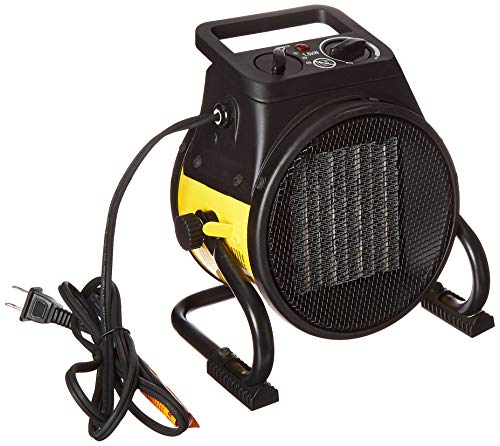
The Dura Heat EUH1465 Is A Rugged Forced-Air Heater With Steel Construction, Delivering Up To 1500W Of Output (Quoted 5,120 BTU Equivalent). The Pivoting Base Helps Aim Warm Air, And The Unit Offers Heat And Fan-Only Modes For Versatile Use As A Heater Or Air Circulator.
Suited For Garages, Workshops, And Job-Site Areas Where Durability And Directed High Heat Are Required. The Steel Body And Pivoting Design Prioritize Robustness Over Aesthetic Features.
Heat Storm HS-1500-PHX-WIFI Infrared Heater

The Heat Storm HS-1500-PHX-WIFI Is A Wall-Mounted Infrared Heater That Connects To Wi‑Fi For Remote Temperature Control Via A Smartphone. It Includes A Digital Thermostat, Touch Screen, And Remote, While The Wall-Mounted Design Preserves Floor Space.
Call 888-896-7031 for Free Local HVAC Quotes – Compare and Save Today!
Infrared Heating Targets Objects And People Directly Rather Than Only Heating Air, Which Can Provide A Comfortable Perceived Warmth At Lower Ambient Temperatures. Built-In Safety Includes Tip-Over Shutoff And ETL/Certified Features Depending On Model Variants.
InVarme Extra Hot Heating Pad

The InVarme Extra Hot Heating Pad Uses Dual Graphene Infusion To Deliver Faster Heat-Up And Improved Thermal Performance Versus Traditional Pads. It Reaches A Maximum 160°F And Claims Rapid Warmth Within Seconds With High Electrical-To-Thermal Conversion Efficiency.
Designed For Targeted Deep Heat Therapy To Relieve Muscle Soreness And Cramps, The Pad Offers Multiple Heat Levels And An Auto-Off Safety Feature. This Product Focuses On High Local Surface Temperature Rather Than Room Heating.
Buying Guide: How To Choose The Hottest Electric Heater
Selecting The Right Heater Depends On Intended Use, Safety, And Features. Below Are Key Considerations To Compare Models Effectively.
1. Intended Heating Type
- Room Heating (PTC Ceramic): Fast warm-up, even distribution, typically 1500W for small-to-medium rooms.
- Workshop/Shop (Forced Air): Directed hot air, robust construction, useful for garages and workspaces where durability matters.
- Infrared (Wall Or Panel): Heats people and objects directly, often energy-efficient for occupied zones and preserves floor space.
- Targeted Heat (Heating Pads): High surface temperatures for therapy; not designed to heat rooms.
2. Power And Coverage
- Wattage: 1500W is common for single-room heaters and provides strong output; higher wattage units may require dedicated circuits.
- Coverage Claims: Look For Manufacturer Guidance (square footage) But Also Consider Room Insulation, Ceiling Height, And Placement.
3. Heat Delivery And Speed
- PTC Ceramic: Fast warm-up, stable output, good for quick comfort.
- Forced Air: Powerful directional output; may be noisier and less subtle than infrared.
- Infrared: Immediate perceived warmth at the target area without needing to raise ambient air temperature.
- Heating Pads: Surface temps and rapid penetration are key metrics for therapeutic effectiveness.
4. Temperature Control And Modes
- Thermostat Precision: Finer increments (1°F) enable better energy savings and comfort control.
- Modes & Timers: Oscillation, eco modes, and programmable timers add convenience and energy efficiency.
- Remote/Wi‑Fi: Remote control or app connectivity improves usability, especially for wall-mounted or hard-to-reach units.
5. Safety Features
- Overheat Protection: Automatically cuts power if internal temps exceed safe levels.
- Tip-Over Shutoff: Essential for freestanding heaters to reduce fire risk if knocked over.
- Certifications: Look For ETL/UL/CE Listings And Flame-Retardant Materials Where Applicable.
6. Build Quality And Placement
- Housing Material: Metal Bodies Offer Durability For Worksites; Lightweight Plastics May Be Adequate For Bedrooms.
- Mounting Options: Wall-Mounted Infrared Models Save Floor Space; Portable Heaters Offer Flexibility.
- Oscillation And Aim: Oscillating And Pivoting Bases Help Spread Heat More Evenly.
7. Noise, Maintenance, And Longevity
- Noise Levels: Fans And Forced-Air Units Typically Produce More Noise Than Infrared Panels.
- Maintenance: Dust Filters Or Occasional Wipe-Downs May Be Required For Optimal Performance.
- Expected Lifespan: Durable Components And Quality Heating Elements (PTC, Graphene) Tend To Last Longer.
8. Energy Efficiency And Operating Cost
- Thermostat Use: Maintaining A Setpoint Reduces Cycling And Energy Use Versus Running At Full Power Continuously.
- Targeted Heating: Infrared And Localized Pads Can Be More Efficient When Heating Occupied Areas Rather Than Whole Rooms.
9. Safety For Personal Heating Pads
- Surface Temperature Limits: Pads That Reach High Temps Should Include Auto-Off And Overheat Protection.
- Timer Functions: Scheduled Auto-Shutoff Limits Exposure And Reduces Risk.
- Material And Cleaning: Removable, Machine-Washable Covers Improve Hygiene And Longevity.
10. Comparison Perspectives
- Performance: Forced-air and high-watt PTC units provide the most rapid volumetric heat, while infrared gives efficient perceived warmth.
- Durability: Steel-bodied shop heaters are best for harsh environments; PTC heaters are optimized for indoor daily use.
- Convenience: Remote and Wi‑Fi control increase ease of use; oscillation aids distribution in larger rooms.
- Target vs. Area Heating: Choose heating pads for localized therapy and space heaters for room comfort.
Use these criteria to match a heater’s strengths to your space and needs: whether you prioritize the fastest room heat, direct infrared comfort, robust shop durability, or deep-targeted heating for pain relief.
Tips for Getting the Best HVAC Prices
- Prioritize Quality Over Cost
The most critical factor in any HVAC project is the quality of the installation. Don’t compromise on contractor expertise just to save money. - Check for Rebates
Always research current rebates and incentives — they can significantly reduce your overall cost. - Compare Multiple Quotes
Request at least three estimates before making your choice. You can click here to get three free quotes from local professionals. These quotes include available rebates and tax credits and automatically exclude unqualified contractors. - Negotiate Smartly
Once you've chosen a contractor, use the proven strategies from our guide — How Homeowners Can Negotiate with HVAC Dealers — to get the best possible final price.