
Kerosene torpedo heaters offer powerful, portable heat for garages, construction sites, barns, and large workspaces. This guide compares five top forced-air models, summarizing capacity, fuel compatibility, runtime, and control features to help you choose the right heater for your space.
| Model | Output (BTU) | Fuel Options | Key Feature |
|---|---|---|---|
| VEVOR Kerosene Forced Air Heater | 215,000 | Kerosene, Diesel | Thermostat With Room Display |
| Mr. Heater 80,000 BTU Forced Air | 80,000 | Kerosene, Diesel, Fuel Oil, Jet A | Built-in Thermostat & LED Diagnostics |
| Towallmark 125,000 BTU Forced Air | 125,000 | Kerosene, Diesel, Home Heating Oil, Jet Fuel | Up To 8 Hours Runtime |
| ProTemp 140,000 BTU Torpedo Heater | 140,000 | Diesel, Kerosene (multi-fuel capable) | High Airflow Up To 12,000 CFM |
| L.B. White Tradesman K210 | 210,000 | Kerosene | Spark Ignition And Thermostat |
Content Navigation
- VEVOR 215,000 BTU Kerosene Forced Air Heater
- Mr. Heater 80,000 BTU Forced Air Kerosene Heater
- Towallmark 125,000 BTU Forced Air Heater
- ProTemp 140,000 BTU Kerosene/Diesel Torpedo Heater
- L.B. White Tradesman K210 Portable Forced Air
- Buying Guide: Choosing The Right Kerosene Torpedo Heater
- Heat Output And Space Size
- Fuel Compatibility And Availability
- Runtime And Tank Capacity
- Controls And Thermostat Features
- Airflow And Heat Distribution
- Safety Features
- Durability And Construction
- Portability And Weight
- Power Requirements
- Emissions, Odor, And Ventilation
- Maintenance And Parts Availability
- Comparison Perspectives
VEVOR 215,000 BTU Kerosene Forced Air Heater

The VEVOR forced-air heater delivers 215,000 BTUs, designed to heat very large workspaces and barns. The unit supports both kerosene and diesel, with a recommendation for 1-K kerosene for optimal performance. It includes a thermostat knob and room temperature display adjustable from 40°F to 110°F, allowing automatic shutoff when the set temperature is reached to save fuel.
Safety and monitoring features include overheat protection (auto-shutoff at 176°F) and a fuel gauge with auto-shutoff on low fuel. Dual fuel filters are listed to reduce smoke and odor, and a pressure gauge helps with system checks. The manufacturer specifies coverage volume up to about 44,497 cubic feet (1260 m3), making this model suitable for very large indoor or semi-enclosed areas.
Mr. Heater 80,000 BTU Forced Air Kerosene Heater

The Mr. Heater torpedo is a multi-fuel forced air heater rated at 80,000 BTUs and sized for spaces up to about 2,000 sq ft. It lists compatibility with kerosene, filtered diesel (1 and 2), fuel oil (1 and 2), and jet A (JP8). This flexibility makes it useful where multiple fuel types are available or preferred for cost or storage reasons.
Call 888-896-7031 for Free Local HVAC Quotes – Compare and Save Today!
Control features include a built-in thermostat and LED troubleshooting diagnostics for service and fault identification. The combination of mid-range BTU output and multi-fuel capability targets workshops, medium garages, and jobsites requiring portable, reliable heat without excessive footprint.
Towallmark 125,000 BTU Forced Air Heater
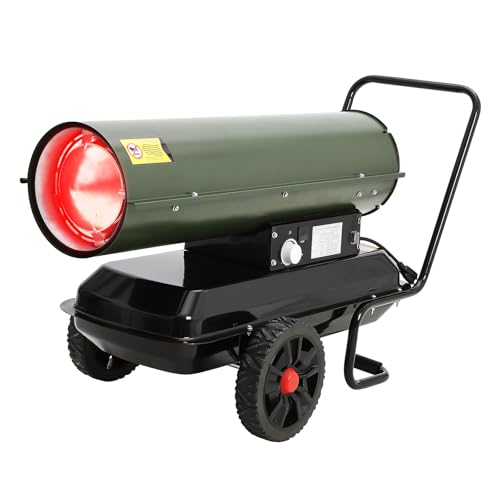
The Towallmark 125,000 BTU torpedo heater is designed for larger garages and medium jobsite spaces, with claimed coverage up to approximately 3,125 sq ft. It accepts kerosene, diesel, home heating oil, and jet fuel (explicit warning not to use gasoline).
Notable specs: a 26L (6.87 gallon) fuel tank and a manufacturer-stated runtime up to 8 hours on a full tank. The unit is described with portable dimensions and a weight of about 53.8 pounds. The mix of fuel options and extended runtime supports longer unattended operation in remote or outdoor jobsite settings.
ProTemp 140,000 BTU Kerosene/Diesel Torpedo Heater

ProTemp lists this model at 140,000 BTU with an emphasis on airflow and efficiency. It pairs matched direct drive motors and blades to maximize airflow, with a rating up to 12,000 CFM, which can move heat quickly across larger shop areas.
Call 888-896-7031 for Free Local HVAC Quotes – Compare and Save Today!
Construction features include powder-coated steel guards for corrosion resistance and a design intended to draw minimal electrical current (manufacturer notes as low as 1.6 amps). The focus is on efficient heat delivery with durable components for frequent jobsite use.
L.B. White Tradesman K210 Portable Forced Air

The L.B. White Tradesman K210 is a professional-grade 210,000 BTU forced-air kerosene heater intended for heavy construction and demanding jobsite environments. It features a spark ignition system for reliable starts and a thermostatic control for automated temperature management.
L.B. White positions this model for long-term, heavy-duty use, highlighting easy and reliable operation. The combination of high output and established industrial design makes it a choice where sustained high heat and robust construction are priorities.
Buying Guide: Choosing The Right Kerosene Torpedo Heater
Heat Output And Space Size
Select a heater with appropriate BTU output for your space. Smaller workshops may only need 75,000–80,000 BTU units, while large barns, warehouses, or construction sites often require 125,000 BTU or more. Consider cubic footage and ceiling height when estimating needs.
Fuel Compatibility And Availability
Many torpedo heaters accept kerosene and diesel, and some accept heating oil or jet fuel. Confirm which fuels are supported and whether multi-fuel capability is desirable. Fuel availability, storage safety, and local regulations should guide your choice.
Runtime And Tank Capacity
Look at fuel tank capacity and advertised runtime to estimate how often you must refuel. Longer runtime reduces interruptions but typically increases unit weight and footprint. Consider whether extended unattended operation is needed.
Controls And Thermostat Features
Thermostatic control enables automatic temperature regulation and improved fuel efficiency. Digital displays, temperature range, and safety auto-shutoff settings add convenience and protection. LED diagnostics can aid troubleshooting on job sites.
Airflow And Heat Distribution
High airflow (CFM) helps move heat quickly across larger spaces. Units emphasizing matched motors and blades or higher CFM ratings will warm expansive areas more evenly. Pair heater placement with fans or ducting if targeted distribution is required.
Safety Features
Key safety items include overheat protection, low-fuel auto-shutoff, spark ignition systems, and sturdy guards. For indoor use, ensure adequate ventilation and follow manufacturer guidelines on placement and clearance to combustibles.
Durability And Construction
Jobsite heaters should have robust housings, corrosion-resistant coatings, and reliable ignition systems. Powder-coated guards, heavy gauge steel, and reputable brand support are important for frequent, long-term use.
Portability And Weight
Consider weight and handles/wheels for moving the heater between sites. Higher-BTU units often weigh more and may require two-person moves. Evaluate storage footprint if space is limited.
Power Requirements
Most forced-air torpedo heaters require minimal electrical power for fans and ignition. Check amps or plug type for compatibility with onsite power. Some models are designed to draw very low electrical current for convenience.
Emissions, Odor, And Ventilation
Kerosene and diesel combustion can produce odors and exhaust gases. Use heaters in well-ventilated spaces and consider models with dual filters or reduced-smoke designs if odor is a concern. Follow local codes for indoor fuel-burning equipment.
Maintenance And Parts Availability
Review availability of replacement parts like filters, fuel pumps, and ignition components. Units with simpler maintenance requirements and widely available parts reduce downtime and long-term costs.
Comparison Perspectives
- High Output Needs: Choose 200k+ BTU units like the VEVOR 215k or L.B. White K210 for very large spaces.
- Mid-Size Workshops: 80k–140k BTU models such as Mr. Heater or ProTemp balance size and portability.
- Fuel Flexibility: Models that accept multiple fuels (Mr. Heater, Towallmark) offer logistics flexibility.
- Airflow Emphasis: ProTemp focuses on high CFM for faster distribution.
- Runtime Priority: Towallmark’s larger tank and stated multi-hour runtime reduce refueling frequency.
Use the above considerations and the product summaries to match heater specifications to your workspace, fuel access, runtime needs, and safety requirements.
Tips for Getting the Best HVAC Prices
- Prioritize Quality Over Cost
The most critical factor in any HVAC project is the quality of the installation. Don’t compromise on contractor expertise just to save money. - Check for Rebates
Always research current rebates and incentives — they can significantly reduce your overall cost. - Compare Multiple Quotes
Request at least three estimates before making your choice. You can click here to get three free quotes from local professionals. These quotes include available rebates and tax credits and automatically exclude unqualified contractors. - Negotiate Smartly
Once you've chosen a contractor, use the proven strategies from our guide — How Homeowners Can Negotiate with HVAC Dealers — to get the best possible final price.