
Choosing a garage heater requires balancing efficiency, coverage, installation type, and safety. Below is a concise comparison table of five well-matched heaters that suit different garage sizes, fuel types, and mounting styles.
| Product | Type | Key Strength |
|---|---|---|
| Modine HD45AS0111 Natural Gas Hot Dawg | Natural Gas Unit Heater | High BTU Output, Residential/Commercial Rated |
| Mr. Heater Big Maxx MHU80NG | Natural Gas Unit Heater | Large Coverage, High BTU |
| CTSC 10000W Electric Garage Heater | Hardwired Electric Fan-Forced | High Electric Power, Digital Controls |
| Comfort Zone CZ230ER Ceiling Mount Heater | Hardwired Ceiling Fan-Forced | Ceiling Mount Space Savings, Large Coverage |
| NewAir NGH160GA00 Portable Garage Heater | 120V Portable Electric | Portable, Safety Features, Quick Warmth For Small Garages |
Modine Natural Gas Hot Dawg 45,000 BTU
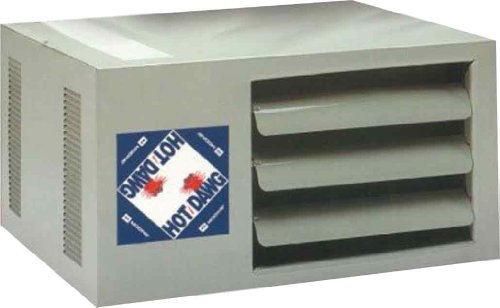
This natural gas unit heater is designed for residential, commercial, and industrial spaces. The unit delivers 45,000 BTU, suitable for medium-to-large garages and workshops where gas infrastructure exists.
Key listed features include quiet operation, 80-percent efficiency, and a low profile design. Its certification for multiple use cases indicates it meets common safety and performance standards for permanent installations.
Considerations: this heater requires professional gas hookup and appropriate venting. It is optimized for continuous use in poorly insulated spaces and is best where long-run operating efficiency and high heat output are priorities.
Mr. Heater Big Maxx MHU80NG 80,000 BTU
Call 888-896-7031 for Free Local HVAC Quotes – Compare and Save Today!
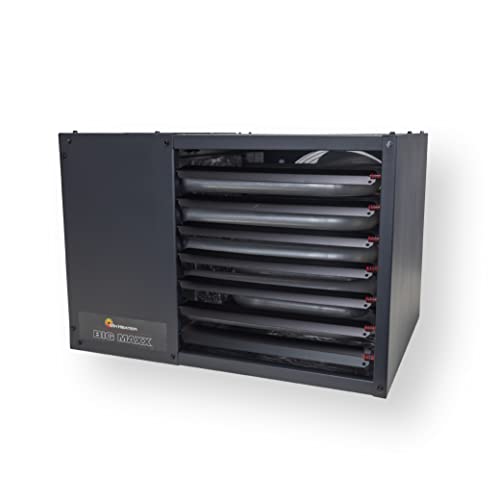
The Mr. Heater Big Maxx is a high-capacity natural gas unit heater delivering up to 80,000 BTU and covering very large garages or small commercial spaces. The device includes mounting brackets and is designed for fixed installation.
Listed features highlight wide coverage area (up to 2000 sq. ft. per spec), compatibility with natural gas, and conversion options. The unit’s design requires adherence to clearance and venting requirements and typically professional installation.
Operational notes: this model is suited where strong, continuous heat is needed and natural gas is available. It emphasizes raw BTU output rather than portable convenience or electric-only installations.
CTSC 10000W Electric Garage Heater 240V

This hardwired, fan-forced electric heater offers up to 10,000W (240V) with multiple heat settings and a digital thermostat for precise control. It’s aimed at large garages and workshops needing electric heating without gas.
Features called out include a voltage display to aid troubleshooting, overheat protection, ETL listing, and both remote and touch-panel control. The unit is manufactured from SPCC cold-rolled steel for durability.
Call 888-896-7031 for Free Local HVAC Quotes – Compare and Save Today!
Considerations: installation requires 240V wiring and may need an electrician. The three heat levels (10000W/7500W/fan) provide flexibility, and the digital controls and timer support optimized energy use when paired with proper insulation.
Comfort Zone Ceiling Mount Fan-Forced Garage Heater

The Comfort Zone CZ230ER is a hard-wired ceiling-mounted fan-forced heater with a digital thermostat, remote, and overheat protection. It claims coverage up to 1250 sq. ft. depending on space and insulation.
Key features include space-saving ceiling installation, heavy gauge steel construction, adjustable louvers for directed airflow, and a 12-hour timer. The design is suited to workshops where floor space must remain clear.
Considerations: this heater is meant for permanent installation and requires electrical hard-wiring. Its fan-forced circulation helps distribute heat quickly, making it practical for larger open garages or warehouse-like spaces.
NewAir NGH160GA00 Portable Garage Heater 120V

The NewAir NGH160GA00 is a 120V portable electric garage heater intended for small garages or localized heating. It features adjustable temperature control, two heat modes, and a tilting head for directional warmth.
Listed safety features include cool-to-the-touch design, internal thermostat, and automatic shut-off to prevent overheating. A ceramic heating plate and 200 CFM fan provide fast warm-up for confined spaces.
Considerations: this model is best for portable, localized heating rather than whole-garage climate control. It requires only a standard outlet and is useful where hardwiring or gas hookups are not available.
Buying Guide: How To Choose The Most Efficient Garage Heater
This guide focuses on efficiency, installation, coverage, safety, and operating cost. Evaluate each factor to match a heater to your garage’s size, insulation, and available utilities.
Tips for Getting the Best HVAC Prices
- Prioritize Quality Over Cost
The most critical factor in any HVAC project is the quality of the installation. Don’t compromise on contractor expertise just to save money. - Check for Rebates
Always research current rebates and incentives — they can significantly reduce your overall cost. - Compare Multiple Quotes
Request at least three estimates before making your choice. You can click here to get three free quotes from local professionals. These quotes include available rebates and tax credits and automatically exclude unqualified contractors. - Negotiate Smartly
Once you've chosen a contractor, use the proven strategies from our guide — How Homeowners Can Negotiate with HVAC Dealers — to get the best possible final price.
1. Fuel Type And Operating Cost
- Natural Gas: Generally lower operating costs per BTU and strong output for large spaces. Requires gas line, proper venting, and professional installation. Best for frequent, long-run heating in large garages.
- Electric (Hardwired): Clean and quiet with precise digital controls. Efficiency is near 100% at the unit, but electricity cost per kWh can make runtime more expensive than gas in some regions.
- Portable Electric (120V): Convenient and no special wiring, but lower maximum output. Appropriate for spot heating or small, occasionally used garages.
2. Heat Output And Coverage
- Match BTU (gas) or wattage (electric) to garage size. Larger spaces need higher BTU or kW and better air distribution.
- Manufacturer coverage claims assume average insulation; poorly insulated garages will require oversized capacity or additional insulation for efficiency.
- Fan-forced units distribute heat faster; infrared and unit heaters provide radiant or convective heat depending on design.
3. Installation And Space Considerations
- Ceiling/Wall Mount: Saves floor space and allows permanent, distributed heating. Hardwired units often need electrical work.
- Free-Standing/Portable: No installation required; useful for renters or intermittent use. Check placement clearances and tip-over protection.
- Gas units require proper venting, clearances, and certified installation.
4. Safety Features
- Look for overheat protection, tip-over shutoff, and ETL/CSA certification where applicable.
- Gas heaters should be certified for residential/commercial use and installed per code to avoid carbon monoxide risks.
- Electric units with digital thermostats, timers, and ECO modes allow controlled runtime to reduce risk and cost.
5. Controls, Efficiency, And Usability
- Thermostat Precision: Digital thermostats and timers improve energy efficiency by running only when needed.
- Multiple Power Settings: Allow matching heat output to current conditions and avoiding constant full-power draw.
- Remote/Wi‑Fi: Adds convenience and can help reduce runtime by preheating only when needed.
6. Durability And Maintenance
- Steel housings and commercial-grade components last longer in harsh garage environments.
- Regular maintenance: clean fans, check electrical connections, inspect venting on gas models.
- Serviceability: choose units with accessible components and available replacement parts for longevity.
7. Comparing Perspectives
- Cost-Per-Heat Delivered: Compare expected runtime costs using local gas and electricity rates. High BTU gas units often win on cost for continuous heating.
- Installation Complexity: Portable electric wins for ease; hardwired electric and gas require professionals but yield better whole-space heating.
- Use Case Match: For workshops with frequent occupancy, permanent gas or hardwired electric units provide reliable comfort. For occasional use, portable electric is efficient on a per-use basis.
8. Final Selection Checklist
- Measure cubic footage and evaluate insulation.
- Confirm available utilities (120V, 240V, gas).
- Decide permanent vs. portable preference.
- Prioritize safety certifications and controls (thermostat, timer, overheat protection).
- Plan for professional installation when required (gas, hardwired electric).