
Choosing the right natural gas heater for a greenhouse requires balancing output, venting, and safety. Below is a quick comparison of five natural gas heaters suitable for greenhouse use, followed by individual product overviews and a comprehensive buying guide to help match heater features to greenhouse needs.
| Product | Type | Max BTU | Coverage |
|---|---|---|---|
| GASLAND Gasmart E (Tankless) | Tankless Water Heater | 199,000 BTU | Hot water for greenhouse plumbing/heat-exchange |
| Dyna-Glo IR30NMDG-1 | Infrared Wall Heater | 30,000 BTU | Up to 1,000 sq. ft. (radiant heat) |
| Mr. Heater Big Maxx MHU80NG | Unit Heater | 80,000 BTU | Up to 2,000 sq. ft. (forced/ducted) |
| ProCom MN300TPA-B | Ventless Infrared Space Heater | 30,000 BTU | Up to 1,400 sq. ft. (infrared) |
| Comfort Glow 17,000 BTU | Direct Vent Wall Heater | 17,000 BTU | Up to 570 sq. ft. (vented blue flame) |
Content Navigation
- Dyna-Glo IR30NMDG-1 Infrared Wall Heater
- Mr. Heater Big Maxx MHU80NG Unit Heater
- ProCom MN300TPA-B Ventless Infrared Heater
- ProCom MN300TBA-B Blue Flame Ventless Space Heater
- Comfort Glow 17,000 BTU Direct Vent Wall Heater
- Buying Guide For Natural Gas Greenhouse Heaters
- 1. Heat Output And Sizing
- 2. Heating Method: Radiant Vs. Convective
- 3. Venting: Vented, Direct Vent, Or Ventless
- 4. Safety Features
- 5. Controls And Thermostats
- 6. Installation And Ventilation Requirements
- 7. Fuel Supply And Efficiency
- 8. Plant And Worker Considerations
- 9. Zoning And Distribution
- 10. Maintenance And Serviceability
- Comparison Perspectives
Dyna-Glo IR30NMDG-1 Infrared Wall Heater

Type: Infrared Wall Heater. Key Feature: Radiant heating warms objects and plants directly rather than just air, which can be advantageous in greenhouses where airflow is high and air temperature fluctuates.
- Natural gas ready; 30,000 BTU/hr output suitable for small to medium greenhouse zones.
- Infrared Technology heats objects and surfaces first, reducing heat loss from ventilation.
- Manufacturer states coverage up to 1,000 sq. ft. — appropriate for localized zones or supplemental heat.
Infrared wall heaters are useful where targeted plant-surface warming is needed, and where reducing warm-air stratification matters. Install location and radiant angle should be planned to avoid cold spots and ensure even coverage.
Mr. Heater Big Maxx MHU80NG Unit Heater
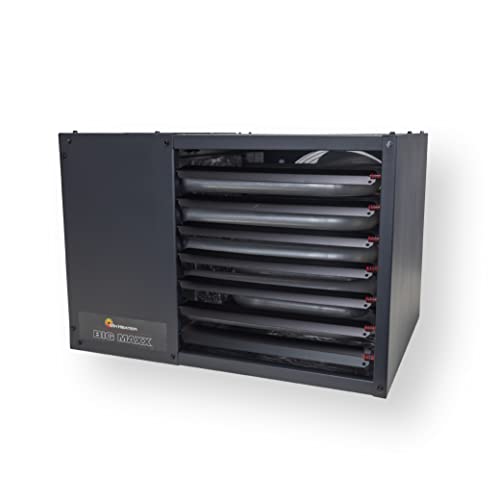
Type: Natural Gas Unit Heater. Key Feature: High output forced-air unit designed for large spaces and heavy-duty greenhouse applications.
Call 888-896-7031 for Free Local HVAC Quotes – Compare and Save Today!
- Rated at 80,000 BTU with coverage up to 2,000 sq. ft. — suitable for larger greenhouses or barn-style structures.
- Category 1 vertical and category 3 horizontal venting options; includes mounting brackets and LP conversion kit.
- Requires electrical connection (120 V) for blower operation; clearance and venting requirements apply (e.g., minimum 8 ft. clearance).
Unit heaters provide distributed warm air, reducing cold pockets when paired with proper circulation. For greenhouse use, plan ducting or placement to avoid direct hot airflow that could desiccate plants and to maintain uniform temperatures.
ProCom MN300TPA-B Ventless Infrared Heater

Type: Ventless Infrared Space Heater. Key Feature: Produces radiant heat without a flue, with thermostat control and mounting options.
- Maximum 30,000 BTU, stated heating up to 1,400 sq. ft. — suitable as a supplemental greenhouse heater in well-ventilated structures.
- Built-in thermostat with High/Medium/Low controls allows some temperature regulation at the unit.
- Includes wall mount and base feet for placement flexibility.
Ventless heaters avoid the complexity of flues but require careful consideration of ventilation and combustion byproducts. For greenhouses, ensure CO and O2 levels are monitored and follow manufacturer clearances to protect plant health and staff safety.
ProCom MN300TBA-B Blue Flame Ventless Space Heater

Type: Ventless Blue Flame Heater. Key Feature: Blue flame combustion provides convective heat with thermostat control and multiple heat settings.
Call 888-896-7031 for Free Local HVAC Quotes – Compare and Save Today!
- Produces 30,000 BTU and is rated to heat areas up to 1,400 sq. ft.
- Thermostat control with High/Medium/Low settings supports basic temperature management.
- Manual push-button Piezo ignition and an Oxygen Depletion Sensor (ODS) with automatic shutoff enhance safety for non-vented operation.
Blue flame ventless heaters warm air directly and can be efficient in greenhouses with controlled ventilation. The ODS is important for safety but consistent fresh-air exchange is still necessary to maintain plant and human health.
Comfort Glow 17,000 BTU Direct Vent Wall Heater

Type: Direct Vent Wall Heater. Key Feature: Sealed combustion provides safe vented operation with modest output for small greenhouse zones.
- 17,000 BTU output suitable for areas up to approximately 570 sq. ft.
- Sealed burn system with matchless Piezo ignition and safety pilot prevents indoor combustion contamination.
- Space-saving wall-mount design; includes built-in pressure regulator and pilot safety features.
Direct vent models are often preferred for enclosed greenhouse rooms or adjacent workspaces because they exhaust combustion gases outdoors. They are suitable for smaller zones or where venting can be routed through a wall with minimal modification.
Buying Guide For Natural Gas Greenhouse Heaters
Use the following considerations to select a heater that matches greenhouse size, ventilation, plant sensitivity, and operational priorities.
1. Heat Output And Sizing
Calculate required BTU using greenhouse volume, insulation, target temperature delta, and local outdoor design temperature. As a rough guide, small insulated greenhouses may need 20–40 BTU per sq. ft. Larger or poorly insulated structures require more. Match heater capacity to the largest expected heat loss scenario rather than average conditions.
2. Heating Method: Radiant Vs. Convective
Infrared (Radiant) heaters warm plant surfaces first, which can reduce stratification and be efficient when ventilation is frequent. Convective/Forced-Air unit heaters distribute warm air and can be paired with circulation fans to maintain even temperatures. Choose based on whether you need surface warming or uniform air temperature.
3. Venting: Vented, Direct Vent, Or Ventless
Vented/Direct Vent heaters exhaust combustion gases outdoors, protecting indoor air quality — preferred for enclosed greenhouses. Ventless units avoid flues but introduce combustion byproducts into the greenhouse; they require robust fresh-air exchange and monitoring of CO and oxygen levels. Select venting based on structural constraints and ventilation control.
4. Safety Features
Look for Oxygen Depletion Sensors (ODS), automatic shutoff, sealed combustion, and pressure regulators. Ensure minimum clearances, flame-sensing pilots, and compatibility with greenhouse materials. Install CO detectors and consider redundant alarms when using ventless appliances.
5. Controls And Thermostats
Thermostat accuracy and placement matter. Wall-mounted thermostats measure air temperature, while radiant systems may benefit from surface probes or multiple sensors. Programmable thermostats and remote or zone controls improve energy efficiency and crop protection during extreme conditions.
6. Installation And Ventilation Requirements
Account for vent penetration points, clearance distances, and electrical needs for blowers or ignition. Venting paths should minimize heat loss. For permanent systems, professional HVAC or licensed gas-fitters ensure code compliance and safer installation.
7. Fuel Supply And Efficiency
Confirm natural gas supply pressure, pipe sizing, and meter capacity for high-BTU units. Consider units with higher combustion efficiency and controls to minimize fuel waste. For hybrid systems, pairing with thermal mass (water barrels, concrete) can smooth temperature swings.
8. Plant And Worker Considerations
Some plants are sensitive to dry, direct heat. Use humidification, indirect heating, or circulating fans to prevent localized drying. Ensure human-occupied greenhouse areas maintain safe CO and temperature levels during heater operation.
9. Zoning And Distribution
Large greenhouses commonly use multiple smaller heaters or a central unit with ducting and fans for even distribution. Zoning allows independent control for propagation rooms, staging areas, and main growing bays to reduce energy use and protect sensitive crops.
10. Maintenance And Serviceability
Choose units with accessible service panels and widely available parts. Regular maintenance — cleaning burners, checking vents, and testing safety sensors — preserves performance and safety. Verify local service support and warranty coverage.
Comparison Perspectives
- Small/Propagation Areas: Direct vent or small infrared units provide localized warmth with safer combustion control.
- Large Production Bays: High-BTU unit heaters with forced air and distribution fans work best to overcome losses and maintain uniformity.
- Low-Modification Installations: Ventless heaters reduce installation complexity but require ventilation planning and monitoring.
- Energy Efficiency: Infrared and zone-controlled systems can conserve fuel by targeting plant surfaces and only heating occupied zones.
When selecting a heater for greenhouse use, prioritize safety, appropriate capacity, and the heating method that aligns with your plant species and ventilation strategy. Professional sizing and installation are recommended for larger or permanently installed natural gas systems.
Tips for Getting the Best HVAC Prices
- Prioritize Quality Over Cost
The most critical factor in any HVAC project is the quality of the installation. Don’t compromise on contractor expertise just to save money. - Check for Rebates
Always research current rebates and incentives — they can significantly reduce your overall cost. - Compare Multiple Quotes
Request at least three estimates before making your choice. You can click here to get three free quotes from local professionals. These quotes include available rebates and tax credits and automatically exclude unqualified contractors. - Negotiate Smartly
Once you've chosen a contractor, use the proven strategies from our guide — How Homeowners Can Negotiate with HVAC Dealers — to get the best possible final price.