
Finding the right natural gas wall-mount patio heater means balancing heat output, installation type, safety features, and coverage. The following table summarizes five wall-mountable natural gas and compatible heaters selected for outdoor or covered-patio use and wall-mount flexibility.
| Product | Type | Main Feature |
|---|---|---|
| Comfort Glow 25,000 BTU Direct Vent | Direct Vent Wall Heater | 25,000 BTU — Heats Up To 825 Sq. Ft. |
| Comfort Glow 17,000 BTU Direct Vent | Direct Vent Wall Heater | 17,000 BTU — Heats Up To 570 Sq. Ft. |
| Bromic Heating Smart-Heat Platinum 500 | Radiant Infrared Natural Gas | 39,800 BTU Radiant Infrared With Wind Resistance |
| ProCom MN300TPA-B 30,000 BTU Infrared | Ventless Infrared Wall Heater | 30,000 BTU — Thermostat Control & Wall Mount |
| Mr. Heater MHVFBF30NGT 30,000 BTU | Vent-Free Blue Flame Wall Heater | 30,000 BTU — Thermostat & Battery Ignition |
Comfort Glow 25,000 BTU Direct Vent

Type: Direct Vent Natural Gas Wall Heater. Output: 25,000 BTU designed to heat up to about 825 sq. ft. The unit uses a sealed burn system and Matchless Piezo ignition which supports safer operation in enclosed vented environments.
- Safety: Sealed burn system with a safety pilot and built-in pressure regulator to stop gas flow if the pilot goes out.
- Design: Space-saving wall mount that aims to minimize footprint; dimensions provided for planning installation.
- Use Case: Suitable for larger covered patios, garage conversions, or semi-enclosed outdoor rooms where direct-vent exhaust can be accommodated.
Comfort Glow 17,000 BTU Direct Vent

Type: Direct Vent Natural Gas Wall Heater. Output: 17,000 BTU suitable for spaces up to approximately 570 sq. ft. The smaller direct-vent format reduces installation complexity in tighter patio spaces.
- Safety: Sealed burn with Matchless Piezo ignition and pilot pressure regulator for automatic gas shutoff if pilot extinguishes.
- Space Savings: Compact dimensions aimed at blending into smaller wall areas while still supplying convection heat.
- Use Case: Best for medium covered patios, screened porches, or spaces that need moderate wall-mounted heating with venting.
Bromic Heating Smart-Heat Platinum 500

Call 888-896-7031 for Free Local HVAC Quotes – Compare and Save Today!
Type: Radiant Infrared Natural Gas Patio Heater. Output: 39,800 BTU with a radiant infrared burner intended to provide direct, fast heat to people rather than heating all ambient air.
- Design: Sleek stainless steel with tinted ceramic glass for a contemporary look; intended for visible patio installations.
- Performance: Radiant infrared heating provides immediate sensation of warmth and is less affected by moderate breezes; manufacturer notes wind resistance up to 12 mph.
- Placement: Designed for wall or ceiling mounting to direct radiant heat to seating areas; ideal for open or semi-enclosed patios where radiant warmth is preferred.
ProCom MN300TPA-B 30,000 BTU Infrared

Type: Ventless Natural Gas Infrared Heater. Output: 30,000 BTU and claimed coverage up to 1,400 sq. ft., with included wall mount hardware and floor base feet for flexible installation.
- Control: High/Medium/Low thermostat settings give adjustable output for maintaining set comfort levels.
- Installation Flexibility: Can be wall-mounted or placed on the floor using included feet; slim profile for tighter spaces.
- Consideration: As a ventless appliance, verify local codes and ventilation needs; ventless units influence indoor air quality and may not be suitable for all covered outdoor areas.
Mr. Heater 30,000 BTU Vent-Free Blue Flame
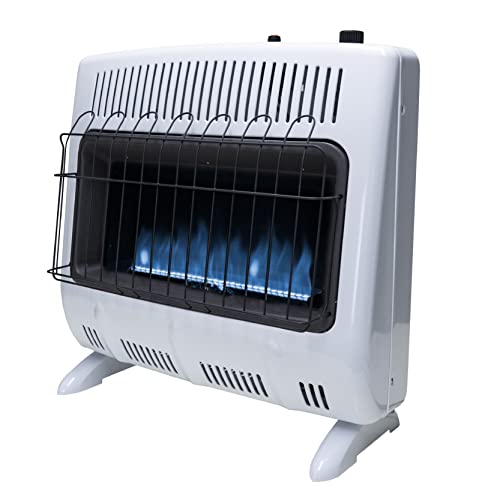
Type: Vent-Free Blue Flame Natural Gas Wall Heater. Output: 30,000 BTU intended for spaces up to about 1,000 sq. ft. with an integrated thermostat for precise temperature control.
- Efficiency: Blue flame convection heating designed to deliver even heat distribution without external venting.
- Controls: Built-in thermostat and battery-powered ignition for straightforward operation and temperature dialing.
- Regulatory Note: Vent-free appliances may be restricted by local building codes and are not recommended for tightly sealed indoor spaces; appropriate for certain covered patios where codes permit.
Buying Guide: How To Choose A Natural Gas Wall-Mount Patio Heater
Choosing the right wall-mounted natural gas patio heater requires evaluating installation constraints, heating goals, safety, and regulatory compliance. The following considerations compare key perspectives to help narrow choices objectively.
Call 888-896-7031 for Free Local HVAC Quotes – Compare and Save Today!
1. Heater Type And Heat Delivery
- Direct Vent vs Vent-Free: Direct vent units draw combustion air from outside and exhaust outside, improving indoor/outdoor air quality and meeting stricter code requirements for some enclosed spaces. Vent-free units release combustion byproducts into the room and may be limited by local codes.
- Radiant Infrared vs Convection (Blue Flame): Radiant heaters (infrared) warm people and objects directly and perform well in breezy or open spaces. Convection or blue flame units heat air and are better for enclosed or semi-enclosed patios with minimal drafts.
2. Output (BTU) And Coverage Area
- Match BTU To Space: Estimate the coverage area and choose a BTU rating aligned with the space. Higher BTU units provide more direct warmth but require appropriate gas supply and potentially larger clearances.
- Seating Zone vs Whole Area: For targeted warmth over seating, radiant high-BTU models can be more efficient. For warming entire covered patios, convection or direct-vent larger units may provide more uniform temperature.
3. Installation Requirements
- Wall Mounting And Clearances: Check manufacturer clearance requirements, wall structural capability, and proximity to combustible materials. Dimensions in spec sheets are critical for planning.
- Venting Needs: Direct-vent units need an exterior vent termination; vent-free models avoid this but may have code restrictions. Confirm location suitability before purchase.
- Gas Supply Considerations: Ensure natural gas line capacity and pressure match the heater’s requirements; some higher-BTU models require dedicated lines or specific regulators.
4. Safety Features And Controls
- Pilot And Ignition: Sealed burn, matchless piezo ignition, and safety pilots with automatic gas shutoff help prevent unintentional gas flow. Battery ignition adds convenience for vent-free units.
- Thermostat And Output Control: Built-in thermostats allow precise temperature control; multi-stage output reduces cycling and improves comfort. Consider whether remote or smart controls are desired.
- Oxygen Depletion Sensors (ODS): Many vent-free units include ODS to shut down if oxygen levels drop. Confirm presence if considering ventless options.
5. Environmental And Usage Factors
- Wind And Exposure: Radiant infrared units claim better resistance to wind because they heat people directly. In exposed patios, consider models with wind resistance or aim radiant output at seating zones.
- Covered vs Open Patio: For fully open patios, radiant heaters or ceiling-mounted radiants may be preferable. For covered or semi-enclosed areas, direct vent or vent-free convection heaters may deliver more even warmth.
6. Code Compliance And Ventilation
- Local Codes: Always check local building and fire codes regarding vent-free natural gas appliances. Some jurisdictions restrict ventless heaters in living spaces, bedrooms, or enclosed areas.
- Ventilation Needs: Even when allowed, ensure adequate ventilation for combustion safety, especially with vent-free heaters.
7. Durability, Materials, And Aesthetics
- Materials: Stainless steel and ceramic glass components resist corrosion and withstand higher temperatures in outdoor environments.
- Finish And Visibility: If the heater will be a visible feature, consider finish and design: some units are built for style as well as function.
8. Maintenance And Serviceability
- Access For Cleaning: Ensure filters, burners, or pilot assemblies are accessible for seasonal maintenance.
- Parts And Support: Consider brands with clear replacement part availability and local service networks if longevity and repairability are important.
9. Comparison Perspectives
- Performance vs Efficiency: High-BTU radiant units give faster perceived warmth but may consume more fuel for continuous operation. Vent-free blue flame units can be more fuel-efficient in mild climates but may impact indoor air.
- Installation Complexity vs Convenience: Direct vent systems are more complex to install due to venting and often need professional setup; ventless models offer easier installation but require code checks.
- Targeted Warmth vs Whole-Space Heating: If the goal is to warm people sitting in a zone, radiant infrared is often more efficient. For whole-space comfort in covered patios, convection or higher-output direct vent heaters perform better.
Use this guide to compare the selected models against your site conditions, local regulations, and heating goals. Measure mounting height, seating layout, and gas supply capability before final selection to ensure safe and effective performance.
Tips for Getting the Best HVAC Prices
- Prioritize Quality Over Cost
The most critical factor in any HVAC project is the quality of the installation. Don’t compromise on contractor expertise just to save money. - Check for Rebates
Always research current rebates and incentives — they can significantly reduce your overall cost. - Compare Multiple Quotes
Request at least three estimates before making your choice. You can click here to get three free quotes from local professionals. These quotes include available rebates and tax credits and automatically exclude unqualified contractors. - Negotiate Smartly
Once you've chosen a contractor, use the proven strategies from our guide — How Homeowners Can Negotiate with HVAC Dealers — to get the best possible final price.