
Choosing the right natural gas salamander heater depends on space size, portability, venting needs, and BTU output. The table below summarizes five top natural gas models and their core strengths to help you compare quickly.
| Product | Type / Form | BTU / Coverage | Key Feature |
|---|---|---|---|
| Mr. Heater Big Maxx MHU80NG | Unit/Ceiling-Mount | 80,000 BTU / ~2000 sq. ft. | Category 1/3 venting, unit heater durability |
| L.B. White Tradesman CP170NU | Portable Forced-Air Salamander | 125,000–170,000 BTU | Variable valve & thermostatic control |
| L.B. White Tradesman 170N | Portable Forced-Air Salamander | 125,000–170,000 BTU | Direct-fired, high-efficiency construction |
| Dyna-Glo IR30NMDG-1 | Infrared Wall Heater | 30,000 BTU / up to 1,000 sq. ft. | Infrared radiant heat, natural gas ready |
| Reznor UDXC-30 | Ceiling/Wall Unit Heater | 30,000 BTU / dual fire levels | Quiet forced air with ceiling mount option |
Content Navigation
- Mr. Heater F260560 Big Maxx MHU80NG Natural Gas Unit Heater
- Tradesman CP170NU Portable Propane LP Forced Air Heater — Torpedo Salamander
- L.B. White Tradesman 170N Portable Forced Air Heater
- Dyna-Glo IR30NMDG-1 30,000 BTU Natural Gas Infrared Wall Heater
- Reznor 30,000 BTU Unit Natural Gas Heater UDXC-30
- Buying Guide: Choosing A Natural Gas Salamander Heater
Mr. Heater F260560 Big Maxx MHU80NG Natural Gas Unit Heater
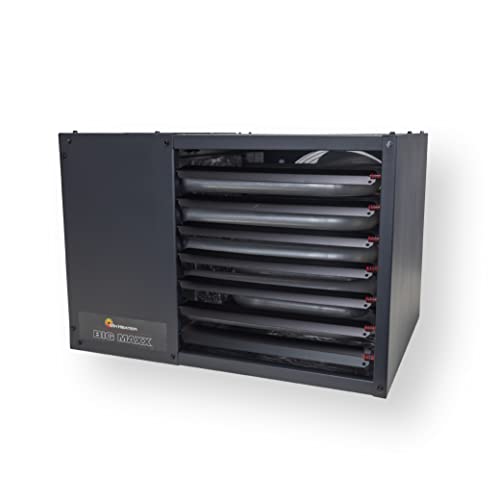
The Mr. Heater Big Maxx MHU80NG is designed as a mounted unit heater for larger enclosed spaces. It delivers 80,000 BTU and lists coverage up to 2,000 sq. ft.. The unit ships with two angle brackets and a conversion kit for liquid propane, though it is primarily configured for natural gas.
Key listed specifications include 29.33” L x 15.50” W x 26.37” H, 120 V power for the fan motor, and a 2.3 amp draw. The manufacturer requires a minimum 8 ft. clearance from floor to base and supports category 1 vertical and category 3 horizontal venting. Thermostat, hose, and regulator are not included with the unit.
For fixed installations where ceiling or wall mounting is acceptable, this model offers a robust BTU output and formal venting options suitable for garages, workshops, and small warehouses. The supplied conversion kit provides some fuel flexibility during installation.
Tradesman CP170NU Portable Propane LP Forced Air Heater — Torpedo Salamander

Call 888-896-7031 for Free Local HVAC Quotes – Compare and Save Today!
The L.B. White Tradesman CP170NU is presented as a high-output forced-air salamander with a wide BTU range of 125,000 to 170,000 BTU/hr. The product highlights a variable rate valve and thermostatic control for regulating heat output and fuel use.
Construction features emphasize durability, including a heavy-gauge combustion chamber and an enamel-coated case for abrasion and corrosion resistance. The heater includes an electronic start system for reliable ignition and is noted as manufactured with premium components.
This model targets portable applications such as construction sites, large garages, and barns where powerful, directional forced air heat is needed. Its adjustable output and thermostatic control help match heating intensity to task demands while improving fuel efficiency compared with fixed-output torpedoes.
L.B. White Tradesman 170N Portable Forced Air Heater

The L.B. White Tradesman 170N is a portable natural gas forced-air salamander offering 125,000–170,000 BTU/hr. It uses direct-fired technology and is positioned for industrial and construction site use where high output and ruggedness matter.
Listed features include 99.97% fuel delivery efficiency by direct-fired design, an electronic spark ignition for dependable starts, and a built-in diagnostic light for troubleshooting. The unit sports a heavy gauge combustion chamber with a tri-shield finish to resist wear.
Call 888-896-7031 for Free Local HVAC Quotes – Compare and Save Today!
For users needing a purpose-built portable salamander that prioritizes reliability and serviceability, this model emphasizes industrial-grade components and easier diagnostics for jobsite maintenance. Its forced-air design provides fast, concentrated heating in open or semi-enclosed spaces.
Dyna-Glo IR30NMDG-1 30,000 BTU Natural Gas Infrared Wall Heater

The Dyna-Glo IR30NMDG-1 is an infrared wall heater marketed as natural gas ready and rated at 30,000 BTU/hr. Infrared technology radiates heat to objects and surfaces first, which can feel more immediate compared with convective forced-air heaters.
Manufacturer notes indicate coverage up to 1,000 sq. ft. and a natural-gas-ready configuration where fuel conversion is not permitted. The radiant heat approach suits shops, garages, and work areas where localized warmth of people and equipment is preferred over heating large air volumes.
This unit is more comparable to wall-mounted radiant heaters than torpedo salamanders. It provides low-visual-impact mounting and targeted infrared warmth for moderate-sized spaces where direct radiant comfort is prioritized.
Reznor 30,000 BTU Unit Natural Gas Heater UDXC-30

The Reznor UDXC-30 is a compact unit heater designed for indoor use in garages, workshops, and light commercial spaces. It lists a 30,000 BTU rating with two output levels—low-fire and high-fire—to match varying heat loads.
Key specs claim an 82% thermal efficiency and a quiet forced-air propeller fan with low static pressure. Mounting options include ceiling suspension or wall mounting using brackets (sold separately); the heater includes suspension points with threaded-nut retainers.
This model suits users looking for a modest BTU unit that can be ceiling-mounted to free floor space while delivering zoned forced-air heating. The dual output levels offer flexibility for milder versus colder conditions without large fuel consumption swings.
Buying Guide: Choosing A Natural Gas Salamander Heater
Selecting the right natural gas salamander heater involves examining several technical and practical factors. Below are the primary considerations and comparison perspectives buyers should evaluate.
Tips for Getting the Best HVAC Prices
- Prioritize Quality Over Cost
The most critical factor in any HVAC project is the quality of the installation. Don’t compromise on contractor expertise just to save money. - Check for Rebates
Always research current rebates and incentives — they can significantly reduce your overall cost. - Compare Multiple Quotes
Request at least three estimates before making your choice. You can click here to get three free quotes from local professionals. These quotes include available rebates and tax credits and automatically exclude unqualified contractors. - Negotiate Smartly
Once you've chosen a contractor, use the proven strategies from our guide — How Homeowners Can Negotiate with HVAC Dealers — to get the best possible final price.
BTU Output And Space Size
- Match BTU To Volume: Higher BTU (100k–170k) models heat large, open jobsite areas faster. Lower BTU (25k–80k) unit heaters are better for enclosed garages or small workshops.
- Coverage Estimates: Manufacturer coverage is a guideline—insulation, ceiling height, and air infiltration all influence effective heating.
Heater Type: Forced-Air Salamander vs. Unit/Infrared
- Forced-Air Salamanders (Torpedo): Provide directional, high-velocity heat good for open construction areas. Typically portable but direct-fired, so ventilation and combustion air are critical.
- Unit/Ceiling Heaters: Permanently mounted, quieter, and better for circulating heat throughout an enclosed space. Often require professional venting and clearance considerations.
- Infrared Heaters: Radiant heat warms people and objects directly, often with lower perceived airflow and faster local comfort in moderately sized spaces.
Venting, Safety, And Installation
- Venting Requirements: Direct-fired portable salamanders typically require good ventilation; unit heaters may use category venting systems—verify local codes and clearance specs.
- Clearances And Mounting: Follow manufacturer minimum clearances and mounting instructions to reduce fire risk and ensure safe operation.
- Safety Controls: Look for safety pilot systems, diagnostic lights, or automatic shutoffs that address flame loss, overheat, or low-oxygen conditions.
Portability And Use Case
- Temporary Jobsite Use: Choose robust portable forced-air units with reliable ignition systems and durable housings.
- Permanent Garage Or Shop: Consider mounted unit heaters or wall/ceiling infrared units for cleaner operation and fewer ventilation concerns.
- Fuel Supply And Conversion: Confirm natural gas hook-up compatibility; some units include conversion kits for propane but check restrictions.
Efficiency, Controls, And Fuel Consumption
- Thermostatic Control: Models with thermostat control or variable output improve comfort and reduce run time compared with single-stage heaters.
- Direct-Fired Efficiency: Direct-fired forced-air units convert most fuel to usable heat quickly but will exchange combustion products with room air unless vented.
- Multi-Level Output: Dual-fire or adjustable-output units allow matching heat output to current conditions, improving fuel economy.
Durability And Serviceability
- Construction Materials: Heavy-gauge combustion chambers and coated finishes resist jobsite wear.
- Maintenance Access: Diagnostic lights, accessible panels, and common replacement parts reduce downtime on jobsites.
- Brand Support: Consider manufacturers with documented parts availability and support networks for service and repair.
Regulatory And Indoor Use Considerations
- Indoor Use Ratings: Verify that the model is approved for indoor use if installing inside occupied buildings.
- Ventless Units: Avoid ventless direct-fired units in tightly sealed spaces due to combustion byproducts; comply with local code and carbon monoxide safety practices.
- Installation By Qualified Personnel: For permanent installations and vented units, professional gas and venting installation is recommended to meet code and safety standards.
Comparison Perspectives
- Power vs. Portability: High-BTU torpedoes deliver intense heat but need ventilation; mounted units are less intrusive and better for continuous indoor heating.
- Radiant vs. Convective Comfort: Infrared models provide immediate surface warmth with less air movement; forced-air salamanders heat air quickly and can move heat across larger open areas.
- Short-Term Heating vs. Continuous Use: Portable salamanders excel at spot or temporary heating; unit heaters and infrared wall units are more suited to ongoing space conditioning.